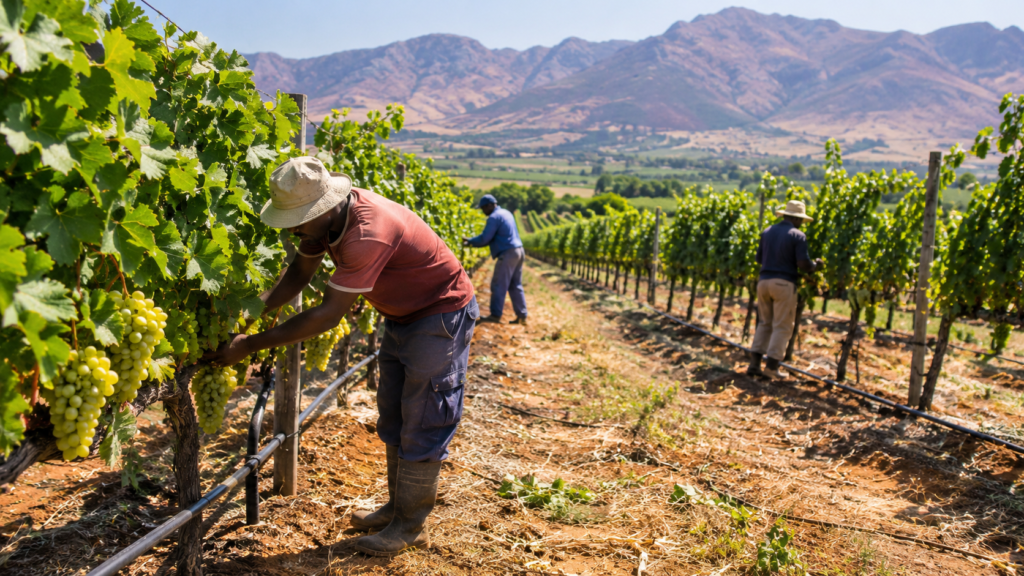
Summary: South Africa’s fruit industry is facing mounting pressure from extreme weather, changing rainfall patterns and export-logistics challenges. Flooding earlier in 2026 damaged orchards, while emerging El Niño conditions are raising concerns about heat stress, water availability and the next harvest. Revised table-grape forecasts now point to lower export volumes, highlighting the vulnerability of one of the country’s most important agricultural export industries.
◉ The forecast for the 2026–27 season has been revised down to 73.4 million cartons, 6.4% below the initial estimate for South Africa’s table-grape exports.
◉ The 2026 forecast stands at 201 million 15-kilogram cartons, representing a 1.5% decline from the previous season and a 4% shortfall against the initial projection for Southern African citrus exports.
◉ Flood damage, heatwaves, changing rainfall patterns and port constraints are creating additional uncertainty for growers as the industry prepares for the 2027 export season.
Extreme Weather Challenges Fruit Producers
South Africa’s agricultural export industry is entering another difficult period as weather-related risks begin affecting production expectations.
The country’s fruit producers are dealing with the consequences of unusually heavy rainfall earlier in 2026, alongside emerging concerns about El Niño conditions and higher temperatures heading into the next growing season.
The challenges are particularly significant for citrus, table grapes and stone fruit, which represent important components of South Africa’s agricultural export economy.
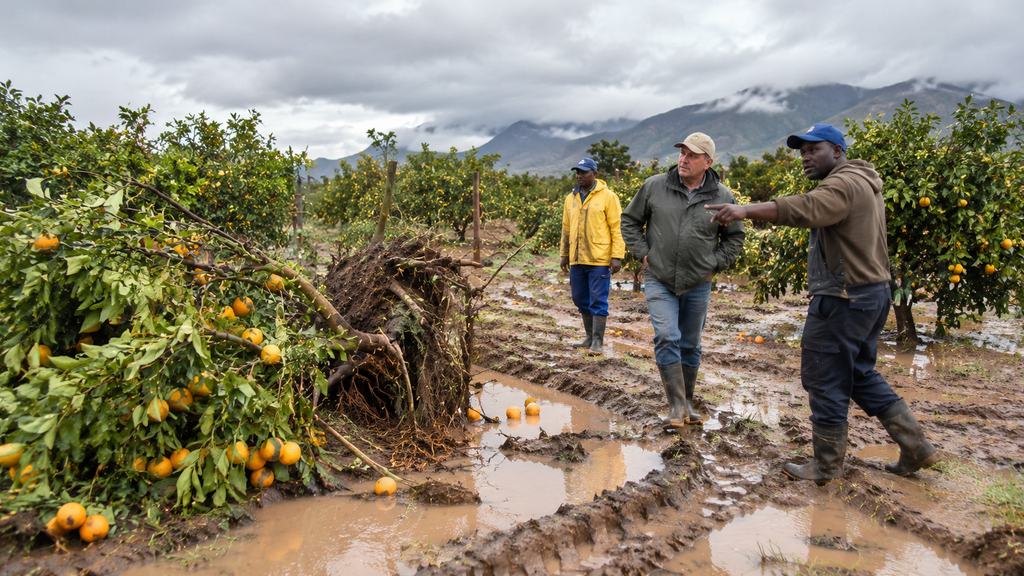
Flooding between May and June affected several production regions, including parts of the Eastern Cape and Western Cape, as well as areas of Limpopo and Mpumalanga.
Some orchards were destroyed, while excessive rainfall affected fruit quality, production schedules and harvesting conditions.
The industry is now facing a different weather-related concern.
The developing El Niño pattern is associated with expectations of hotter conditions and below-normal summer rainfall in several South African agricultural regions.
This creates a difficult combination for growers: previous flooding caused physical damage, while the approaching summer brings increased concerns about water availability and heat stress.
It is important to distinguish between these two developments. The earlier floods followed exceptionally wet La Niña-season conditions, whereas El Niño is now raising concerns about a potentially drier and hotter growing environment.
Table Grape Forecasts Revised Lower
The latest warning signs are particularly visible in the table-grape industry.
On November 27, the South African Table Grape Industry revised its preliminary 2026–27 export forecast to 73.4 million four-kilogram cartons.
This represents a 6.4% reduction from its initial estimate.
The Orange River production region has experienced one of the largest adjustments, with its expected export deliveries reduced from 24.2 million to 21.4 million cartons.
Other production regions, including the Olifants River and Northern regions, have also revised their estimates downward.
The early varieties Sweet Globe, Timpson and Ivory have been affected in the Orange River region.
The timing is commercially important because early-season grapes are intended to reach European markets during the pre-Christmas period, when seasonal demand is particularly relevant.
Lower initial volumes could therefore influence export availability and pricing during an important trading window.
Despite the reduction, the revised forecast remains close to the industry’s longer-term production averages.
This suggests that the situation represents a deterioration in the expected harvest rather than evidence of a collapse in the entire sector.
Citrus Exports Also Face Pressure
South Africa’s citrus industry is experiencing similar difficulties.
The Citrus Growers’ Association of Southern Africa forecasts that growers will pack approximately 201 million 15-kilogram cartons for export during the 2026 season.
That is 1.5% below the 204 million cartons exported in 2025 and 4% below the original estimate of 209.4 million.
The impact differs considerably between fruit varieties.
Lemons were the strongest performer, reaching approximately 51 million cartons, an increase of 23% compared with the previous season.
However, Valencia oranges reached 58.8 million cartons, down 5%, while Navel orange exports fell 20% to 25.2 million cartons.
Grapefruit volumes remained broadly unchanged at 13.5 million cartons.
These differences illustrate how weather conditions, fruit quality and international market requirements can affect individual agricultural products in very different ways.
The financial importance of these industries is substantial.
In 2025, citrus and table-grape exports accounted for approximately 24% of South Africa’s agricultural exports, valued at $15.1 billion.
Citrus exports contributed approximately $2.5 billion, while table-grape and raisin exports generated around $1.1 billion.
The consequences therefore extend beyond individual farms, affecting agricultural employment, logistics companies, exporters and foreign-currency earnings.
El Niño Raises the Next Production Risk
The outlook for 2027 introduces another layer of uncertainty.
The South African government and weather authorities have warned that El Niño conditions could bring below-normal rainfall and higher temperatures during the 2026–27 summer season.
For fruit producers, the consequences could include:
- Water availability: Lower rainfall could increase dependence on irrigation and raise production costs.
- Heat stress: Higher temperatures can affect fruit development, quality and yields.
- Harvest timing: Unusual weather patterns could disrupt production and harvesting schedules.
- Operating expenses: Additional irrigation, energy and crop-management requirements could reduce farm profitability.
Higher dam levels following the previous rainy season provide some protection, particularly for irrigation-dependent agricultural businesses.
However, water reserves do not eliminate the risks associated with prolonged heat and changing rainfall patterns.
The relationship between weather conditions and available irrigation capacity will be particularly important in determining the impact on the next harvest.
Export Logistics Add to the Pressure
Weather is only one part of the challenge.
South African fruit exporters are also dealing with port congestion, limited shipping capacity and changing international trade conditions.
The 2026 citrus season demonstrated how difficult it can be to maintain profitability even when farms achieve reasonable production volumes.
Shipping disruptions affected access to important Middle Eastern markets, while logistical bottlenecks at the Port of Durban caused delays.
Competition from Egyptian orange producers also narrowed the European supply window.
The timing of deliveries is particularly important for fresh fruit because products have limited shelf lives and must reach international buyers within specific commercial windows.
A delayed shipment can reduce the value of an entire consignment, even when the fruit was successfully harvested and packed.
The industry is consequently placing greater emphasis on reliable port infrastructure, shipping schedules and more accurate international demand forecasting.
Global Food Supply and Agricultural Prices
South Africa’s difficulties are part of a wider international agricultural challenge.
Changing weather patterns are creating uncertainty for producers across several regions, particularly where fruit production depends on stable seasonal conditions.
The consequences can extend into international food markets.
Lower export availability can influence wholesale prices, seasonal supply arrangements and competition between producing countries.
European importers are particularly relevant to South African growers because the Northern Hemisphere winter creates an important commercial window for Southern Hemisphere fruit.
If South African production declines while shipping and distribution costs remain elevated, importers may need to secure alternative suppliers.
This could create opportunities for competing exporters, but it may also increase costs throughout the supply chain.
For agricultural investors, the situation highlights the growing importance of climate resilience, irrigation infrastructure and reliable export logistics.
What Comes Next for South African Agriculture?
Four developments will determine the industry’s outlook heading into 2027:
- Weather conditions: Whether El Niño produces prolonged heat and below-average rainfall in major production regions.
- Harvest forecasts: Whether table-grape, citrus and stone-fruit estimates require further downward revisions.
- Export logistics: Whether ports and shipping operators can improve delivery reliability and reduce congestion.
- International demand: Whether European and Asian buyers maintain sufficient demand to support export profitability.
South Africa’s fruit industry remains internationally competitive, but the latest developments demonstrate how vulnerable agricultural exports can become when weather, infrastructure and international market conditions deteriorate simultaneously.
The revised grape forecast is an important early indicator of the challenges facing the next export season.
For the wider economy, the consequences could extend beyond agricultural production, affecting rural employment, foreign-currency earnings and the competitiveness of South African exporters.
The central question for 2027 is whether improved agricultural planning, sufficient water reserves and more reliable logistics can offset the growing uncertainty surrounding weather conditions.
Sources
- Fruitnet – South Africa Revises Table Grape Forecast, November 27, 2026
- Daily Dispatch – South African Agriculture Faces Uncertain 2027, November 26
- FreshPlaza – South African Citrus and Grape Exports Face Declines Ahead of 2027
- Wandile Sihlobo – South Africa’s Agricultural Performance in 2026 and the Outlook for 2027
- South African Government – Agriculture and El Niño Weather Conditions
- Business Day – Citrus Exports Dip Below Forecasts as Weather and Shipping Disruptions Bite
- Bloomberg – El Niño, Flooding Put Squeeze on South African Fruit Producers
- Denarni Fokus – Editorial Disclosure & Transparency