Global equities recovered on November 11 as strong AI infrastructure demand supported Asian technology stocks and European markets. TSMC’s latest investment commitments reinforced confidence in the semiconductor sector, while stronger US inflation complicated expectations for monetary easing and increased uncertainty around technology valuations.
◉ Asian markets rallied, with Taiwan’s Taiex surging 3.6%, South Korea’s Kospi rising 2.4%, and Japan’s Nikkei adding 1.3%.
◉ Behind the move, TSMC is positioning itself closer to the AI boom, with up to $1 billion approved for investments in Anthropic and OpenAI.
◉ US consumer prices increased 0.4% in October, exceeding expectations and keeping interest-rate concerns in focus.
◉ European equities advanced, with Germany’s DAX gaining approximately 1% during the session.
Asian Markets Recover
Asian equities staged a broad recovery on Wednesday, November 11, reversing some of the pressure from the previous Wall Street session. Taiwan led regional gains, with the Taiex advancing 3.6%. South Korea’s Kospi added 2.4%, while Japan’s Nikkei climbed 1.3%.
The rebound reflected renewed buying interest in technology and semiconductor companies, particularly those benefiting from the continued expansion of artificial intelligence infrastructure.
The recovery was notable because it occurred despite weaker US equity performance. On Tuesday, the S&P 500 declined 0.4%, the Dow Jones Industrial Average lost 0.3%, and the Nasdaq Composite fell 0.7%.
The divergence suggests that investors are increasingly differentiating between regional markets and individual companies based on their exposure to AI-related revenue growth.
TSMC Expands AI Exposure
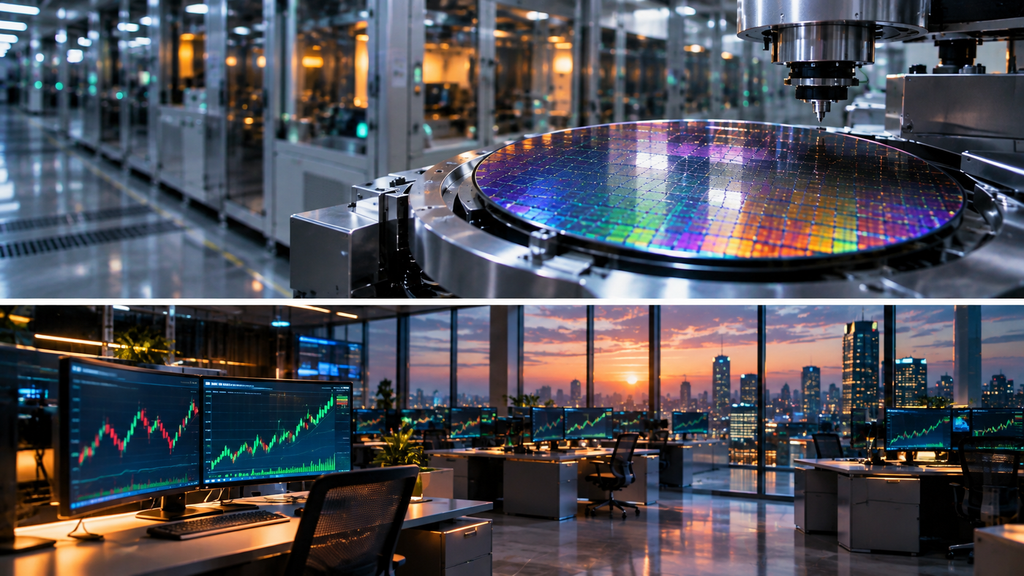
Taiwan Semiconductor Manufacturing Company (TSMC) gained 3.1% after reporting a strong October revenue performance.
The company reported October revenue growth of approximately 59.7% year-on-year, reinforcing the strength of demand for advanced semiconductor manufacturing.
Another important development came from its investment strategy. TSMC’s board approved up to $500 million in investments in Anthropic and another $500 million in OpenAI.
The decision represents a significant expansion of the company’s relationship with the AI industry.
TSMC already occupies a central position in the global AI supply chain through its manufacturing of advanced chips used in high-performance computing and artificial intelligence applications.
Its latest commitments introduce additional financial exposure to two major AI developers, creating a closer relationship between semiconductor production and the companies developing next-generation AI models.
The broader investment environment remains substantial. TSMC has indicated that demand for AI-related chips continues to exceed available manufacturing capacity, while its full-year 2026 revenue growth outlook stands at approximately 44%.
However, the expansion also raises questions about the long-term economics of AI infrastructure spending, capital efficiency and the ability of technology companies to generate sufficient returns from increasingly expensive computing investments.
Inflation Challenges Market Sentiment
While Asian technology shares recovered, the latest US inflation figures presented a more complicated picture for global financial markets.
According to the US Bureau of Labor Statistics, the Consumer Price Index increased 0.4% month-on-month in October, following a 0.6% increase in September.
Core CPI, excluding food and energy, advanced 0.3%.
Food prices increased 0.5%, while the energy index gained 0.7%.
The monthly headline reading exceeded economists’ expectations of 0.3%, reinforcing concerns that inflationary pressures remain persistent.
Importantly, the BLS did not publish a year-on-year CPI comparison because October 2025 data were unavailable following the previous year’s federal government shutdown.
For financial markets, the figures complicate expectations surrounding the Federal Reserve’s monetary policy.
Persistent inflation can limit the central bank’s ability to reduce borrowing costs. Higher interest rates also increase the discount applied to future corporate earnings, potentially putting pressure on technology companies with elevated valuations.
This creates an important distinction: strong demand for AI infrastructure does not automatically eliminate the valuation risks associated with tighter monetary conditions.
European Markets Join the Recovery
European equities also moved higher, extending the positive sentiment across international markets.
Germany’s DAX gained approximately 1%, supported by improved market sentiment and developments in the technology sector.
German inflation also provided a relatively positive signal, with the annual inflation rate easing to 2.8%.
The European market recovery highlights the broader economic significance of the AI investment cycle.
Demand for advanced computing infrastructure extends beyond semiconductor manufacturers. Data centres, electricity networks, industrial automation and specialised technology equipment are becoming increasingly important parts of the investment landscape.
European companies operating in these areas could benefit from continued infrastructure expansion.
Nevertheless, higher financing costs and uncertainty surrounding the global inflation outlook remain important considerations for capital-intensive businesses.
The Growing Divide in Global Markets
The latest market developments highlight a growing divide between corporate investment momentum and monetary conditions.
On one side, AI-related demand continues to support semiconductor manufacturers, technology suppliers and companies positioned within the global computing infrastructure ecosystem.
On the other, persistent inflation and elevated interest-rate expectations continue to challenge equity valuations and the broader financial environment.
This divergence is particularly important because the current AI investment cycle requires substantial capital commitments.
The market is increasingly focused not only on the pace of AI adoption but also on whether the revenues and earnings generated by this expansion will justify the scale of investment.
The next phase of global equity performance may therefore depend on two interconnected factors: the sustainability of AI-related corporate growth and the direction of monetary policy.
For investors following international markets, the relationship between semiconductor demand, inflation and interest rates remains one of the most important themes shaping the current market environment.
Sources
- Associated Press – Global Markets and AI Demand
- Reuters – TSMC Investment in Anthropic and OpenAI
- Euronews – European Stocks and Technology Rally
- US Bureau of Labor Statistics – October CPI
- Reuters – US Inflation Report
- Editorial Disclosure & Transparency: https://denarnifokus.com/editorial-disclosure-transparency/