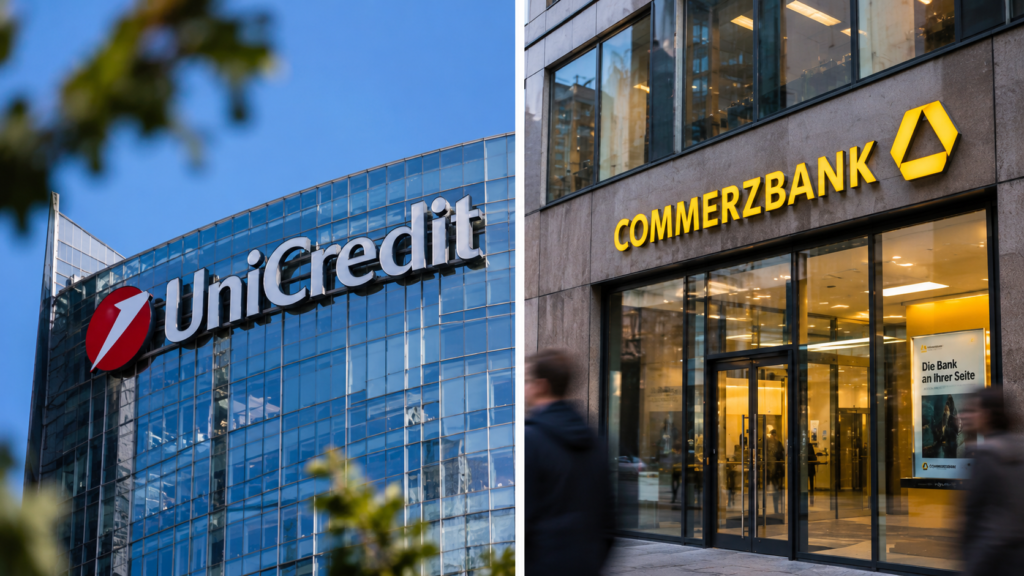
Summary: UniCredit has secured the final regulatory approval needed to complete its takeover offer for Germany’s Commerzbank, removing the last major obstacle to one of Europe’s most consequential banking transactions. The Polish financial regulator’s decision clears the way for UniCredit to increase its voting position to approximately 47.6% and begin reshaping Commerzbank’s governance, potentially changing the competitive landscape of European banking.
◉ The final outstanding regulatory approval was granted on November 26 by the KNF, Poland’s financial supervisory authority, completing the authorisation process for UniCredit’s Commerzbank offer.
◉ The transaction is expected to leave UniCredit with approximately 47.6% of Commerzbank’s voting rights, bringing the German bank under effective control.
◉ Plans to replace nine of Commerzbank’s ten shareholder representatives and appoint CEO Andrea Orcel as the German bank’s future supervisory board chairman have been proposed by UniCredit.
The Final Regulatory Hurdle Falls
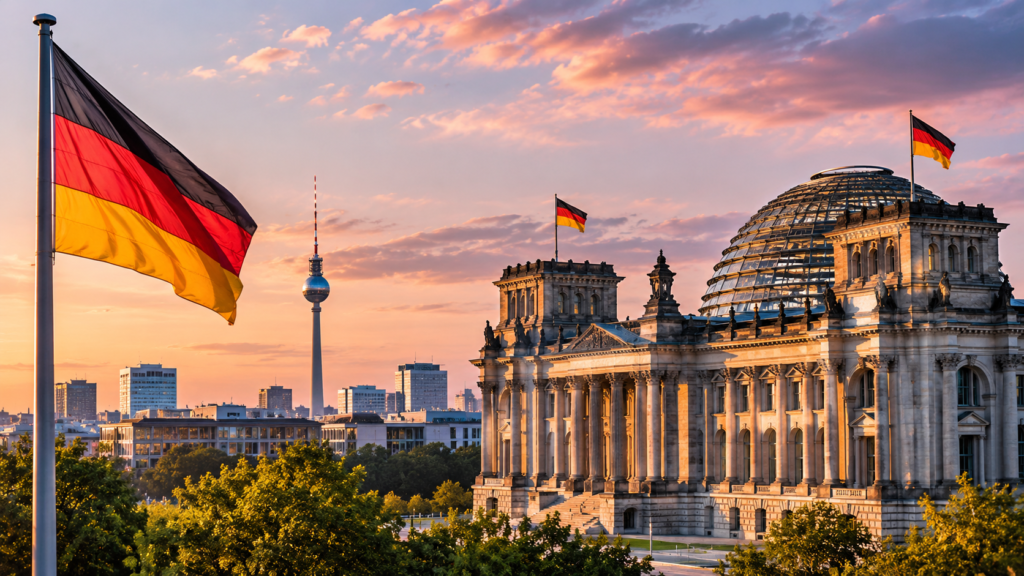
UniCredit’s long-running attempt to gain control of Commerzbank has reached a decisive milestone.
On Thursday, November 26, Poland’s Financial Supervision Authority, known as KNF, approved the transaction, providing the final regulatory clearance required for settlement of the Italian bank’s public exchange offer.
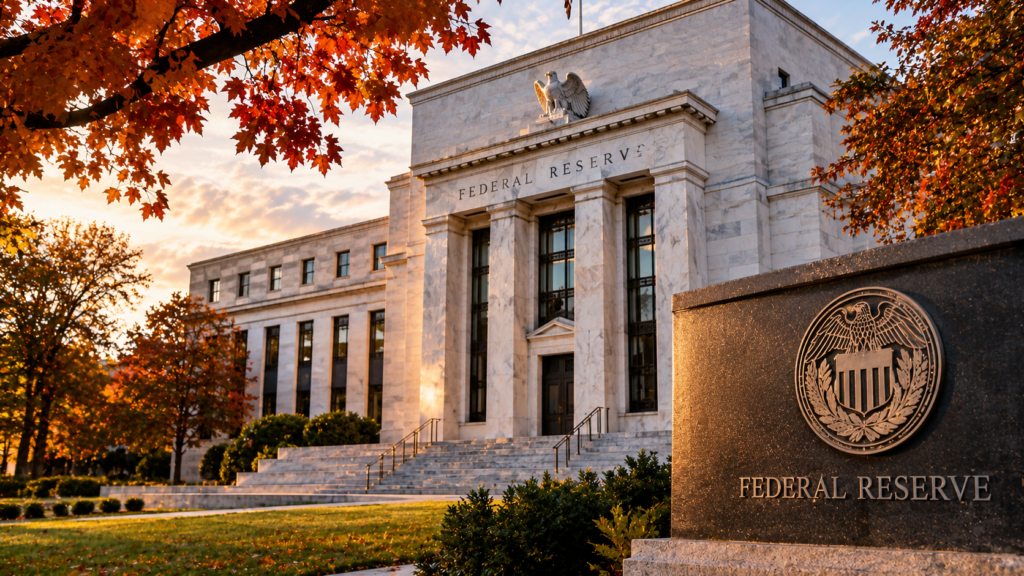
The decision follows earlier approvals from the European Commission and the US Federal Reserve.
The Polish authorisation was particularly important because Commerzbank owns approximately 69.1% of Warsaw-listed mBank, one of Poland’s significant banking institutions.
A change of control at the German parent company also affects the indirect ownership structure of its Polish subsidiary, requiring approval from the country’s financial regulator.
With this final authorisation secured, UniCredit announced that all conditions attached to its offer had been fulfilled.
The development marks the conclusion of an important regulatory phase in a takeover contest that has been developing since 2024.
A €39 Billion Banking Transaction
The transaction represents one of the most significant cross-border banking consolidation attempts in Europe in nearly two decades.
UniCredit launched its public exchange offer in May 2026, offering Commerzbank shareholders 0.485 UniCredit shares for each Commerzbank share tendered.
The offer followed an extended period of increasing exposure through derivatives and other financial instruments.
Following the latest transaction, UniCredit is expected to hold approximately 47.6% of Commerzbank’s voting rights.
This represents a substantial increase in its influence over the German institution, while remaining below the 50% threshold.
The structure is particularly relevant because exceeding certain ownership thresholds could trigger additional obligations under German and Polish takeover regulations.
UniCredit has therefore pursued a structure that provides effective control without immediately crossing the majority ownership threshold.
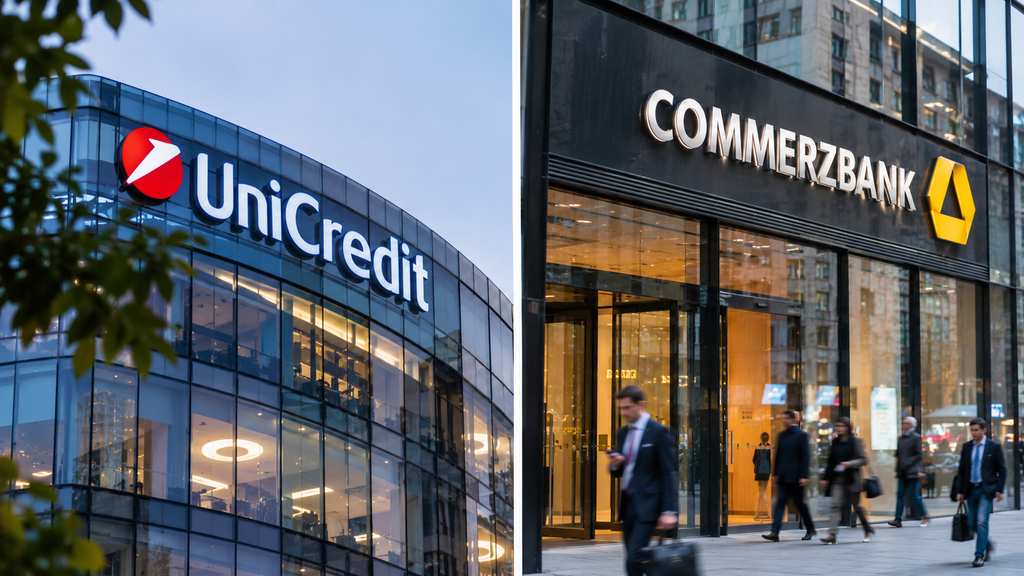
Andrea Orcel Targets Commerzbank’s Leadership
Attention is now shifting from regulatory approval towards corporate governance.
UniCredit CEO Andrea Orcel has requested an extraordinary general meeting of Commerzbank shareholders to elect new shareholder representatives to the supervisory board.
The Italian group wants to replace nine of the ten existing shareholder representatives.
Orcel himself has been proposed as the future chairman of Commerzbank’s supervisory board.
UniCredit’s proposed candidates also include senior executives responsible for finance, digital operations, risk management and human resources.
The proposal represents a potentially substantial change in the German bank’s governance structure.
Commerzbank’s current supervisory board chairman, former Bundesbank president Jens Weidmann, has emphasised the importance of maintaining stability and protecting customer interests during the transition.
The bank has indicated that it will consider UniCredit’s requests while evaluating the appropriate governance arrangements.
Germany’s Position Remains Sensitive
Despite the progress, the transaction remains politically significant.
The German government continues to hold approximately 13.3% of Commerzbank through its financial stabilisation fund, following its intervention during the 2008 financial crisis.
Berlin has previously opposed UniCredit’s approach, expressing concerns about employment, national banking interests and the future of Commerzbank’s headquarters.
However, negotiations between UniCredit CEO Andrea Orcel and the German government produced a series of commitments intended to address these concerns.
UniCredit has pledged to:
- Maintain Commerzbank’s headquarters in Frankfurt.
- Preserve its German legal structure and stock-market listing.
- Support financing for German small and medium-sized businesses.
- Maintain a substantial operational presence in Germany.
- Invest in digital technologies, artificial intelligence and employee development.
- Protect existing employment agreements and maintain dialogue with trade unions.
These commitments are important because Commerzbank plays a significant role in financing Germany’s Mittelstand, the network of small and medium-sized businesses that forms an important part of the country’s industrial economy.
The German government’s continued shareholding also provides a mechanism for monitoring the transaction’s implementation.
What Happens to Commerzbank and HVB?
One of the central strategic questions concerns the relationship between Commerzbank and UniCredit’s existing German subsidiary, HypoVereinsbank (HVB).
Both institutions have substantial operations in Germany, making potential integration an important source of future cost savings and operational efficiencies.
UniCredit has indicated that Commerzbank will remain separate from HVB until at least 2028 while the businesses are aligned.
The longer-term possibility of integration could create a significantly larger banking operation with greater scale, a broader customer base and stronger international distribution capabilities.
However, achieving these benefits will depend on regulatory requirements, operational integration and the ability to manage two established banking organisations with different corporate structures.
The future of Commerzbank’s management team and the distribution of responsibilities between the two institutions will therefore remain important developments to monitor.
December 7 Becomes the Next Important Date
The regulatory milestone now moves the transaction towards settlement.
UniCredit expects the new shares issued in exchange for tendered Commerzbank shares to be credited to shareholders’ custody accounts by December 7, 2026.
The Italian bank has also requested an extraordinary general meeting to elect new shareholder representatives to Commerzbank’s supervisory board.
The meeting is expected to become a critical step in determining the bank’s future governance.
UniCredit estimates that the transaction will absorb approximately 200–225 basis points of its Common Equity Tier 1 capital ratio, reflecting the capital commitment associated with the acquisition.
The expected financial contribution from Commerzbank will be important in assessing whether the transaction ultimately delivers sufficient returns relative to the capital deployed.
What It Means for European Banking
The significance of the transaction extends beyond UniCredit and Commerzbank.
European banking remains relatively fragmented compared with the US market, where several large institutions operate across multiple states and financial centres.
Cross-border consolidation has historically faced obstacles involving national interests, regulatory differences, employment concerns and political resistance.
UniCredit’s progress could therefore represent an important development in the broader discussion about European banking integration.
A larger banking group could potentially achieve economies of scale, improve investment capacity in technology and strengthen its ability to compete internationally.
However, the transaction also raises questions about competition, employment and the future role of national banking institutions.
For Germany, the challenge will be balancing international ownership with the preservation of a strong domestic banking presence.
For UniCredit, the challenge will be demonstrating that increased control can translate into sustainable profitability and long-term shareholder value.
The Next Chapter of European Banking Consolidation
The final Polish approval removes a major obstacle from UniCredit’s Commerzbank transaction.
The immediate focus now shifts towards settlement, supervisory board appointments and the gradual alignment of the two banking businesses.
The December 7 share-crediting deadline represents the next major operational milestone, while the proposed governance changes could reshape Commerzbank’s leadership in early 2027.
More broadly, the transaction provides an important test of whether European banking consolidation can move beyond political discussions and become a practical reality.
The outcome could influence how other major European banks approach cross-border acquisitions and the future structure of the region’s financial industry.
Sources
- UniCredit – Official Announcement: Final KNF Approval and Completion of Offer Conditions
- Reuters – UniCredit Pushes for Commerzbank Management Shake-Up
- Euronews – UniCredit Secures Final Polish Approval for Commerzbank Takeover
- The Wall Street Journal – UniCredit Clears Final Hurdle in Commerzbank Takeover
- UniCredit – European Commission Grants Unconditional Approval
- Denarni Fokus – Editorial Disclosure & Transparency