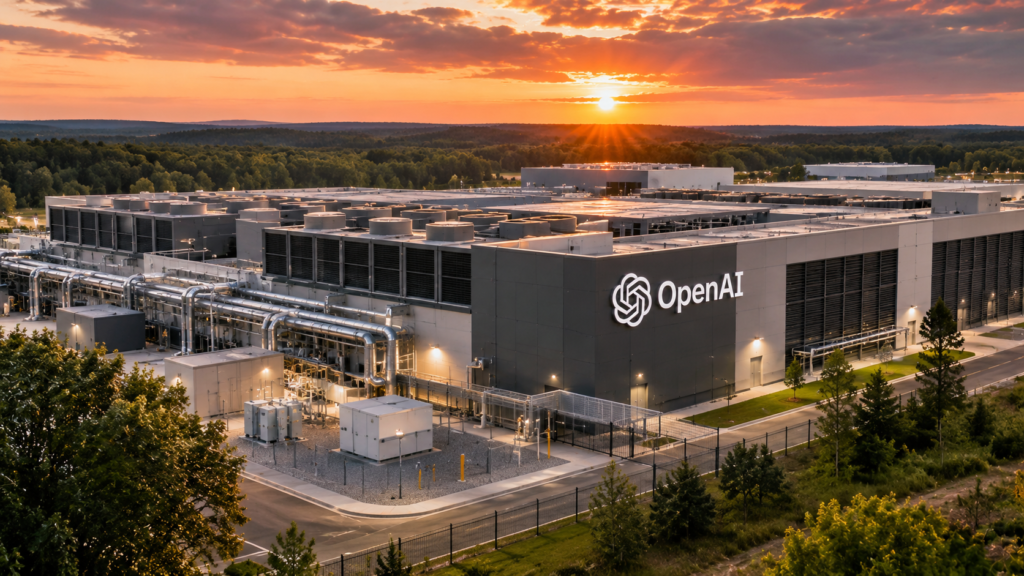
Global technology markets remain under pressure as investors reassess artificial intelligence valuations, infrastructure spending and the profitability of the AI boom. Friday’s rebound offered some relief, but steep weekly losses across the United States and Asia suggest that market confidence remains fragile.
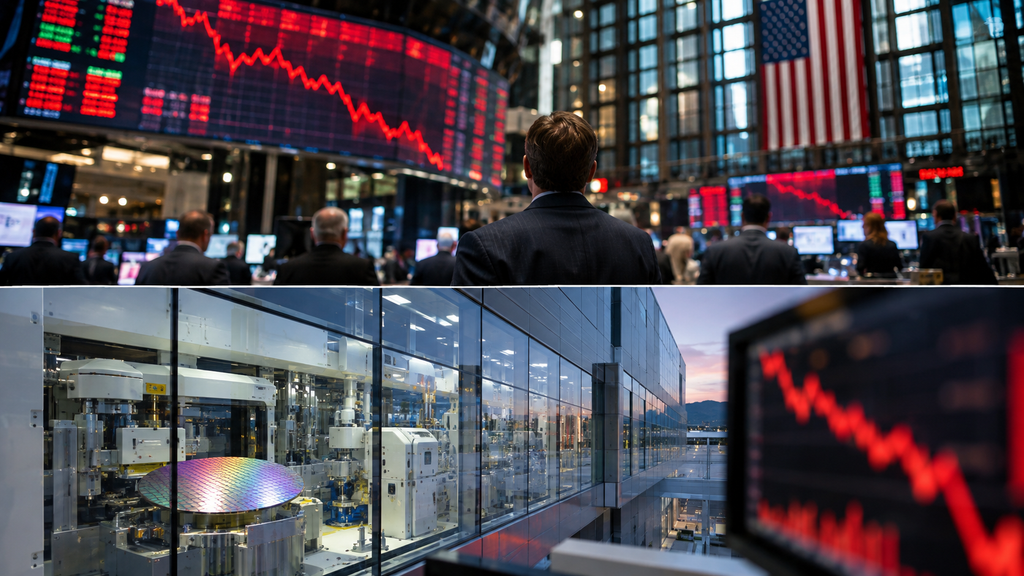
◉ The S&P 500 finished the week down 2.7%, despite a recovery in US equities during Friday’s session.
◉ Japan’s Nikkei and Taiwan’s Taiex entered technical bear markets, while South Korea’s Kospi triggered a temporary trading halt during the selloff.
◉ Investors are increasingly questioning whether massive AI infrastructure investments can deliver returns that justify current technology valuations.
◉ The correction is spreading beyond software companies, affecting semiconductor manufacturers, technology investors and businesses supplying AI infrastructure.
Wall Street’s Recovery Fails to Reverse Weekly Losses
Global technology stocks experienced another turbulent week as investors reduced exposure to some of the market’s most expensive AI-related companies.
Friday brought a partial recovery on Wall Street, with the Nasdaq 100 advancing 1.4% as technology shares attracted renewed buying interest following the previous session’s heavy losses.
However, the recovery was insufficient to reverse the broader decline. The S&P 500 ended the week down 2.7%, highlighting the extent of selling pressure across American equities.
The market reaction reflects a growing reassessment of the artificial intelligence investment cycle. For much of the past year, investors rewarded companies positioned to benefit from expanding AI infrastructure, semiconductor demand and cloud computing capacity.
That enthusiasm is now facing more demanding questions.
The central issue is increasingly whether the financial returns generated by AI will justify the enormous capital expenditure required to build data centres, purchase advanced processors and expand electricity infrastructure.
Investors are also evaluating the possibility that political developments and regulatory changes could affect the pace of future infrastructure expansion.
Asian Technology Markets Enter Bear Territory
The pressure extended well beyond the United States, with several major Asian markets experiencing particularly severe declines.
Japan’s Nikkei 225 and Taiwan’s Taiex entered technical bear markets, generally defined as declines of at least 20% from recent peaks.
South Korea experienced one of the most dramatic sessions. The Kospi fell sharply enough to trigger a temporary trading halt as selling accelerated.
The regional weakness is particularly significant because Asian markets have substantial exposure to the global semiconductor supply chain.
Companies involved in memory chips, semiconductor manufacturing equipment and advanced computing components have benefited considerably from the expansion of AI infrastructure.
Consequently, concerns about future AI spending can affect their valuations even when their current operating businesses remain profitable.
The selloff also illustrates how interconnected global technology markets have become. Changes in sentiment on Wall Street can quickly influence investment flows across Tokyo, Seoul and Taipei.
AI Investment Faces a New Reality
One of the most important developments behind the correction is the changing attitude towards AI capital expenditure.
Technology companies have committed enormous financial resources to building computing capacity. Data centres require specialised processors, advanced cooling systems, networking equipment and reliable electricity supplies.
However, infrastructure expansion does not automatically translate into proportional revenue growth.
Investors increasingly want evidence that AI-related spending can generate sustainable operating profits and acceptable returns on invested capital.
This creates a more complicated environment for companies across the technology ecosystem.
Semiconductor manufacturers face questions about the sustainability of demand. Cloud providers must demonstrate that expanding infrastructure can generate sufficient revenue. AI developers need to establish commercially viable business models capable of supporting substantial computing costs.
The distinction between companies benefiting from AI enthusiasm and those generating measurable financial returns is becoming increasingly important.
Political Risk Adds Another Layer
Market uncertainty has also been influenced by the latest US political developments.
Concerns about potentially tighter oversight of artificial intelligence and data-centre construction have added another dimension to the investment debate.
The possibility of stricter regulation, local restrictions and longer approval processes introduces uncertainty for companies planning large infrastructure projects.
This matters because the AI investment cycle depends on several interconnected factors: access to capital, electricity availability, semiconductor production and regulatory approval.
Any disruption across these areas could affect expected construction schedules and future spending.
Nevertheless, the market reaction does not necessarily indicate that demand for artificial intelligence is disappearing. Rather, investors appear to be reassessing the valuations and financial assumptions attached to the sector.
What the Selloff Means for Global Markets
The latest correction highlights a broader shift in market behaviour.
For an extended period, AI-related companies were among the strongest drivers of global equity performance. Their valuations reflected expectations of substantial long-term growth and continued expansion in computing demand.
The recent volatility suggests that investors are becoming less willing to accept ambitious growth assumptions without stronger financial evidence.
This could lead to greater differentiation between technology companies with established revenue streams and businesses whose valuations depend heavily on future AI expansion.
It also raises questions about market concentration. When a relatively small group of technology and semiconductor companies accounts for a substantial share of index performance, weakness in those stocks can have consequences far beyond the technology sector.
Friday’s recovery demonstrated that buyers remain active. However, the weekly losses and sharp movements across Asian markets indicate that uncertainty has not disappeared.
The next stage of the AI investment cycle may therefore be defined less by enthusiasm for technological potential and more by the ability of companies to convert enormous infrastructure spending into sustainable earnings.
For global equity markets, that distinction could become one of the most important investment themes of the coming months.
Sources
- Bloomberg – AI Stocks Rebound as Investors Weigh Whether Selloff Is Over
- Bloomberg – AI Selloff Drives Asian Stock Markets to Fresh Grim Milestones
- MarketWatch – Global Market Selloff and Investor Positioning
- WE News – Global Stocks Slide as AI Sell-Off Hits Markets
- Reuters – Global Markets After AI-Related Selloff
- Denarni Fokus – Editorial Disclosure & Transparency