Summary
CoreWeave shares surged following 168% annual revenue growth and stronger-than-expected quarterly results. The AI cloud provider raised its 2026 outlook, reported a $132.5 billion revenue backlog and outlined a path to adjusted profitability in the first half of 2028. However, rising capital expenditure and debt remain significant challenges.
◉ Revenue increased 168% year-on-year to $3.66 billion in the third quarter of 2026.
◉ Revenue backlog reached $132.5 billion, up 138% year-on-year, highlighting strong contracted demand.
◉ Management expects adjusted net income to turn positive in the first half of 2028.
◉ Capital expenditure reached $14.5 billion during the quarter, while full-year spending is projected at $37–39 billion.
◉ CoreWeave shares gained more than 10% in premarket trading on November 11 following the results.
Revenue Growth Accelerates
CoreWeave delivered one of the strongest quarterly revenue growth performances in the AI infrastructure sector, reporting third-quarter 2026 revenue of $3.66 billion, compared with $1.37 billion in the same period last year.
The 168% annual increase reflects rapidly expanding demand for specialised cloud computing capacity used to train and operate artificial intelligence models.
The company also reported adjusted operating income of $379 million, representing a 10% margin. This compares with $217 million in the third quarter of 2025.
The improvement suggests that CoreWeave is beginning to benefit from operating leverage as its infrastructure expands and customer utilisation increases.
However, profitability remains more complicated when measured using conventional accounting standards. The company reported a GAAP net loss of $709 million, compared with $110 million a year earlier. Net interest expense reached $846 million.
This distinction is important. Strong revenue growth and improving adjusted operating margins do not yet translate into positive net earnings.
Backlog Signals Strong Demand
One of the most significant figures in the quarterly report was CoreWeave’s revenue backlog.
The company reported $132.5 billion in contracted future revenue, representing a 138% increase year-on-year.
This provides substantial visibility into future business activity, although backlog should not be interpreted as guaranteed revenue or immediate cash flow. Delivery schedules, customer commitments and infrastructure availability remain important variables.
Management also indicated that demand for its AI infrastructure is approximately ten times the company’s available capacity.
The gap between customer demand and available computing resources illustrates the scale of the current AI infrastructure expansion.
For CoreWeave, the challenge is increasingly about how quickly additional capacity can be financed, constructed, powered and delivered.
Infrastructure Investment Expands
CoreWeave’s growth strategy requires substantial capital.
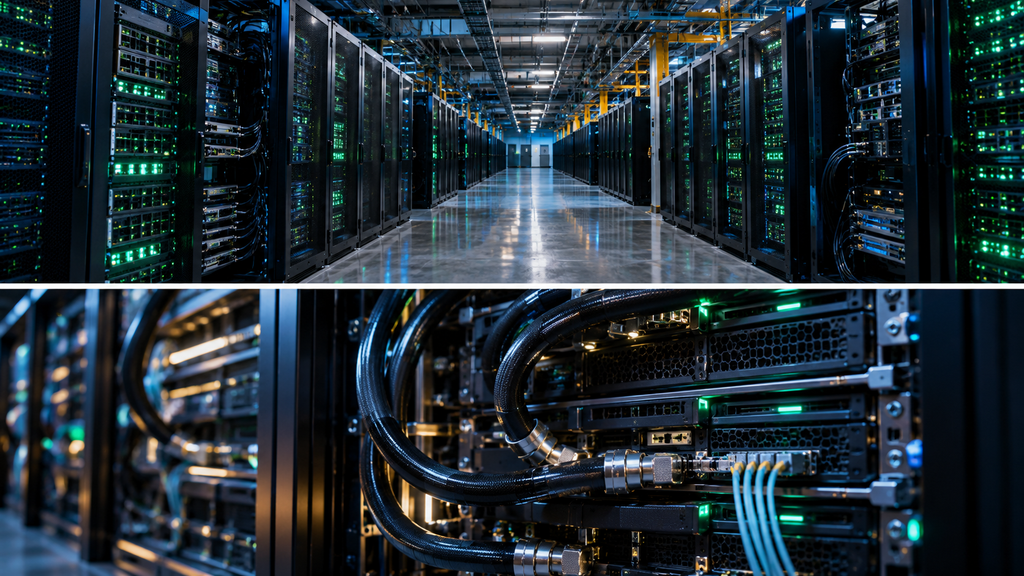
Capital expenditure reached $14.5 billion in the third quarter, reflecting investment in data centres, advanced computing systems, networking and supporting infrastructure.
The company raised its full-year 2026 capital expenditure outlook to $37–39 billion.
It also reported more than 4.6 gigawatts of contracted power and approximately 1.7 gigawatts of active power.
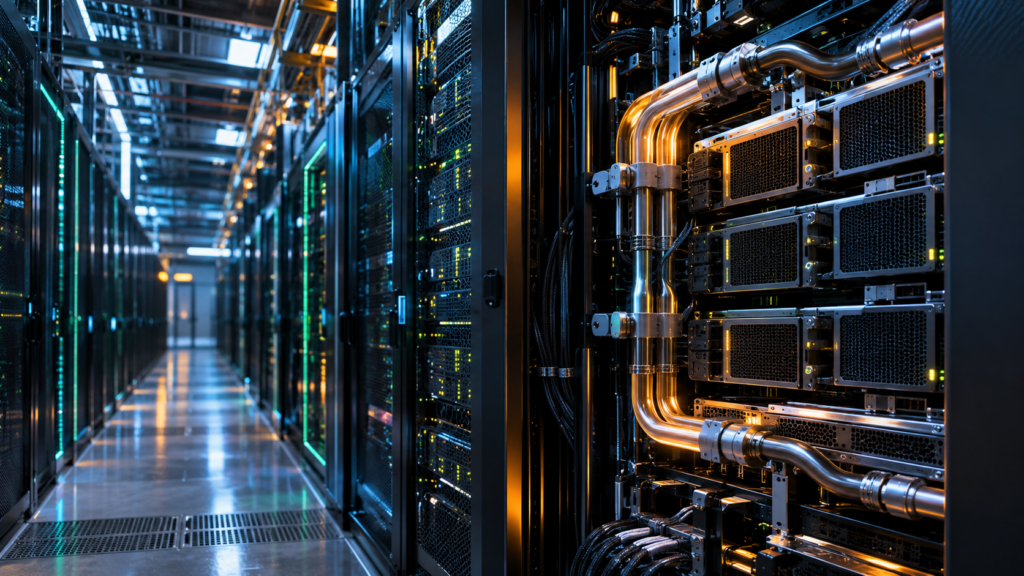
These figures demonstrate the physical scale of the business. AI cloud infrastructure is not simply a software operation: it requires access to electricity, specialised hardware, cooling systems, land and long-term financing.
CoreWeave has also continued expanding its relationship with NVIDIA.
Its earlier deployment of NVIDIA GB300 NVL72 systems established its position as an early provider of next-generation AI computing infrastructure. More recently, the company brought NVIDIA Vera Rubin NVL72 systems into production, with initial workloads delivering 4.8 times greater token throughput than the previous GB200 NVL72 platform.
This progression highlights how quickly the competitive landscape is evolving and why access to advanced computing hardware remains strategically important.
Profitability Target: 2028
Despite rapid expansion, CoreWeave remains under pressure to demonstrate that its infrastructure investments can generate sustainable financial returns.
Management outlined a target of achieving positive adjusted net income in the first half of 2028, with profitability expected to continue throughout that year.
The company is relying on several sources of financing to support its expansion, including customer prepayments, operating cash flow and debt financing.
Management expects approximately $9 billion in customer prepayments and deposits over the next three months.
The company also raised its 2026 revenue guidance to $13.0–13.3 billion and expects to exit the year with annualised run-rate revenue of $20–21 billion.
These projections indicate that management expects demand to remain strong, but they also underline the significant financial commitments required to maintain growth.
Debt and Financing Risks
The main concern surrounding CoreWeave is the relationship between infrastructure expansion, borrowing costs and future cash generation.
Total debt reached approximately $46.9 billion at the end of September.
Net interest expense of $846 million during the third quarter demonstrates how financing costs can absorb a substantial portion of operating performance.
The company’s strategy depends on converting its contracted backlog into delivered computing capacity and ultimately into operating cash flow.
Several factors could complicate that process:
- Delays in data-centre construction and electricity connections.
- Higher borrowing costs and refinancing requirements.
- Changes in demand for advanced AI computing.
- Increasing competition from hyperscale cloud providers.
- Faster hardware replacement cycles and depreciation costs.
The $132.5 billion backlog provides significant commercial visibility, but it does not eliminate execution or financing risk.
The Bigger AI Infrastructure Picture
CoreWeave’s results offer an important indication of where the artificial intelligence industry is heading.
The investment cycle is moving beyond the initial excitement surrounding AI models and applications. Increasingly, financial attention is shifting towards the physical infrastructure required to support them.
GPU clusters, high-speed networking, liquid cooling, electricity capacity and specialised cloud platforms are becoming essential components of the global AI economy.
CoreWeave occupies an interesting position within this transition. It benefits from direct demand for computing capacity while simultaneously carrying substantial infrastructure and financing requirements.
Its latest results demonstrate that demand is translating into significant revenue growth. The next challenge is proving that this growth can generate sustainable earnings and sufficient cash flow.
For financial markets, CoreWeave is becoming an important case study in the economics of the AI investment cycle: whether unprecedented demand for computing power can ultimately justify the enormous capital commitments required to deliver it.
Sources
- Reuters – CoreWeave targets 2028 profitability
- Reuters – AI infrastructure results lift US futures
- CoreWeave – Third Quarter 2026 Results
- SEC – CoreWeave Q3 2026 Filing
- CoreWeave – NVIDIA GB300 NVL72 Deployment
- CoreWeave – Vera Rubin Production Deployment
- Editorial Disclosure & Transparency: https://denarnifokus.com/editorial-disclosure-transparency/