Summary: Nvidia shares remain under pressure as investors reassess the risks surrounding the artificial intelligence investment boom. A possible credit-rating downgrade, concerns about corporate governance and increasingly expensive AI infrastructure financing are adding to uncertainty, despite signs of stabilisation in European technology stocks.
◉ Their shares declined 3.9% on November 25, extending a broader technology-sector correction that has intensified since October.
◉ S&P Global Ratings placed Nvidia’s AA credit rating on CreditWatch Negative, citing concerns about management, board independence and corporate governance.
◉ Rising borrowing costs, complex financing arrangements and questions about the profitability of AI infrastructure investments are creating additional pressure across the technology ecosystem.
Nvidia’s Correction Deepens
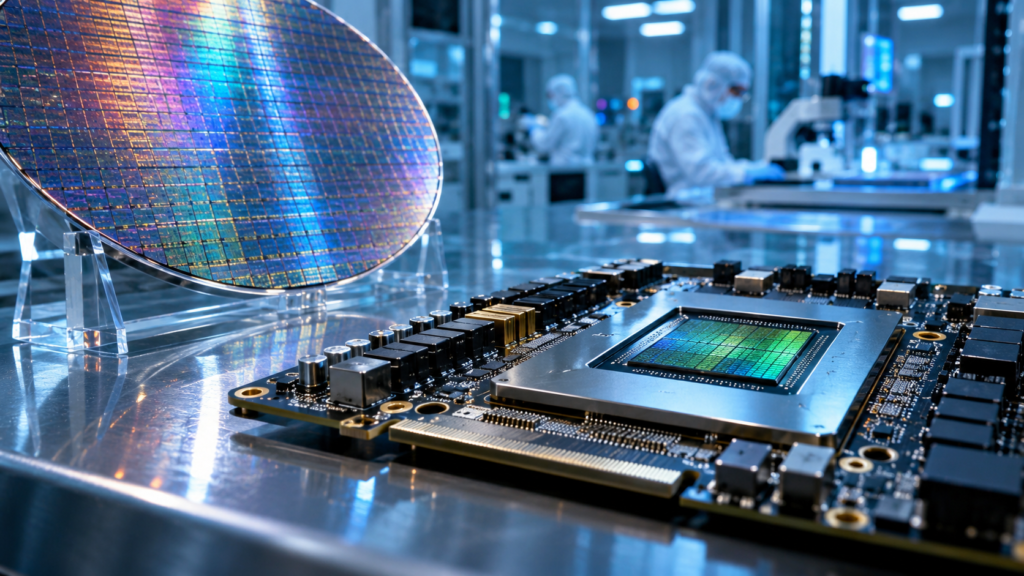
Nvidia remains at the centre of the global artificial intelligence investment cycle, but its shares are increasingly exposed to changing investor expectations.
The semiconductor giant declined 3.9% during Wednesday’s trading session, following an earlier intraday fall of approximately 8.5%.
The broader correction reflects a shift in market sentiment towards companies associated with artificial intelligence infrastructure.
Investors are no longer evaluating the sector exclusively through revenue growth, semiconductor demand and technological development. Increasing attention is being directed towards capital expenditure, financing structures and the ability of AI businesses to generate sustainable returns.
The Nasdaq-100 briefly approached a 20% decline from its October record during Wednesday’s session before recovering part of its losses.
Although the index ultimately closed 0.6% lower, the intraday movement demonstrated how fragile sentiment has become.
The latest pressure also extends beyond Nvidia, affecting semiconductor manufacturers, cloud computing providers and companies building specialised AI data centres.
S&P Places Nvidia on Downgrade Watch
Another important development concerns Nvidia’s credit standing.
S&P Global Ratings placed the company’s long-term credit rating on CreditWatch Negative on November 25, indicating that a downgrade is possible within the next 90 days.
Nvidia currently holds an AA rating, reflecting a very strong capacity to meet its financial obligations.
The agency’s concerns primarily relate to corporate governance following the departure and subsequent reinstatement of chief executive Jensen Huang.
S&P questioned aspects of board independence, executive oversight and succession planning, arguing that Nvidia’s governance framework may not have developed sufficiently alongside the company’s rapid expansion.
A potential downgrade is expected to be limited to one notch under the agency’s current assessment, unless additional developments materially affect Nvidia’s reputation or business prospects.
Importantly, this is not a downgrade resulting directly from deteriorating operating performance or an inability to service debt.
Nevertheless, the development introduces another consideration for investors assessing the company’s financial position and its role within the wider AI ecosystem.
The Financing Problem Behind AI Growth
Beyond Nvidia’s individual credit rating, a broader concern is emerging across the artificial intelligence industry: how the next phase of infrastructure expansion will be financed.
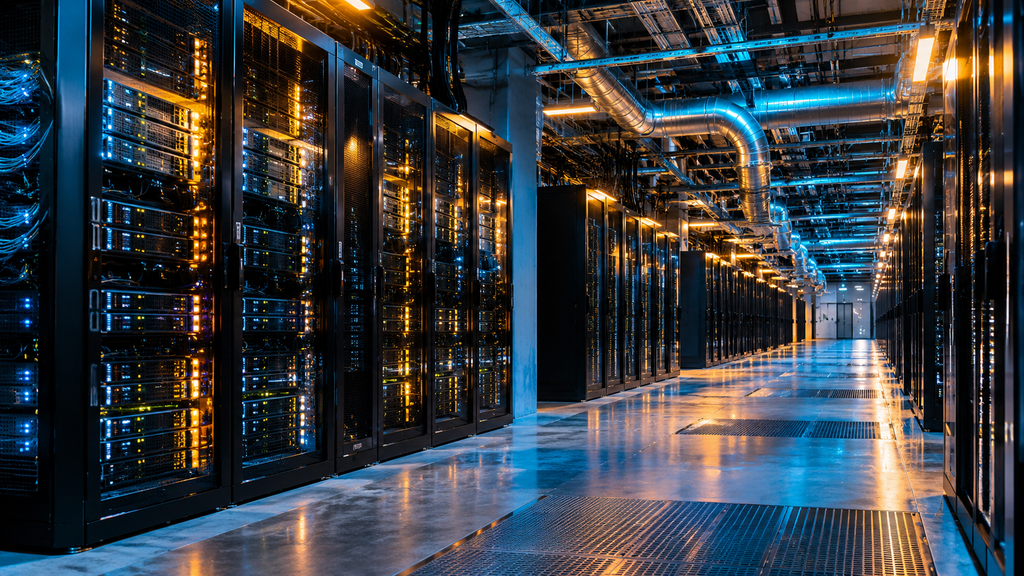
Technology companies are committing enormous amounts of capital to data centres, advanced processors, networking equipment and electricity infrastructure.
Much of this expansion is being supported by borrowing, private credit, infrastructure partnerships and complex financing arrangements.
The consequences are becoming increasingly visible in credit markets.
CoreWeave, an Nvidia-backed AI computing provider, has experienced significant pressure on its debt. Yields on its 2031 bonds approached 18%, reflecting growing investor concerns about the financial risks associated with rapid infrastructure expansion.
Credit-default swap spreads for several technology companies, including Oracle, Alphabet, SpaceX and CoreWeave, also reached elevated levels.
These developments suggest that investors are beginning to distinguish between companies with established cash-generating businesses and infrastructure providers whose growth depends heavily on continued access to external financing.
For Nvidia, the distinction is particularly important.
The company supplies the processors that power much of the AI industry, but it also participates in financing arrangements designed to accelerate the development of computing infrastructure.
This creates a more interconnected financial ecosystem in which chip manufacturers, cloud providers, AI developers and infrastructure investors increasingly depend on one another.
Circular Financing Raises Questions
One of the most closely watched issues is the relationship between AI investment and financing.
Nvidia supplies advanced processors to cloud computing companies and infrastructure providers. Some of these businesses then use external financing to purchase additional Nvidia equipment and expand their computing capacity.
The arrangement can accelerate industry growth, but it also creates questions about the sustainability of demand.
If AI customers generate sufficient revenue from their computing infrastructure, the investment cycle can support continued expansion.
However, if demand develops more slowly than expected, highly leveraged infrastructure providers could face difficulties servicing debt and financing additional capacity.
This is particularly relevant for companies with large construction commitments, substantial borrowing requirements and limited operating cash flow.
The concern is not necessarily that AI demand will disappear. Rather, the financial returns may take longer to materialise than the capital markets currently expect.
European Technology Stocks Recover
Thursday’s European trading session has offered some relief to technology investors, with selected technology shares recovering from recent declines.
However, a regional rebound does not necessarily indicate that the broader AI valuation correction has ended.
European technology companies operate within the same international investment environment as US semiconductor manufacturers and cloud infrastructure providers.
Changes in financing conditions, global technology spending and investor risk appetite can therefore influence both markets.
The distinction between a short-term price recovery and an improvement in underlying fundamentals remains important.
Investors will continue examining earnings expectations, capital expenditure plans and the profitability of AI-related investments.
The Next Test for Nvidia
Three developments will be particularly important for Nvidia and the broader AI investment cycle.
1. Credit-rating review
S&P’s assessment over the coming 90 days could influence perceptions of Nvidia’s corporate governance and credit risk. Any rating change would also be relevant to lenders and financing partners.
2. AI infrastructure profitability
Investors will increasingly demand evidence that spending on data centres, processors and computing capacity is translating into sustainable revenue and cash flow.
3. Financing conditions
The cost and availability of capital for AI infrastructure providers will help determine whether the current expansion can continue at its existing pace.
AI Growth Meets Financial Reality
The artificial intelligence industry remains one of the most significant structural investment themes in global markets.
Nvidia continues to occupy a central position in the development of advanced computing infrastructure. However, its recent share-price performance demonstrates that technological leadership does not eliminate financial-market risks.
The current correction is increasingly about the economics of the AI investment cycle: how much capital is required, how that capital is financed and when the resulting infrastructure will generate sufficient returns.
The potential S&P rating downgrade adds a separate corporate governance dimension to the debate.
For global markets, the next phase of AI investment may therefore be determined not only by technological innovation but also by financial discipline, credit quality and the ability of companies to turn infrastructure spending into sustainable earnings.
Sources
- Reuters – AI Stock Rout Deepens but Damage Is Limited by Afternoon Bounce (25 November 2026).
- Reuters – S&P Global Places Nvidia Rating on CreditWatch Negative (25 November 2026).
- Reuters – AI Credit Risks Increase as Investors Question Infrastructure Financing (25 November 2026).
- TechCrunch – S&P Considers Nvidia Credit Downgrade Over Governance and Key-Man Risks (25 November 2026).
- S&P Global Ratings – AI Infrastructure Investment to Exceed $1.3 Trillion by 2027 (27 August 2026).
- Denarni Fokus – Editorial Disclosure & Transparency.