Summary: German business confidence improves for a seventh consecutive month, with the Ifo Business Climate Index reaching 90.6 in November. Stronger expectations, government investment and improving exports are supporting hopes of an economic recovery, although weakness in manufacturing and construction highlights the challenges facing Europe’s largest economy.
◉ Germany’s Ifo Business Climate Index rises to 90.6 in November, its highest level since spring 2023.
◉ The business expectations index advances to 91.9, while the assessment of current conditions improves to 89.4.
◉ Services and trade strengthen, but manufacturing and construction remain weaker, exposing the uneven nature of Germany’s recovery.
Business Confidence Reaches Three-Year High
Germany’s economic outlook continued to improve in November, extending a recovery in business confidence that has now lasted seven consecutive months.
The Ifo Business Climate Index increased to 90.6 points from a revised 90.1 in October, exceeding the Reuters consensus forecast of 90.5.
The latest reading represents its highest level since spring 2023 and provides another indication that Germany’s prolonged period of economic stagnation could be approaching a turning point.
The improvement was visible in both components of the survey. The assessment of current business conditions increased to 89.4 from 88.8, while the expectations index advanced to 91.9 from 91.5.
The expectations component is particularly important because it reflects how companies view the next six months of economic activity.
The continued improvement suggests that businesses are becoming more confident about future orders, investment conditions and domestic demand.
However, the index remains below its 2015 benchmark of 100, indicating that overall business sentiment has not yet returned to historically stronger levels.
Government Spending Supports Recovery
One of the most important drivers behind Germany’s improving outlook is the government’s expansion of public investment.
Large-scale spending plans covering infrastructure, defence and transport are expected to provide additional support for industrial activity and domestic demand.
After several years of weak economic performance, public investment is becoming an increasingly important source of growth.
Germany’s economy expanded by 0.2% in the third quarter of 2026, marking another period of positive quarterly growth.
Economic advisers have also become more optimistic. The government’s economic advisers have more than doubled their 2026 growth forecast to 1.3%, while projecting expansion of approximately 1% in 2027.
The improvement is also supported by stronger export expectations and the international investment cycle surrounding artificial intelligence.
German manufacturers supplying electronics, industrial components and specialised equipment could benefit from increased global spending on data centres and technology infrastructure.
Nevertheless, the recovery remains partly dependent on government expenditure rather than a broad-based improvement across private-sector activity.
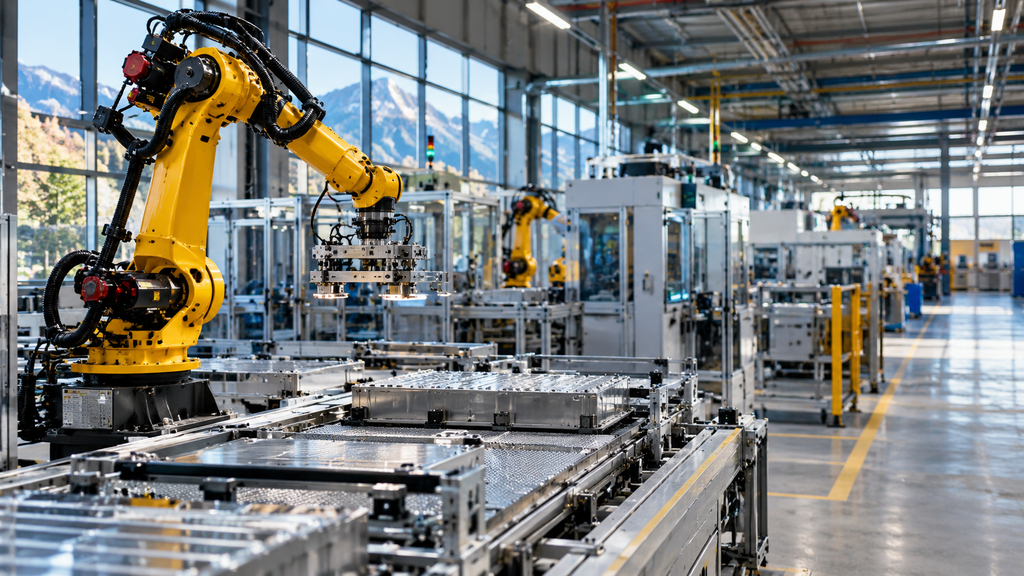
Manufacturing Still Faces Challenges
Despite the stronger headline figure, the latest Ifo survey reveals significant differences between Germany’s economic sectors.
Manufacturing sentiment weakened in November after six consecutive monthly increases. Expectations returned to negative territory, while assessments of current conditions remained broadly unchanged.
Consumer goods producers reported particularly weaker sentiment.
Construction also experienced a slight deterioration, mainly reflecting less favourable assessments of current business conditions.
These developments matter because manufacturing and construction have traditionally played central roles in Germany’s economic model.
High energy costs, international competition, weak industrial demand and structural investment requirements continue to challenge companies operating in these sectors.
The contrast with services and trade is particularly notable.
Both sectors reported improving business conditions and expectations, with logistics also continuing its recovery.
The latest figures therefore suggest that Germany’s economic improvement is becoming more visible, but has not yet reached all major industries.
Exports and AI Investment Offer Support
International demand could become another important contributor to Germany’s economic recovery.
The global expansion of artificial intelligence infrastructure is creating new demand for specialised industrial equipment, electrical components, automation systems and engineering services.
German companies have significant exposure to these industries, particularly through their industrial supply chains.
The country’s manufacturing base also remains closely connected to international trade, meaning stronger export demand could improve production and investment activity.
However, Germany continues to face considerable structural challenges, including labour shortages, demographic pressures and the need to modernise infrastructure.
The ability of companies to translate improving international demand into higher productivity and sustainable profitability will remain an important factor in determining the strength of the recovery.
Inflation and Energy Remain Risks
The improving economic outlook is not without significant risks.
Inflation remains an important concern, particularly as Germany approaches the beginning of 2027.
The Bundesbank expects price pressures to increase early next year as temporary measures, including a fuel rebate, expire.
Energy markets represent another source of uncertainty.
Lower European natural gas storage levels could expose the economy to higher energy costs if colder winter conditions increase demand or international supply disruptions intensify.
This would be particularly challenging for energy-intensive manufacturers that are already operating under pressure.
Monetary policy also remains relevant. Expectations surrounding further European Central Bank tightening could increase financing costs and limit the recovery in investment and consumption.
The combination of fiscal expansion, energy uncertainty and monetary tightening creates a complicated environment for German businesses.
What Comes Next for Germany?
November’s Ifo survey provides another positive signal for Europe’s largest economy, but the composition of the improvement deserves attention.
Seven consecutive months of stronger confidence indicate that expectations are becoming more constructive. However, manufacturing and construction have yet to participate fully in the recovery.
The coming months will show whether government investment, export growth and improving services activity can translate into a broader economic expansion.
For European markets, Germany’s performance is particularly important because its industrial supply chains are deeply connected to neighbouring economies.
A sustained recovery could support manufacturing, logistics, capital goods and regional trade across the euro area.
For now, the latest business confidence figures suggest that Germany is moving away from stagnation, although the transition towards stronger and more balanced growth remains incomplete.
Sources
- Bloomberg – German Business Outlook Improves for Seventh Straight Month The Edge Malaysia
- Reuters – German Ifo Business Sentiment Rises for Seventh Consecutive Month Reuters
- Ifo Institute – November 2026 Business Climate Report ifo Institute
- The Wall Street Journal – German Business Sentiment Rises Again The Wall Street Journal
- ING Think – German Business Confidence Continues to Improve ING THINK
- Editorial Disclosure & Transparency