Summary: Newly released ECB meeting minutes reveal that a large number of policymakers were already prepared to raise interest rates in October. With energy-driven inflation remaining elevated, markets are increasingly focused on a possible December rate increase and its consequences for European businesses, consumers and financial markets.
◉ A large number of ECB policymakers could have supported an interest rate increase at the October meeting, according to newly released minutes.
◉ The ECB maintained its deposit rate at 2.50%, but the December 17 meeting is emerging as a potential turning point for monetary policy.
◉ Rising energy prices, persistent inflation risks and uncertainty surrounding wage growth are complicating the outlook for the eurozone economy.
A More Divided ECB Emerges
The European Central Bank’s latest meeting minutes have revealed a stronger appetite for monetary tightening than the October decision initially suggested.
The account of the October 28–29 Governing Council meeting, published on November 26, shows that a large number of policymakers believed the incoming economic data already justified another interest rate increase.
Although the Governing Council ultimately decided to maintain its three key interest rates, the discussion revealed that the decision to wait was not necessarily a reflection of confidence that inflation pressures would disappear.
Instead, policymakers were balancing the risks of acting too late against the possibility of tightening monetary conditions excessively while the full economic consequences of the energy shock remained uncertain.
The distinction is important. The October decision represented a pause in the tightening process rather than a clear indication that the ECB had reached the end of its monetary policy cycle.
Energy Prices Are Changing the Inflation Outlook
Energy has become one of the most important variables influencing the ECB’s latest assessment.
Renewed geopolitical tensions in the Middle East have pushed oil and natural gas prices higher, increasing the possibility that inflation could remain above the central bank’s 2% target for longer than previously anticipated.
Eurozone headline inflation accelerated to 3.8% in September, compared with 3.2% in August. Energy inflation increased substantially, reaching 18.9%.
The ECB’s October discussions highlighted concerns that the energy shock could become larger and more persistent than anticipated in its earlier economic projections.
Higher energy costs can influence inflation through several channels. Beyond household electricity and fuel bills, businesses face higher transportation, production and operating expenses.
If companies begin passing these costs to consumers, the initial energy shock could gradually spread into other areas of the economy.
This is precisely the development policymakers are attempting to prevent.
December Becomes the Main Policy Focus
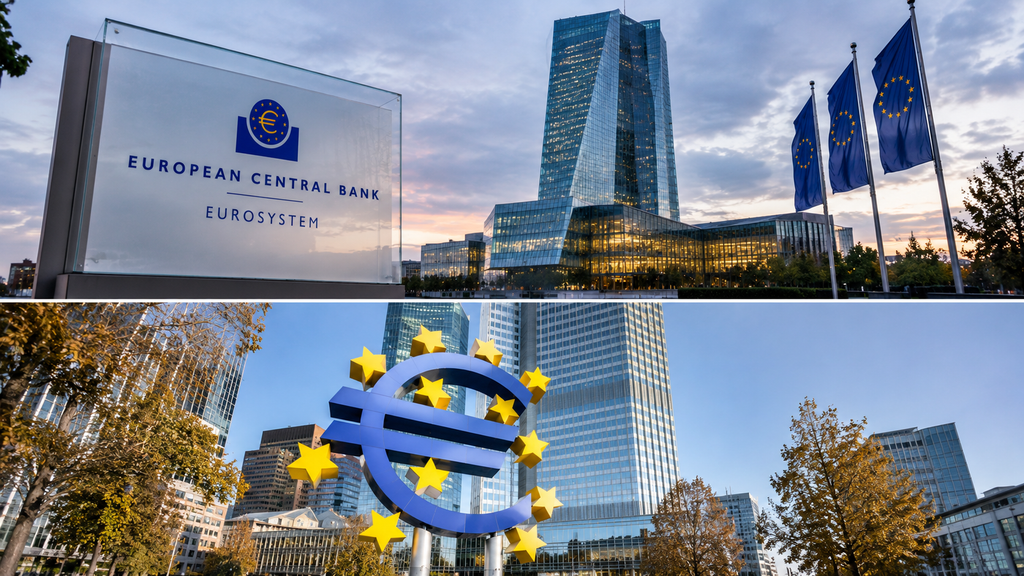
The next major monetary policy decision is scheduled for December 17.
Market participants are increasingly anticipating another 25-basis-point increase, which would lift the ECB deposit facility rate from 2.50% to 2.75%.
However, the longer-term outlook remains considerably less certain.
The ECB is expected to receive updated economic projections in December, extending the forecast horizon to 2029. These projections will provide additional information about inflation, economic growth and the transmission of higher interest rates.
Wage negotiations will also remain particularly important. Although policymakers have not identified significant second-round inflation effects in wages so far, future wage agreements could influence the persistence of domestic price pressures.
The ECB therefore faces a difficult decision: respond quickly to prevent inflation expectations from becoming entrenched, or wait for more evidence that the energy shock is translating into broader inflation.
Why Policymakers Chose to Wait
Despite the hawkish arguments, the Governing Council ultimately reached agreement on maintaining all three key interest rates unchanged.
The deposit facility rate remained at 2.50%, the main refinancing operations rate at 2.65% and the marginal lending facility rate at 2.90%.
The minutes reveal that policymakers supporting a pause placed considerable importance on the absence of significant second-round inflation effects.
Underlying inflation had remained broadly stable, while wage developments had not yet demonstrated a material response to higher energy costs.
Another consideration was the tightening of financial conditions since September. Higher bond yields were already increasing borrowing costs across the eurozone, potentially reducing economic activity and future inflation.
The central bank therefore faced a difficult balance: tightening too early could place additional pressure on economic growth, while waiting too long could allow energy-driven inflation to become embedded in the wider economy.
Importantly, all Governing Council members ultimately supported holding rates unchanged in October, despite the substantial support for an alternative decision.
Markets Increasingly Expect December Action
The December 17 meeting is now attracting considerable attention.
Several ECB policymakers have indicated that another 25-basis-point increase is likely, which would take the deposit facility rate to 2.75%.
However, the outlook beyond December remains uncertain.
Energy prices have retreated from their October highs, reducing some immediate inflation pressure. At the same time, the labour market is showing softer conditions than during previous inflationary episodes.
Wage negotiations will be particularly important in determining whether higher energy costs translate into sustained domestic inflation.
The ECB must also consider the consequences of higher borrowing costs for heavily indebted eurozone economies, particularly France, where government bond yields have experienced significant pressure.
What It Means for European Markets
The possibility of another ECB rate increase has implications extending well beyond monetary policy.
Government bonds: Expectations of higher interest rates could maintain upward pressure on short-term European bond yields, while fiscal concerns may contribute to volatility in longer maturities.
Euro: A more restrictive ECB stance could support the euro against currencies whose central banks are expected to maintain lower interest rates.
European equities: Higher financing costs could create additional pressure on companies with substantial debt exposure, particularly in interest-sensitive sectors such as real estate and utilities.
Households and businesses: Higher borrowing costs could affect mortgage financing, corporate investment and consumer spending, potentially slowing economic activity.
For European investors, the important distinction is that the ECB is not simply responding to current inflation. It is attempting to prevent today’s energy shock from becoming tomorrow’s persistent inflation problem.
A Critical December Decision
The October minutes reveal a central bank that is more concerned about inflation risks than its decision to hold rates might initially suggest.
The December meeting will provide a clearer indication of how policymakers interpret the latest energy prices, wage developments and economic projections.
A further increase would reinforce the ECB’s commitment to price stability, but it would also introduce additional challenges for an economy already facing higher financing costs and geopolitical uncertainty.
The debate is therefore moving beyond whether another rate increase is possible. The more important question is how much additional tightening the eurozone economy can absorb without significantly weakening growth.
Sources
- Investing.com – ECB Minutes Show Large Number of Members Could Have Backed Rate Hike
- Reuters – ECB Already Had Large Support for Rate Hike in October
- European Central Bank – Official October 28–29 Meeting Minutes
- Bundesbank – November 2026 Monetary Policy Report
- Editorial transparency: Denarni Fokus Editorial Disclosure & Transparency