Summary: European gas markets are entering winter with storage levels significantly below seasonal norms, increasing the region’s exposure to colder weather, supply disruptions and competition for LNG. Although Dutch TTF prices declined to approximately €88.10/MWh in the November 26 morning report, the underlying supply situation remains fragile, particularly in Germany and other major Northwest European markets.
◉ EU gas storage stood at approximately 67.8%, compared with a five-year seasonal average of 86.3%, according to GasRadar’s November 26 assessment.
◉ Germany’s storage level was approximately 55.2%, highlighting the vulnerability of Europe’s largest gas-consuming economy.
◉ Dutch TTF gas declined 3.89% to €88.10/MWh, but lower prices have not eliminated the structural risks facing European energy supplies this winter.
Europe’s Winter Buffer Is Under Pressure
Europe is entering the 2026–2027 heating season with significantly less natural gas in storage than during a typical year.
The latest reported figures show EU storage at approximately 67.8% of working capacity, equivalent to around 768 terawatt-hours of stored gas.
This compares with a five-year seasonal average of approximately 86.3%, representing a substantial deficit of around 18.5 percentage points.
The difference is important because storage provides Europe with a critical buffer against fluctuations in pipeline deliveries, LNG imports and seasonal consumption.
During winter, gas demand increases as households require heating and electricity producers rely on natural gas to balance power generation.
When inventories are already below historical norms, the market becomes more sensitive to unexpected disruptions.
The issue is not necessarily whether Europe has sufficient gas to meet its immediate needs. It is whether the region can maintain adequate supply flexibility throughout a potentially difficult winter.
Germany Emerges as a Particular Concern
Germany’s position deserves particular attention.
The country’s reported storage level stood at approximately 55.2%, significantly below the EU aggregate.
Germany is Europe’s largest economy and one of its most important natural gas consumers. Its industrial base includes energy-intensive industries such as chemicals, steel, manufacturing and automotive production.
Lower inventories increase the importance of reliable pipeline imports, LNG deliveries and cross-border infrastructure.
The Netherlands, another important component of Northwest Europe’s gas market, also reported relatively low storage levels at approximately 58%.
These figures highlight an important geographical imbalance.
Some European countries have substantially stronger inventories, but the largest storage buffers are not necessarily located in the markets facing the greatest industrial and heating demand.
This makes regional infrastructure, transportation capacity and cross-border cooperation particularly important.
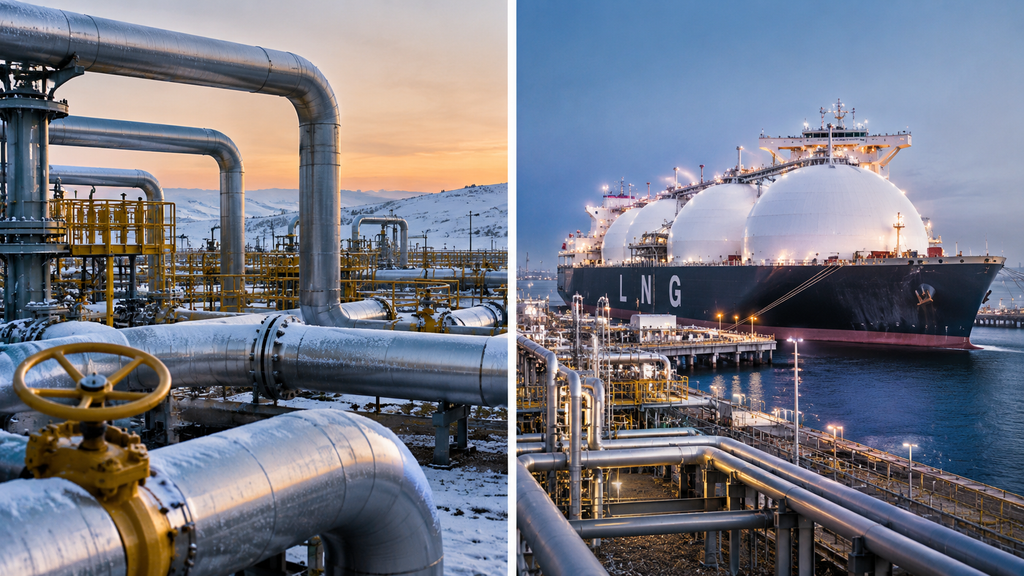
TTF Prices Decline Despite Supply Concerns
The latest movement in European wholesale gas prices presents an interesting contradiction.
The Dutch Title Transfer Facility (TTF), Europe’s principal natural gas benchmark, was reported at €88.10/MWh on November 26, down approximately 3.89%.
The decline followed a three-day recovery that had pushed prices towards €91/MWh.
The market’s reversal reflects several short-term factors, including expectations of recovering Norwegian pipeline deliveries, changing weather forecasts and profit-taking following the previous advance.
However, the decline should not be interpreted as evidence that Europe’s underlying supply position has improved significantly.
Gas storage remains considerably below seasonal averages, while the region continues to depend on reliable LNG deliveries and pipeline imports.
The difference between short-term price movements and longer-term supply fundamentals is becoming increasingly important.
A temporary decline in TTF prices can coexist with a structurally tight market, particularly when inventories are already relatively low.
LNG Competition Adds Another Layer of Risk
Europe’s dependence on liquefied natural gas has become increasingly important following the reduction of Russian pipeline supplies.
LNG allows European buyers to access gas from international markets, including the United States and other major exporting countries.
However, Europe is competing with Asian buyers for the same flexible cargoes.
When Asian demand increases, LNG shipments can be redirected towards higher-paying markets, potentially increasing European procurement costs.
Geopolitical developments also remain relevant.
Disruptions affecting Middle Eastern LNG exports and transportation routes could reduce available global supply or increase shipping costs.
At the same time, Europe’s planned phase-out of Russian LNG imports from January 2027 adds another consideration to the longer-term supply outlook.
The combination of lower inventories, international competition and changing supply arrangements leaves less room for unexpected disruptions.
Norwegian Supply Becomes Increasingly Important
Norway remains one of Europe’s most important natural gas suppliers.
Its pipeline infrastructure provides a significant share of the gas consumed across Northwest Europe, making production reliability particularly important during winter.
Recent supply expectations have provided some relief to the market, with Norwegian flows anticipated to increase as maintenance and outages conclude.
The importance of Norwegian deliveries is also reflected in long-term commercial agreements.
Equinor recently signed an 18-year gas supply agreement with Germany’s VNG, covering approximately 15.3 terawatt-hours annually from January 2027 through 2044.
The agreement highlights how European buyers are seeking greater long-term supply certainty following years of energy-market disruption.
Nevertheless, additional contracted volumes do not immediately solve the current storage deficit.
Pipeline availability, production reliability and infrastructure capacity will remain important throughout the heating season.
Weather Could Determine the Winter Balance
Weather is likely to become one of the most influential variables for European gas markets over the coming months.
A prolonged cold period would increase residential heating demand and accelerate withdrawals from underground storage.
The impact could be particularly significant in Germany, the Netherlands and Central Europe, where inventories are already relatively low.
Wind conditions also matter.
When wind generation declines, gas-fired power stations may need to operate more frequently to compensate for lower renewable electricity production.
This creates an additional source of gas demand beyond household heating.
Conversely, milder temperatures and stronger renewable electricity generation could reduce withdrawals and ease pressure on inventories.
The interaction between temperature, wind generation and available supply will therefore be central to the winter market balance.
What Comes Next for European Gas?
The immediate outlook depends on whether Europe can maintain sufficient supply flexibility as winter demand increases.
Three developments deserve particular attention:
- Storage withdrawals: Whether inventories decline faster than seasonal expectations, particularly in Germany and Northwest Europe.
- LNG availability: Whether European buyers can secure sufficient cargoes despite international competition and geopolitical uncertainty.
- Weather and Norwegian flows: Whether colder conditions coincide with reliable pipeline deliveries and sufficient electricity generation from renewable sources.
The latest decline in TTF prices offers some short-term relief, but the underlying supply position remains challenging.
Europe is not necessarily facing an immediate physical gas shortage. However, lower inventories mean that the market has less protection against an extended cold period, unexpected infrastructure outages or disruptions to international LNG trade.
The critical question is no longer simply where gas prices will trade next week.
It is whether Europe’s existing supply infrastructure and international purchasing capacity can sustain the region through the entire 2026–2027 winter without a significant increase in energy costs.
For Europe’s industrial sector, utilities and households, that distinction could prove decisive.
Sources
- GasRadar – European Gas Briefing, November 26, 2026
- gaslevel.eu – European Gas Storage and Winter Outlook
- Power Trading News Europe – European Gas Prices Fall as Norwegian Supply Recovers
- Morgan Downey’s Commodity News – European Gas and LNG Market Update
- Federal Reserve – Europe’s Natural Gas Outlook for Winter 2026–2027
- Denarni Fokus – Editorial Disclosure & Transparency