Summary: Slovenia’s economic growth moderated in the third quarter of 2026 as the effects of major investment projects began fading and higher energy prices intensified inflationary pressures. Pharmaceutical and electric-vehicle exports remained important growth drivers, while household consumption continued expanding. However, stagnant employment, rising industrial costs and weaker investment momentum highlight the challenges facing the Slovenian economy heading into 2027.
◉ Slovenia’s GDP increased by 0.3% quarter-on-quarter and 3.7% year-on-year in Q3 2026, slowing from 1.7% quarterly growth in the previous quarter.
◉ Inflation remained at 3.3% in October, while industrial producer-price inflation accelerated to 4.2%, largely reflecting higher energy costs.
◉ Pharmaceutical and electric-vehicle exports remained strong, but employment stagnated and manufacturing, trade and administrative services recorded declines.
Economic Growth Loses Momentum
Slovenia’s economy is entering the final months of 2026 with a more moderate growth profile.
The latest November Economic Mirror, published on November 27 by the Institute of Macroeconomic Analysis and Development (UMAR), confirms that economic activity slowed during the third quarter following a particularly strong second quarter.
Seasonally adjusted GDP increased by 0.3% compared with the previous quarter, against growth of 1.7% in Q2.
Annual growth reached 3.7%, compared with 4.9% in the previous quarter.
The slowdown was partly expected. Several temporary growth drivers are gradually disappearing, including the completion of major infrastructure projects and reduced absorption of European Recovery and Resilience Plan funding.
This transition is important because investment activity had provided substantial support to the economy earlier in the year.
As these projects approach completion, private-sector investment and domestic demand will become increasingly important for sustaining economic expansion.
Pharmaceutical and Automotive Exports Provide Support
Despite weaker quarterly momentum, Slovenia’s export-oriented industries continue to demonstrate resilience.
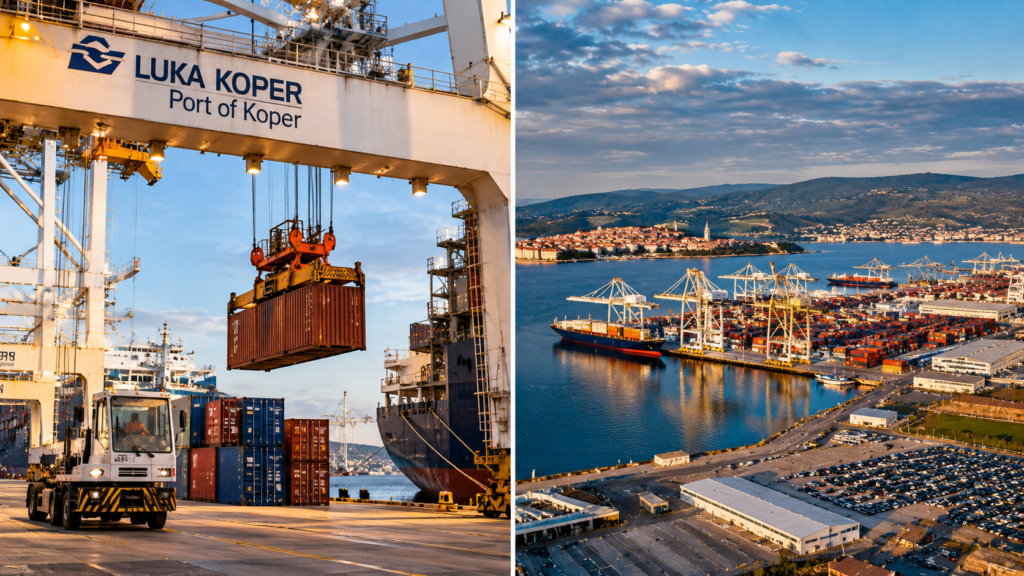
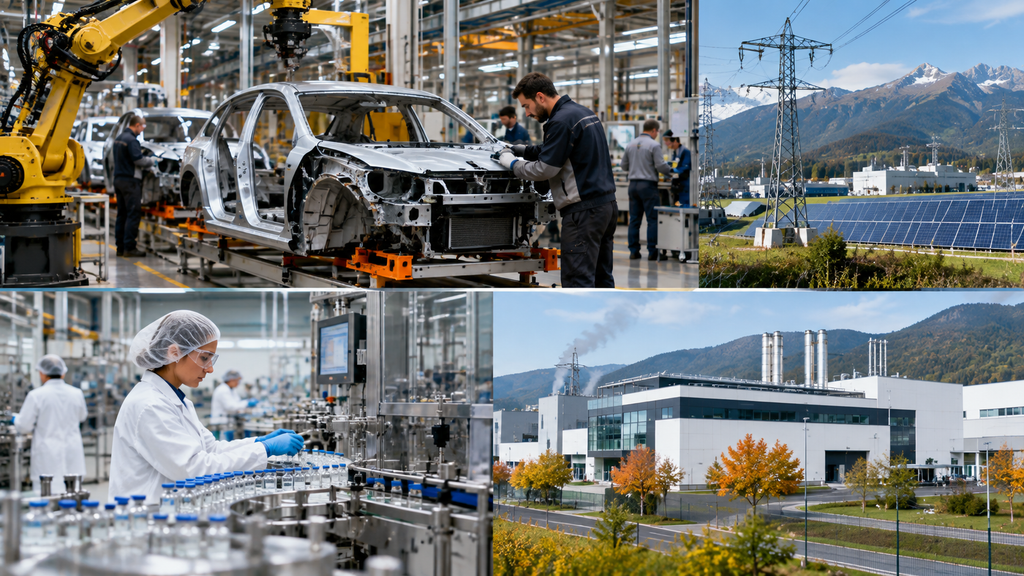
Pharmaceutical exports remained strong, while the automotive sector continued shifting towards electric-vehicle production.
Total exports increased by 3.9% year-on-year during Q3, while imports grew by 2.4%.
The difference between export and import growth contributed positively to economic activity, with net trade adding approximately 1.3 percentage points to GDP growth.
The pharmaceutical industry remains particularly important because of its international reach and contribution to Slovenia’s manufacturing base.
Automotive production is undergoing a structural transition as manufacturers adjust to changing European demand, electrification and international competition.
However, the sector remains exposed to energy costs, supply-chain conditions and the performance of major European trading partners.
For Slovenia, maintaining export competitiveness will be essential as international demand becomes less predictable.
Household Consumption Remains Resilient
Domestic consumption continues to provide another important source of economic support.
Household consumption increased by 3.7% year-on-year in the third quarter.
Higher disposable incomes and continued wage growth have supported consumer spending despite rising living costs.
Average gross wages increased by 7.2% year-on-year in the private sector and 7.6% in the public sector during the first nine months of 2026.
However, October indicators suggest that retail activity may be losing some momentum.
The value of fiscally verified invoices declined month-on-month, while annual sales growth slowed.
This suggests that household spending remains an important growth driver, but its contribution could become more moderate if energy and other living costs continue increasing.
Energy Inflation Becomes a Growing Concern
One of the most important findings in the November report concerns the renewed increase in energy-related costs.
Slovenian inflation remained at 3.3% in October, with housing, electricity, gas, other fuels and transport accounting for a combined 2 percentage points of annual consumer-price growth.
Industrial producer prices increased by 4.2% year-on-year, accelerating for the seventh consecutive month. Energy producer prices rose by 7.4%.
This development matters because higher energy costs affect manufacturing margins, transportation expenses and the overall competitiveness of domestic companies.
Energy-intensive businesses face particular pressure when they cannot fully transfer higher production costs to customers.
The European Commission’s November economic forecast also highlighted the problem, raising its inflation projection for Slovenia to 3.4% for 2026.
The combination of higher energy costs and wage growth could therefore keep operating expenses elevated even if economic activity continues expanding.
Employment Stagnates as Industry Adjusts
The labour market is showing a more mixed picture.
Overall employment has stagnated during 2026, with significant differences between sectors.
Public services continued to add employees, particularly in healthcare and social activities.
By contrast, manufacturing, trade and administrative and support services experienced employment declines.
At the end of October, Slovenia had 43,032 registered unemployed people, 5.8% fewer than a year earlier.
The reduction in unemployment is encouraging, but it does not necessarily indicate stronger hiring across the private sector.
The number of employed people has remained broadly unchanged, while labour shortages and demographic pressures continue affecting several industries.
For businesses, this creates a difficult combination: higher wage expenses alongside uncertain demand and rising energy costs.
What Comes Next for Slovenia’s Economy?
Three developments will be particularly important heading into 2027:
- Energy prices: Whether renewed energy inflation increases production costs and weakens industrial competitiveness.
- Export performance: Whether pharmaceutical and electric-vehicle production can sustain Slovenia’s international trade momentum.
- Private investment: Whether companies increase capital expenditure enough to compensate for the gradual completion of major publicly funded projects.
The latest UMAR report presents an economy that continues to grow but is gradually losing some of the momentum recorded earlier in 2026.
Strong exports and household consumption remain supportive, while higher energy prices, stagnant employment and moderating investment create additional uncertainty.
The central question for Slovenia is whether private-sector investment and industrial productivity can sustain growth as temporary investment drivers fade.
For domestic businesses, the coming months will be particularly important in determining whether rising operating costs become a more persistent constraint on competitiveness.
Sources
- UMAR – Slovenian Economic Mirror 7/2026, November 27
- Bank of Slovenia – Q3 Economic Growth and Energy Price Pressures
- Statistical Office of Slovenia – GDP, Third Quarter 2026
- European Commission – Economic Forecast for Slovenia, November 2026
- UMAR – Industrial Producer Prices and Employment, November 23
- Denarni Fokus – Editorial Disclosure & Transparency