Summary: Elon Musk has pledged two SpaceX shares for every child in the United States, in an initiative estimated to be worth approximately $18 billion. One share will come from SpaceX and another from Musk personally. The announcement introduces an unusual model of corporate equity distribution, linking private-company ownership, children’s investment accounts and the growing debate over how the benefits of the artificial intelligence economy should be shared.
◉ Approximately 140 million shares of SpaceX could be distributed under the proposed giveaway, with an estimated value of $17.8 billion based on the November 25 closing price, according to Musk’s proposal.
◉ They plans to contribute one newly issued Class A share to every currently active Trump Account, while Musk has pledged to personally match the company’s contribution.
◉ The company’s shares are expected to be transferred in December 2026, while Musk’s personal contribution is scheduled after his transfer restrictions expire in June 2027.
An Unusual Corporate Giveaway
Elon Musk has announced one of the largest proposed equity-distribution initiatives involving a privately held technology company.
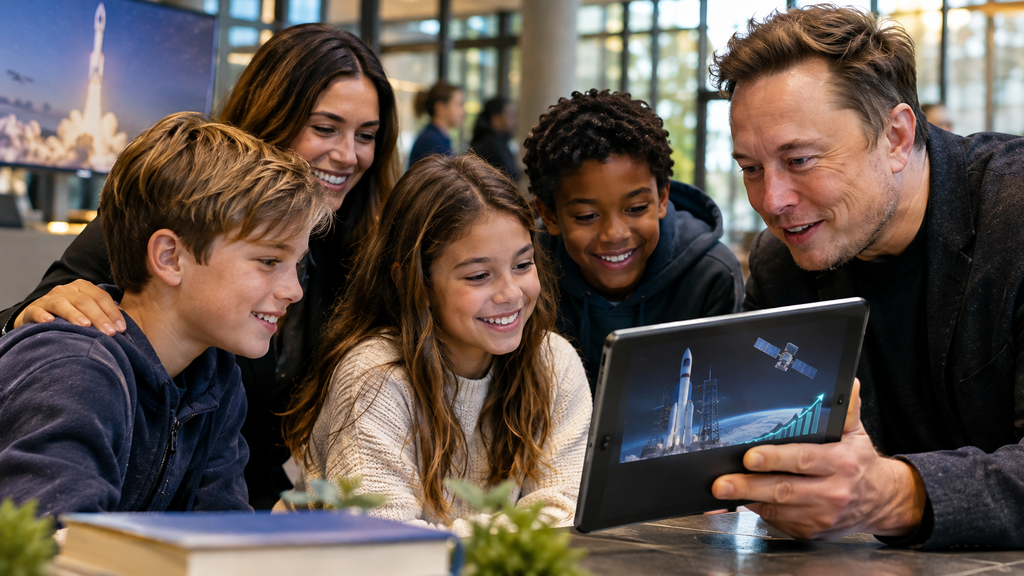
On November 25, the SpaceX chief executive said every child in America would receive two shares of the aerospace and artificial intelligence company.
The commitment combines two separate contributions. SpaceX will issue one new Class A common share, while Musk will provide another share from his personal holdings.
The announcement represents an expansion of his earlier October pledge, when he said he intended to give one of his own SpaceX shares to every American child.
The estimated scale is considerable.
With approximately 70 million Trump Accounts reported as opened and SpaceX shares closing at $127.44 on November 25, the combined distribution could be worth approximately $17.8 billion.
The valuation is based on the reported share price and an estimated 140 million shares. The final value will depend on the number of eligible accounts and the share price when transfers occur.
How the Share Distribution Works
The initiative is closely connected to the Trump Accounts programme, a US government-supported investment structure designed to give children under 18 an opportunity to build long-term financial assets.
SpaceX announced that it would contribute one newly issued Class A common share to every currently active Trump Account.
Musk subsequently said he would personally match the company’s contribution.
The proposed structure therefore involves two different sources of equity:
- SpaceX contribution: One newly issued Class A common share for each currently active Trump Account.
- Musk contribution: One additional share from his personal SpaceX holdings.
There is, however, an important distinction between the headline announcement and its implementation.
Although Musk described the initiative as covering every child in America, the company’s formal announcement specifically referred to currently active Trump Accounts.
It remains unclear whether his personal contribution will be distributed through exactly the same eligibility mechanism.
This distinction matters because the number of active accounts, rather than the total number of American children, will determine the initial scale of the distribution.
Two Different Transfer Timelines
The distribution is not expected to happen simultaneously.
Musk indicated that SpaceX’s newly issued shares would be transferred in December 2026.
His personal contribution will follow later, after restrictions on transferring his shares expire in June 2027.
This creates two separate implementation stages.
The timing also reflects the different ownership structures involved. SpaceX can issue new Class A shares, whereas Musk’s personal contribution involves transferring shares already held by him.
The distinction is important for understanding the potential dilution associated with the programme.
Newly issued shares increase the company’s total outstanding share count, while the transfer of existing shares changes ownership without creating additional shares.
The economic consequences for existing shareholders will therefore depend partly on the final number of shares issued and the conditions attached to the distribution.
SpaceX Ownership Reaches a New Audience
The initiative could introduce millions of American children to direct ownership in one of the world’s most closely watched private technology companies.
SpaceX operates across several major areas:
- Commercial and government space launches.
- Starlink satellite internet services.
- Reusable rocket technology.
- Space transportation and infrastructure.
- Artificial intelligence and space-based computing ambitions.
The company is increasingly positioning itself beyond traditional aerospace operations.
Its ambitions in satellite infrastructure and AI computing have expanded the potential commercial scope of its business, while also attracting greater regulatory and political attention.
For recipients, the shares could represent exposure to a company operating in industries with substantial long-term growth potential.
However, SpaceX remains a privately held company, meaning its shares do not offer the same liquidity, transparent pricing or straightforward trading access as publicly listed equities.
The ability of recipients to sell, transfer or otherwise use the shares will depend on the applicable ownership arrangements and restrictions.
A Broader Debate About AI Wealth Distribution
The announcement comes amid growing debate about how the economic benefits of artificial intelligence should be distributed.
Technology companies are investing enormous amounts of capital in computing infrastructure, data centres, specialised chips and energy systems.
At the same time, concerns are increasing about the concentration of economic power among a relatively small number of technology companies and their founders.
Musk’s proposal presents one approach: distributing equity directly to individuals rather than relying exclusively on traditional charitable contributions.
The development also comes alongside a different initiative from AI company Anthropic.
Anthropic announced plans to commit 5% of its shares to a new public-good fund, with an estimated value of approximately $54 billion based on the reported valuation at the time.
The two approaches are fundamentally different.
SpaceX’s proposal focuses on individual share ownership, while Anthropic’s initiative is structured around a dedicated fund intended to support public-benefit activities.
Both developments reflect an emerging discussion about corporate responsibility and the distribution of wealth generated by advanced technology.
The Financial and Corporate Implications
Beyond its philanthropic dimension, the SpaceX initiative has several important corporate-finance implications.
Shareholder expansion: The programme could create a large new group of individual shareholders, potentially introducing younger generations to private-company ownership.
Equity dilution: Newly issued Class A shares could increase the outstanding share count, although the overall impact will depend on the final number of eligible accounts and the company’s capital structure.
Corporate visibility: The distribution could strengthen SpaceX’s public profile at a time when its activities are expanding across space infrastructure and artificial intelligence.
Future liquidity: A large population of shareholders could eventually create additional demand for mechanisms allowing private-company equity to be transferred or sold, subject to regulatory and contractual restrictions.
The initiative also raises practical questions about the administration of millions of small shareholdings, tax treatment, account eligibility and the long-term rights of beneficiaries.
These details will be important in determining the programme’s actual economic value to recipients.
What Comes Next?
The December 2026 company-share transfer is the next important milestone.
The subsequent personal contribution in June 2027 will provide a second test of the programme’s implementation.
Three developments deserve particular attention:
- Eligibility: Whether the distribution ultimately covers all American children or only those with qualifying active Trump Accounts.
- Shareholder rights: How voting rights, transfers, taxation and future liquidity will work for minor beneficiaries.
- SpaceX valuation: Whether the company’s private-market valuation changes before the shares are distributed.
Musk’s announcement is significant not simply because of its estimated $18 billion value.
It represents an unusual attempt to distribute ownership in a major private technology company directly to a new generation of investors.
Whether the initiative becomes a lasting model for corporate equity distribution will depend on its execution, the rights attached to the shares and the long-term value of the underlying business.
For now, the proposal places SpaceX at the centre of a wider debate about private wealth, technology ownership and who ultimately benefits from the next phase of the AI economy.
Sources
- Reuters – Musk Pledges Two SpaceX Shares for Every US Child in $18 Billion AI Initiative
- MarketWatch – Elon Musk and SpaceX to Donate Approximately $17.8 Billion to Trump Accounts
- The Guardian – Musk Pledges Two SpaceX Shares to Every US Child
- Euronext – Reuters: SpaceX Share Distribution and AI Strategy
- Investing.com – Musk Says Every Child in the US Will Get Two SpaceX Shares
- Denarni Fokus – Editorial Disclosure & Transparency