
Summary: Brent crude approached $98 per barrel on November 27 as attacks on oil tankers in the Strait of Hormuz and disruptions to Saudi energy infrastructure renewed concerns about global supply security. The recovery puts oil on track for its first weekly gain in four weeks, despite a monthly decline of approximately 17%. The market is increasingly balancing expectations of ample global production against growing geopolitical risks to actual deliverable supply.
◉ Brent crude approached the $98 per barrel mark on November 27, trading near $97.50 and reaching its highest level since early November.
◉ Attacks on shipping through the Strait of Hormuz and disruptions at Saudi energy facilities have increased concerns about the reliability of Middle Eastern oil exports.
◉ Despite the latest recovery, Brent remains approximately 17% lower over the month, illustrating the scale of the preceding correction and the sudden return of geopolitical risk premiums.
Geopolitical Risks Return to Oil Markets
Crude oil markets are experiencing a significant change in sentiment as geopolitical developments in the Middle East begin to outweigh concerns about a potential global supply surplus.
Brent futures traded close to $98 per barrel on Friday, November 27, following several consecutive sessions of gains.
The benchmark reached approximately $97.30 during the morning trading session, while other market snapshots placed prices closer to $97.50.
The recovery puts Brent on track for its first weekly advance in four weeks.
The latest movement follows renewed attacks on commercial shipping in the Strait of Hormuz, alongside incidents affecting important Saudi energy infrastructure.
These developments have revived concerns about the security of oil transportation routes connecting major Gulf producers with international markets.
The timing is particularly important because crude prices had experienced substantial downward pressure during November.
Investors had increasingly focused on expectations of sufficient global production, weakening demand assumptions and the possibility of a market surplus.
The latest incidents have forced traders to reconsider whether those expectations adequately reflect the geopolitical risks facing physical oil supply.
Strait of Hormuz Becomes the Central Risk
The Strait of Hormuz remains one of the world’s most important energy transportation corridors.
A substantial share of internationally traded crude oil and petroleum products passes through the narrow waterway connecting Gulf producers with international shipping routes.
Any prolonged disruption can have consequences extending far beyond the immediate region.
Recent incidents have heightened these concerns.
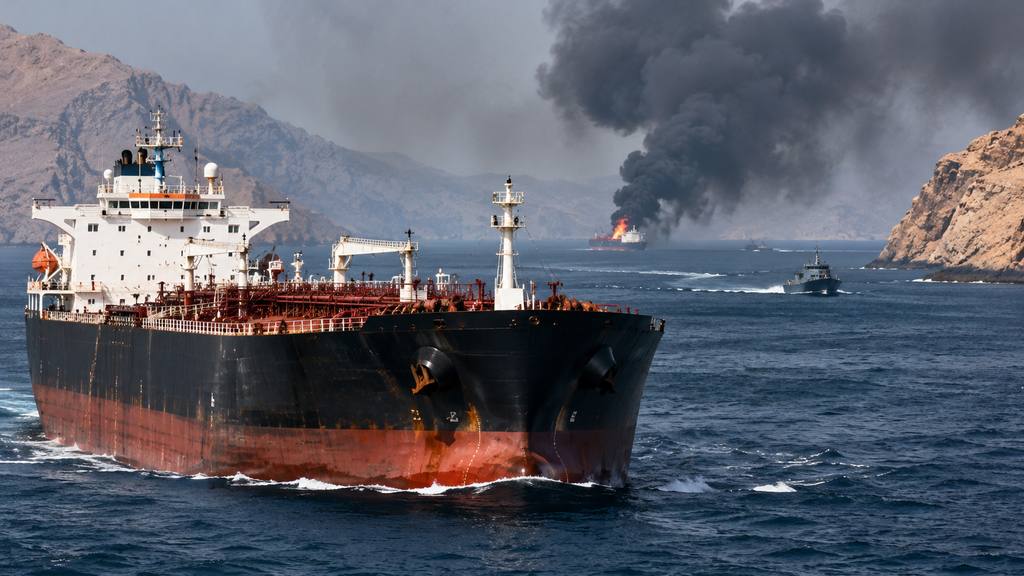
Iran’s Revolutionary Guards reported that two tankers had struck sea mines north of Oman’s Khasab port while attempting to cross the strait. One vessel was reportedly carrying more than two million barrels of crude oil.
The reported incidents have increased uncertainty surrounding maritime insurance, shipping availability and the willingness of operators to maintain normal transit schedules.
The economic implications extend beyond the direct loss of individual cargoes.
Even without a complete closure of the waterway, higher insurance premiums, longer shipping routes and delays can increase the cost of delivering crude to international buyers.
This distinction is important because oil markets respond not only to production volumes but also to the availability of reliable transportation infrastructure.
Saudi Energy Infrastructure Comes Under Pressure
Developments in Saudi Arabia have added another layer of uncertainty.
Saudi Aramco’s Jazan refinery temporarily suspended some operations after a projectile struck the facility on Thursday, November 26.
Saudi authorities reported that one Nepalese worker was killed and several others were injured.
The incident followed claims by Yemen’s Iran-aligned Houthi movement that it had targeted Ras Tanura, one of Saudi Arabia’s largest refinery complexes and an important crude export location.
The reported attacks have increased concerns about the vulnerability of energy infrastructure across the region.
Saudi Arabia is particularly important to global oil markets because of its production capacity, export infrastructure and role within OPEC+.
Any sustained disruption affecting its refineries, terminals or transportation networks could have implications for international supply availability.
However, the distinction between temporary operational interruptions and lasting production losses remains important.
The market is currently pricing an increased risk of disruption rather than confirmation that a substantial portion of Saudi oil production has been permanently removed.
Why Oil Remains Down 17% This Month
Despite the latest geopolitical recovery, Brent crude remains significantly below its levels at the beginning of November.
The approximately 17% monthly decline reflects several factors that had previously weighed on the market.
First, expectations of a potential global oil surplus encouraged investors to reduce bullish positions.
Second, concerns about economic growth and industrial demand created uncertainty around future consumption.
Third, easing expectations of further military escalation involving Iran had reduced the geopolitical risk premium previously embedded in crude prices.
The latest attacks have challenged this narrative.
However, a recovery driven by geopolitical uncertainty does not automatically establish a sustained upward trend.
For oil prices to remain elevated, the market would need evidence that physical supply is becoming materially tighter.
This is also the distinction highlighted by ANZ analysts Brian Martin and Daniel Hynes, who said Brent could move above $100 without another major escalation, but that such a move would increasingly require evidence of constrained deliverable supply.
OPEC+ Faces Another Important Decision
Attention is now turning towards the upcoming OPEC+ meeting scheduled for Sunday, November 29.
The group is expected to discuss its production policy for 2027.
According to people familiar with the discussions, OPEC+ members are considering maintaining existing production targets through at least the first quarter of 2027.
This would represent a cautious approach following the group’s earlier production adjustments.
The decision is particularly relevant given the changing geopolitical environment.
Higher oil prices could provide additional revenue for major producing countries, but a prolonged supply disruption could complicate production planning and international energy trade.
OPEC+ must also consider differences between members regarding production capacity and individual output requirements.
The United Arab Emirates’ departure from the group has added another structural consideration to the organisation’s future production strategy.
For financial markets, Sunday’s announcement could provide important information about how major producers intend to respond to the changing supply environment.
Supply Disruptions Extend Beyond the Middle East
The current oil market environment is not being influenced exclusively by developments around the Persian Gulf.
Several other incidents have raised concerns about international refining capacity.
In Russia, Ukrainian drone attacks have increasingly targeted oil infrastructure.
The latest incident caused a fire at the Slavyansk ECO refinery in the Krasnodar region, with reports indicating significant damage.
Thailand’s Bangchak refinery also experienced a fire that disrupted operations, while Venezuela’s Amuay refinery reported another operational interruption.
Separately, production at Brazil’s offshore Bacalhau oilfield was halted following an incident, with operator Equinor and partner Galp estimating a disruption lasting approximately five to eight weeks.
These developments demonstrate how geographically dispersed infrastructure problems can affect the global energy market simultaneously.
Although individual incidents may have limited effects on total worldwide production, their combined impact can become more significant when transportation risks and regional supply disruptions are already elevated.
Oil Prices and the Inflation Risk
The latest recovery in crude prices also has implications for the wider financial markets.
Energy remains an important component of global inflation calculations.
A sustained increase in oil prices can raise transportation costs, industrial production expenses and fuel prices for households.
For central banks, this creates an additional complication.
The Federal Reserve and European Central Bank are already dealing with persistent inflation pressures and uncertainty surrounding future interest-rate decisions.
If energy prices increase materially and remain elevated, headline inflation could experience renewed upward pressure.
The impact on core inflation would depend on how much of the energy-cost increase passes through to other goods and services.
For heavily indebted economies, higher energy costs could also weaken consumer purchasing power and increase pressure on industrial margins.
Consequently, the latest oil movement is relevant beyond commodity trading.
It represents another variable in the global monetary-policy outlook.
What Comes Next for Crude Oil?
The next several trading sessions will be important in determining whether the latest recovery develops into a broader upward trend.
Four developments deserve particular attention:
- Strait of Hormuz: Whether attacks continue and commercial shipping activity experiences further disruption.
- Saudi infrastructure: Whether operations at Jazan and other strategic energy facilities return to normal.
- OPEC+ policy: Whether producers maintain existing output targets through the first quarter of 2027.
- Physical oil supply: Whether transportation disruptions translate into measurable reductions in available crude exports.
The $100-per-barrel threshold has returned to market discussions, but reaching it sustainably will depend on more than geopolitical headlines.
The current situation illustrates the difference between oil production capacity and actual deliverable supply.
Even when global production remains sufficient, transportation disruptions, refinery damage and shipping restrictions can create regional shortages and increase international prices.
For investors, energy companies and policymakers, the coming days will provide a clearer indication of whether November’s recovery represents a temporary geopolitical premium or the beginning of a more significant repricing of global energy risk.
Sources
- Reuters – Oil on Track to Snap Three-Week Losing Streak as Supply Fears Increase
- Reuters – Brent Trades Near Monthly High as Middle East Conflict Threatens Supply
- The National – Oil Set for Weekly Gain as Middle East Attacks Stoke Supply Concerns
- Reuters – Brent Settles Higher as Tanker and Refinery Attacks Raise Supply Concerns
- Investing.com – Oil Prices Rise on Supply Concerns and Strait of Hormuz Disruptions
- Denarni Fokus – Editorial Disclosure & Transparency