Summary: Wall Street staged a dramatic recovery on November 25 as investors bought the dip following a sharp technology-led sell-off. The Dow finished higher, while the S&P 500 and Nasdaq remained in negative territory amid renewed tariff concerns, inflation pressures and uncertainty surrounding artificial intelligence valuations.
◉ The Dow gained 0.33% to close at 50,182.95, recovering from substantial intraday losses.
◉ The S&P 500 and Nasdaq finished lower, despite recovering most of their steep early-session declines.
◉ AI valuations, rising inflation and renewed US tariff threats remain key sources of uncertainty for equity markets.
A Dramatic Market Reversal
Wall Street experienced another volatile session on Wednesday, November 25, as investors confronted a combination of technology-sector weakness, renewed trade tensions and concerns about the inflation outlook.
The Nasdaq Composite suffered some of the heaviest selling pressure, falling more than 4% during the session before recovering substantially. The S&P 500 also experienced a sharp intraday decline, at one point losing approximately 3.2%.
However, the late-session recovery demonstrated that demand for equities had not disappeared entirely. Investors returned to selected stocks as valuations became more attractive following the recent market weakness.
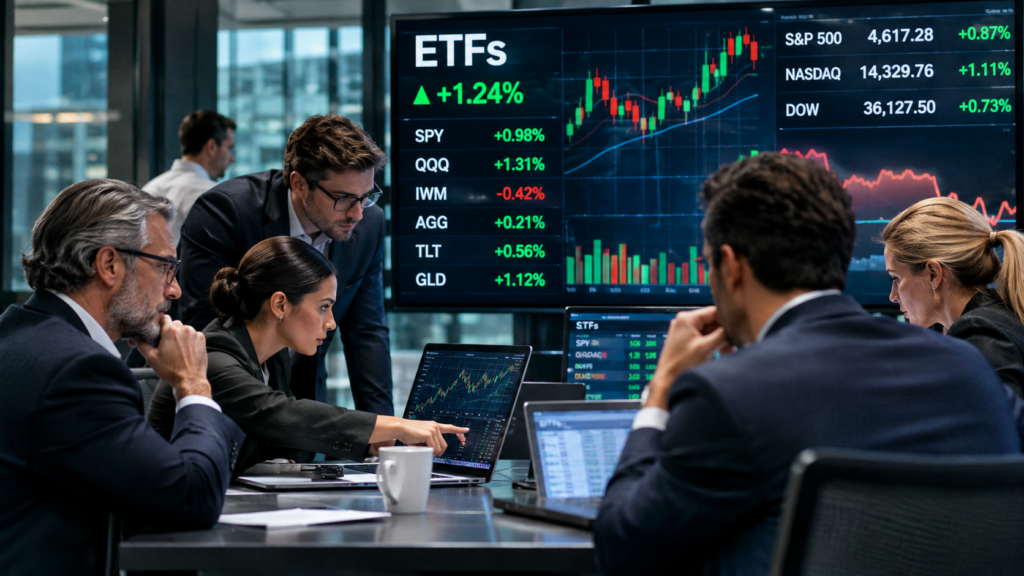
At the closing bell, the Dow Jones Industrial Average advanced 164.25 points, or 0.33%, to 50,182.95. The S&P 500 declined 0.25% to 7,182.78, while the Nasdaq Composite lost 0.62%, finishing at 23,585.80.
The Russell 2000 outperformed the major technology-heavy benchmarks, gaining 0.7% to 2,704.06, suggesting relatively stronger performance among smaller US companies.
AI Stocks Remain Under Pressure
Technology shares continued to weigh on broader market sentiment.
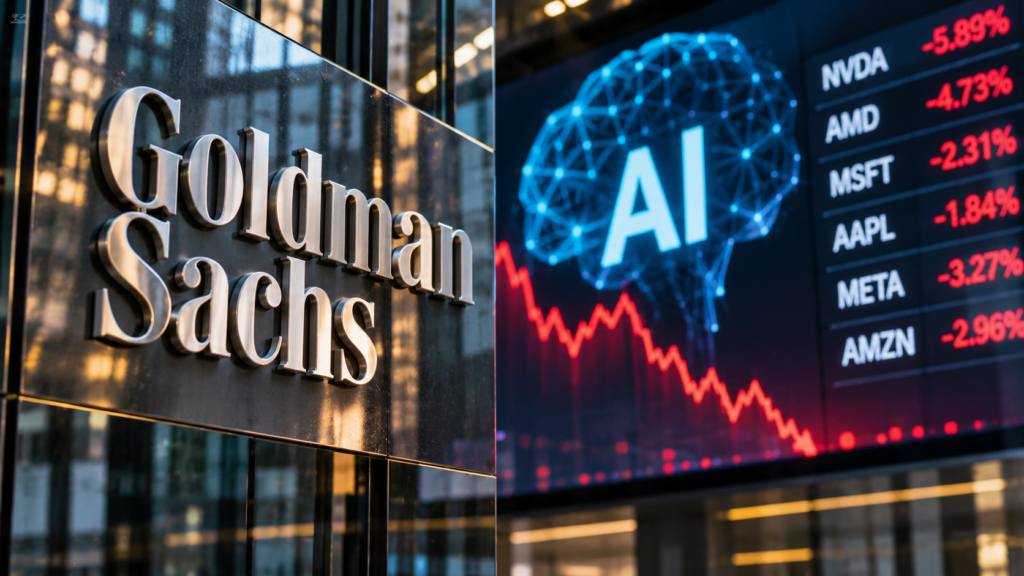
Nvidia declined 3.9%, while Amazon dropped 3.1%. The semiconductor sector also remained under pressure as investors reassessed the valuations of companies benefiting from the artificial intelligence investment boom.
The underlying concern is increasingly focused on the relationship between capital expenditure and future profitability.
Technology companies have committed enormous financial resources to AI infrastructure, including data centres, advanced processors and computing capacity. Markets are now demanding clearer evidence that these investments will translate into sustainable revenue growth and stronger earnings.
This creates a more challenging environment for highly valued technology companies, particularly when expectations have already incorporated substantial future growth.
The pressure has also extended beyond individual companies. The Nasdaq Composite has experienced significant monthly weakness, reflecting broader uncertainty surrounding the sustainability of the AI-driven equity rally.
Inflation and Tariffs Complicate the Outlook
The market’s recovery came despite another difficult macroeconomic backdrop.
Fresh US inflation figures reinforced concerns that price pressures remain persistent, potentially limiting the Federal Reserve’s flexibility to reduce interest rates.
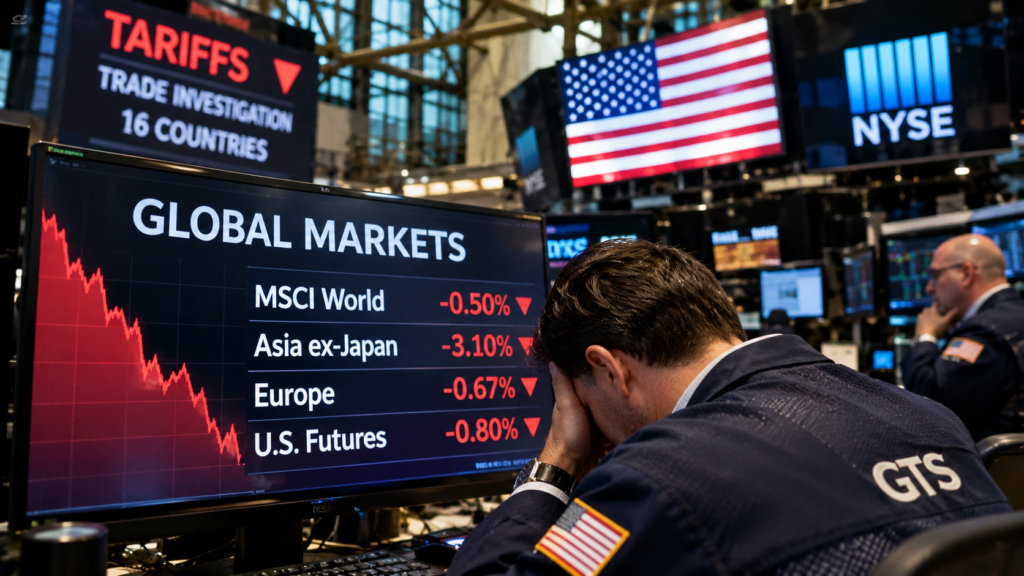
At the same time, the Trump administration introduced additional tariff proposals targeting 14 trading partners, adding another layer of uncertainty to the international trade environment.
Higher import costs could increase pressure on businesses and consumers, while potentially complicating the inflation outlook.
For equity markets, the combination of tariffs and persistent inflation presents a particularly difficult scenario. Companies could face higher operating costs at a time when financing conditions may remain restrictive.
Investors are therefore increasingly evaluating how these developments could influence corporate earnings, profit margins and future monetary policy.
Market Breadth Tells Another Story
Despite the technology sell-off, market performance was not uniformly negative.
Materials and real estate stocks were among the stronger S&P 500 sectors, while value-oriented shares outperformed growth stocks.
The Russell 2000’s positive performance also indicated that the weakness was concentrated in certain areas rather than representing an indiscriminate retreat from all equities.
Nevertheless, the substantial number of stocks recording new lows highlighted the underlying fragility of market sentiment.
The distinction between headline index performance and individual stock performance remains important. A relatively modest decline in the S&P 500 does not necessarily indicate that market-wide selling pressure has disappeared.
Thanksgiving Creates a Short Trading Week
The US market calendar adds another variable to the immediate outlook.
American equity markets remained closed on Thursday, November 26, for Thanksgiving, with trading scheduled to resume on Friday, November 27, during a shortened session ending at 1 p.m. Eastern Time.
Reduced trading hours and potentially lighter participation could amplify individual market movements.
The latest session ultimately demonstrated two competing forces: investors remain concerned about inflation, trade policy and technology valuations, but continue to identify opportunities when prices fall sharply.
Whether this recovery represents the beginning of a more sustainable stabilisation or simply another temporary interruption in the technology-led correction remains an important question for global markets.