Oil prices declined as recovering Middle Eastern exports and weaker Chinese refinery activity strengthened expectations of a global supply surplus. However, renewed tensions around the Strait of Hormuz continue to expose energy markets to significant geopolitical risks.
◉ Oil prices declined, with Brent down 0.7% to $95.15 and WTI at $88.19 per barrel.
◉ Global oil supply is expected to outpace demand in the fourth quarter, according to the International Energy Agency, as Middle Eastern exports recover.
◉ Iran’s reported demands for transit payments of up to $2 million per vessel highlight the continuing risks surrounding the Strait of Hormuz.
Oil Market Shifts Towards Surplus
Crude oil prices moved lower on Monday, 16 November, as investors increasingly focused on improving supply conditions and weaker demand signals.
Brent crude futures declined approximately 0.7% to $95.15 per barrel, while US West Texas Intermediate (WTI) traded around $88.19.
The decline reflects a changing balance in the global energy market. After months of supply disruption and geopolitical uncertainty, shipments from the Middle East have recovered towards pre-conflict levels, reducing some of the pressure that previously supported higher crude prices.
The latest movement also follows a particularly volatile period for energy markets, with both major benchmarks recording substantial weekly losses as traders reassessed the likelihood of a prolonged supply disruption.
The central question is increasingly whether recovering production and exports will outpace global consumption over the coming months.
IEA Signals a Supply Surplus
The International Energy Agency (IEA) has revised its outlook for the global oil market, pointing towards a return to surplus during the fourth quarter of 2026.
According to its November Oil Market Report, global supply increased by 2.3 million barrels per day in October, reaching approximately 105.4 million barrels per day.
The agency expects fourth-quarter supply to average approximately 1.7 million barrels per day above demand.
This represents a significant shift from the tighter market conditions experienced during the earlier stages of the Middle Eastern conflict.
The recovery in Gulf exports has been particularly important. Higher shipments have allowed more crude to reach international markets despite continued security risks affecting energy infrastructure and maritime transport.
However, the IEA continues to highlight substantial uncertainty surrounding the durability of this recovery.
Chinese Demand Adds Pressure
China remains one of the most important variables in the global oil-demand outlook.
October refinery throughput declined 2% month on month and 8.1% year on year, indicating weaker crude processing activity in the world’s largest oil-importing country.
Lower refinery utilisation can signal reduced demand for crude, particularly when combined with rising inventories and slower industrial activity.
The latest developments have increased concerns that global consumption may struggle to absorb the additional supply returning to the market.
For oil producers, this creates a challenging environment in which recovering exports are meeting more cautious demand expectations.
Strait of Hormuz Remains a Geopolitical Risk
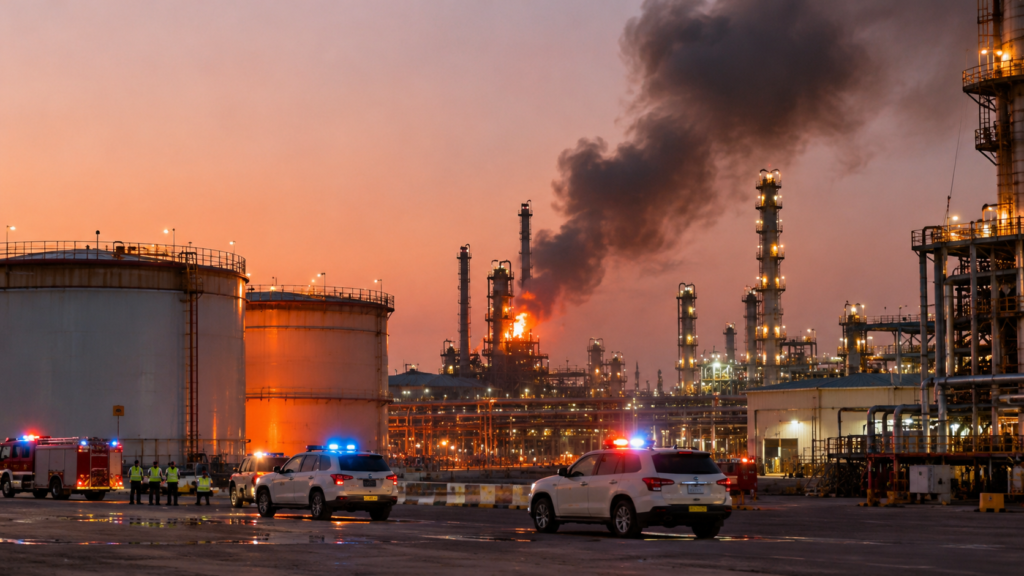
Despite falling prices, the geopolitical situation in the Middle East remains one of the most important sources of uncertainty for energy markets.
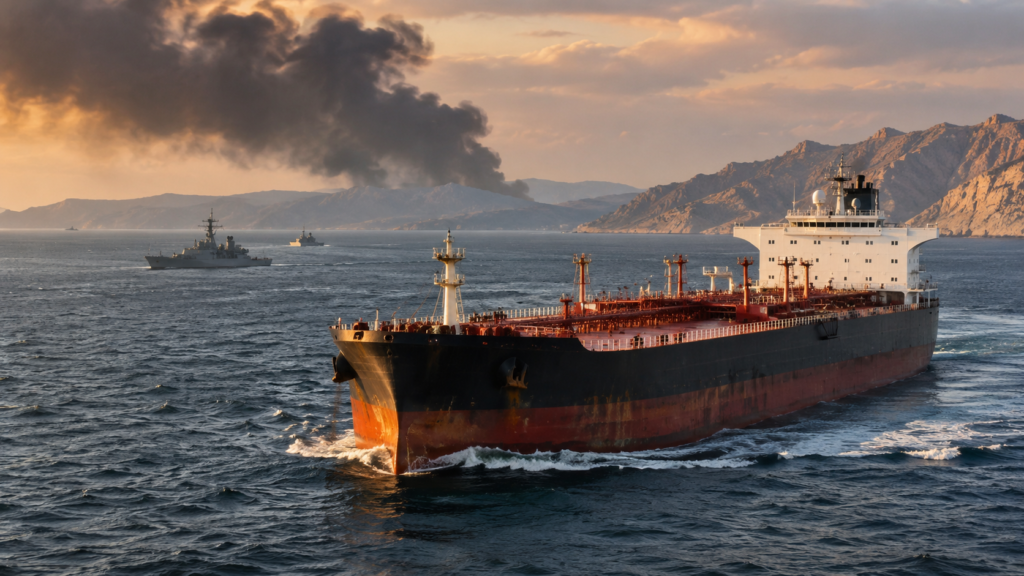
The Strait of Hormuz is a strategic maritime corridor connecting the Persian Gulf with international shipping routes. A substantial share of globally traded oil passes through this narrow waterway, making it essential to energy security.
Iran has sought to introduce payments of up to $2 million for certain vessels transiting the strait, according to previous shipping-industry reports. However, the arrangements remain subject to uncertainty, and the reported amount should not be interpreted as a universally established charge for every tanker.
The US Treasury has also warned that payments to Iranian entities in exchange for safe passage can create sanctions exposure for shipping companies.
Recent reports of tanker incidents and attacks in the region underline the continuing security risks.
This creates an important contradiction for oil markets: improving export flows are pushing prices lower, while the possibility of renewed disruption continues to support a geopolitical risk premium.
What Lower Oil Prices Mean for Europe
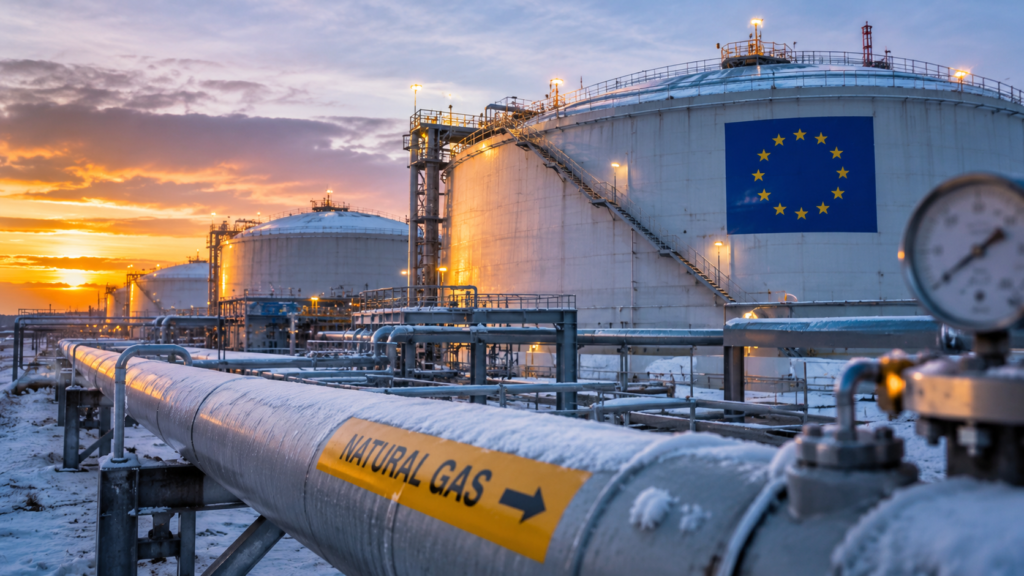
A sustained decline in crude prices could provide some relief for European economies.
Lower energy costs can reduce pressure on transportation, manufacturing and household energy expenditure. They can also contribute to moderating inflation, potentially giving the European Central Bank more flexibility in its monetary policy decisions.
However, the benefits are not necessarily immediate.
European fuel prices also depend on refining margins, taxation, distribution costs and the price of refined products such as diesel and petrol.
For energy companies, the impact is mixed. Lower crude prices can reduce revenue expectations for producers, while refiners and energy-intensive businesses may experience different effects depending on their operating costs and product margins.
What Comes Next?
The next phase of the oil market will depend on whether the recovery in global supply can continue without further geopolitical disruption.
Three developments deserve particular attention:
- IEA supply forecasts: Whether the expected fourth-quarter surplus materialises and continues into 2027.
- Chinese consumption: Whether refinery activity and crude imports recover after October’s decline.
- Strait of Hormuz security: Whether tanker movements remain stable or renewed incidents interrupt Middle Eastern exports.
Oil markets are gradually shifting their attention from immediate supply shortages towards the possibility of excess production.
Nevertheless, the situation remains fragile. A prolonged recovery in exports could reinforce downward pressure on crude prices, while renewed disruption around Hormuz could quickly reverse market sentiment.
The balance between these competing forces will remain central to the global energy outlook.
Sources
- Reuters – Oil prices fall on expectations of coming supply surplus Reuters
- ICIS – Oil prices fall as Middle East supply recovery outweighs Iran risks ICIS
- International Energy Agency – November 2026 Oil Market Report IEA
- US Treasury – Sanctions Risks of Iranian Demands for Strait of Hormuz Passage ofac.treasury.gov
- Editorial Disclosure & Transparency