[df_language_switch slug=”boeing-lockheed-raketni-spodrsljaj”]
The first major Vulcan rocket failure has destroyed 40 Amazon Leo satellites, raising questions about launch reliability, commercial satellite deployment and the potential impact on United Launch Alliance, a joint venture between Boeing and Lockheed Martin.
◉ The first-ever mission failure resulted in the destruction of 40 Amazon Leo satellites aboard Vulcan (ULA).
◉ The incident could trigger an extended investigation and disrupt ULA’s upcoming commercial and national security launch schedule.
◉ Indirect exposure through ULA’s ownership links Boeing, while Amazon faces another setback in expanding its Leo satellite internet network.
The Mission Failure
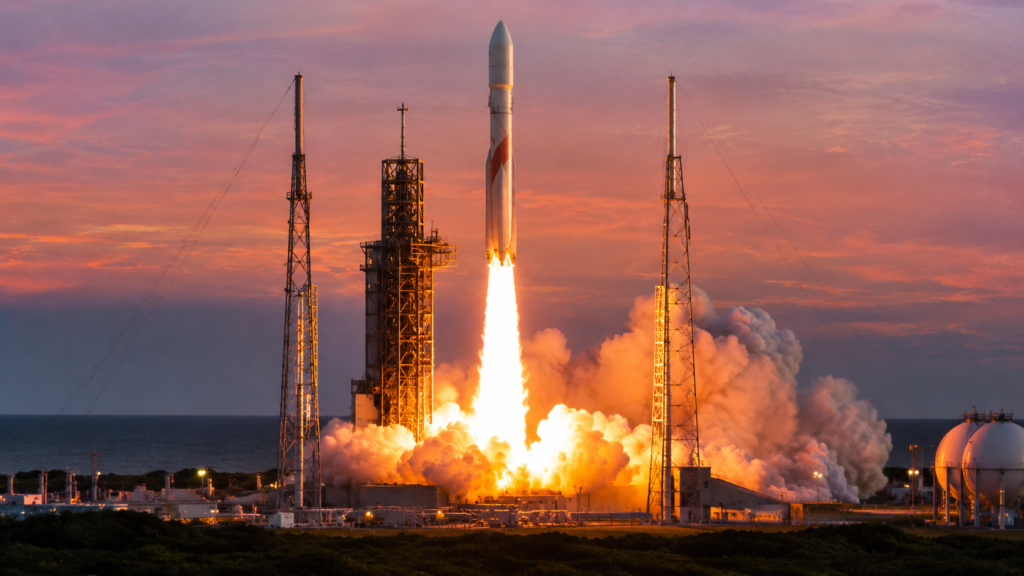
United Launch Alliance (ULA) suffered a major setback on 15 November after its Vulcan rocket failed approximately 10 minutes after liftoff from Cape Canaveral Space Force Station in Florida.
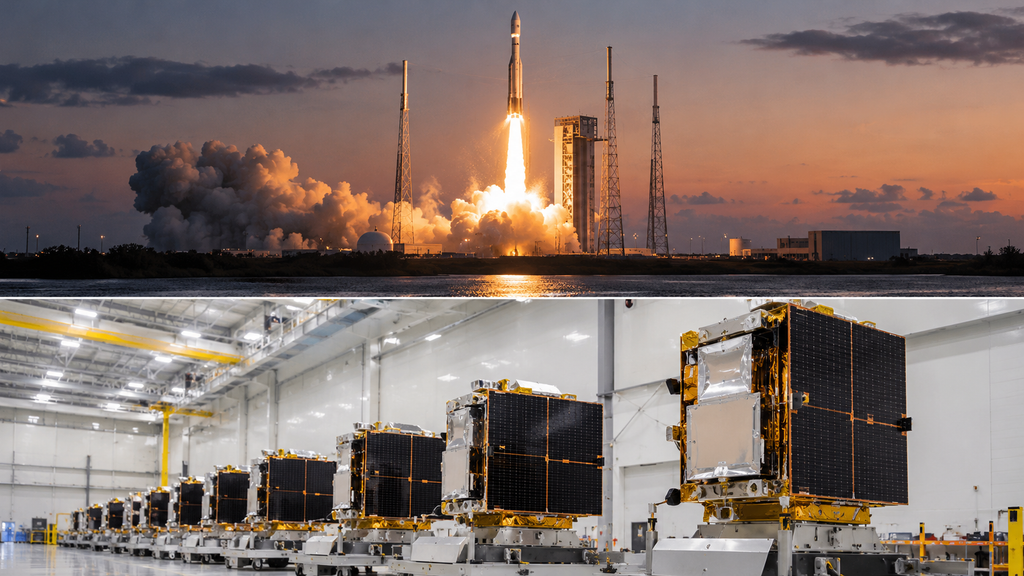
The rocket was carrying 40 Amazon Leo broadband satellites intended for deployment into low Earth orbit. The mission ended without delivering its payload, marking the first complete launch failure in ULA’s history since the company was established in 2006.
ULA is jointly owned by Boeing and Lockheed Martin. The company developed Vulcan as its next-generation launch vehicle, replacing its Atlas V and Delta rocket programmes and strengthening its position in the commercial and national security launch markets.
The failure occurred during Vulcan’s fifth flight and its first mission in approximately nine months.
What Went Wrong?
The precise technical cause remains unknown.
Initial flight information indicates that the anomaly occurred after the rocket’s first-stage separation, during the operation of its Centaur upper stage. However, investigators have yet to establish the underlying cause.
The investigation is particularly important because Vulcan had already experienced technical challenges involving its solid rocket booster nozzles during previous flights.
Blue Origin, which manufactures Vulcan’s BE-4 first-stage engines, is assisting with the investigation. Whether the engines or another part of the launch system contributed to Sunday’s failure has not been established.
ULA will need to analyse flight telemetry, identify the technical fault and determine what corrective measures are required before the vehicle can return to service.
Boeing’s Exposure
The incident places additional attention on Boeing’s aerospace operations and its partnership with Lockheed Martin.
Although ULA operates as a separate joint venture, its performance is strategically relevant to both shareholders. Vulcan is an important component of the United States’ launch infrastructure, particularly for missions requiring access to space for government and defence customers.
A prolonged grounding could affect ULA’s launch backlog, operating costs and ability to fulfil future contracts.
For Boeing, however, the direct financial consequences remain difficult to quantify. No confirmed loss estimate or financial impact attributable to the failure has been disclosed.
The more immediate concern is whether the incident affects confidence in Vulcan’s reliability at a time when the company is attempting to establish the rocket as a dependable alternative in an increasingly competitive launch market.
Amazon’s Satellite Ambitions
The failure also represents a setback for Amazon’s Leo satellite programme, which is designed to compete with SpaceX’s Starlink broadband network.
Amazon is developing a constellation of more than 3,200 satellites to provide global internet connectivity.
Before Sunday’s incident, Amazon had deployed 398 satellites. The lost payload represents 40 additional spacecraft that will not contribute to the planned network.
Amazon has purchased 38 Vulcan launches for the programme, alongside additional launch agreements involving Blue Origin, Arianespace and SpaceX.
This diversified launch strategy provides some protection against dependence on a single provider. Nevertheless, the Vulcan failure introduces uncertainty around deployment schedules and the availability of launch capacity.
Amazon had previously targeted the beginning of initial service in 2026. Whether the latest incident changes that timetable remains unclear.
What Comes Next?
The next significant development will be the outcome of ULA’s technical investigation.
Three factors will determine the broader implications:
- The identification of the failure mechanism and the corrective measures required.
- The expected duration of any Vulcan grounding and its impact on scheduled missions.
- Amazon’s ability to maintain its satellite deployment programme using alternative launch providers.
The incident highlights the technical and operational risks associated with the commercial space industry. For Boeing and Lockheed Martin, the reliability of their joint venture’s next-generation rocket has become an important issue beyond the immediate loss of one mission.
The financial implications will depend less on the 40 lost satellites alone and more on how quickly ULA can restore confidence in Vulcan and resume its launch operations.