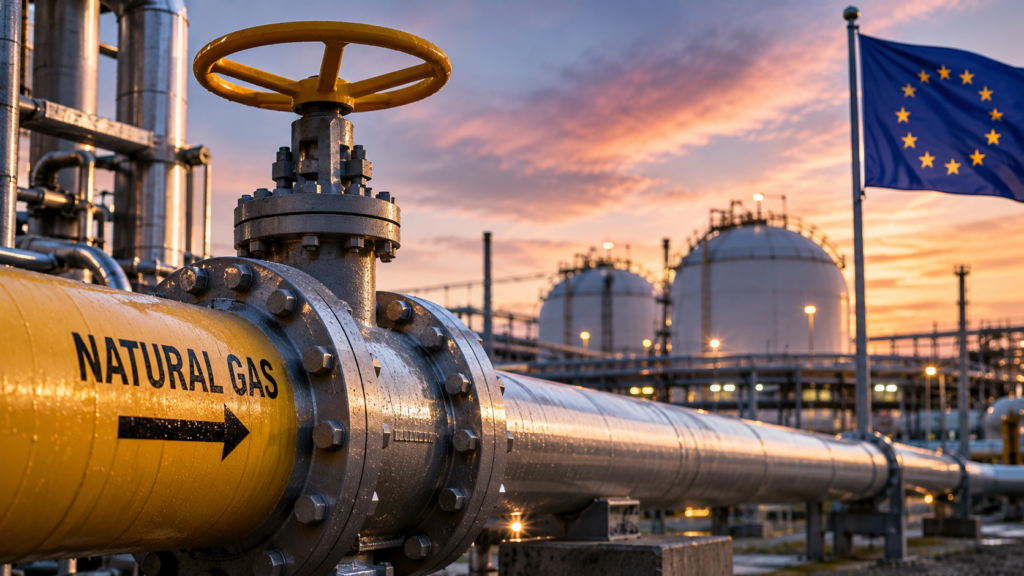
Summary: European natural gas prices extended their recovery for a third consecutive session as winter supply concerns, low storage levels and geopolitical uncertainty kept energy traders cautious. The Dutch TTF benchmark climbed towards €90/MWh, highlighting Europe’s continued exposure to global LNG market disruptions.
◉ Dutch TTF front-month gas futures gained 2% to €88.42/MWh on November 12, extending the rally to three consecutive sessions.
◉ European gas storage remained significantly below seasonal averages, reducing the region’s flexibility ahead of the 2026–27 heating season.
◉ Competition for LNG cargoes, uncertainty surrounding Middle Eastern supply routes and winter weather could keep European gas markets volatile.
Europe’s Gas Market Reverses Direction
European wholesale natural gas prices continued climbing on November 12, extending gains for a third consecutive trading session.
The Dutch Title Transfer Facility (TTF), Europe’s principal wholesale gas benchmark, advanced approximately 2% to €88.42 per megawatt-hour. The British National Balancing Point (NBP) contract followed, rising 1.7% to 219 pence per therm.
The recovery follows a period of significant price weakness earlier in November, when European gas futures approached one-month lows.
The latest movement suggests that traders are once again assigning greater importance to immediate supply security rather than relying exclusively on improving geopolitical expectations.
The contrast with crude oil markets is particularly notable. Brent and West Texas Intermediate futures moved lower during the same session, demonstrating that natural gas and petroleum markets are currently responding to different supply-demand dynamics.
For European gas, the central issue is not simply the global direction of energy prices. It is the availability of sufficient physical supply during the heating season.
Storage Levels Create Structural Pressure
Europe enters the 2026–27 winter with a less comfortable storage position than in previous years.
According to the latest European market assessments, storage levels remain below historical seasonal averages. The European Commission’s market monitoring data showed inventories at approximately 75% of capacity on October 21.
By November, the market was facing the additional challenge of beginning seasonal withdrawals while maintaining sufficient flexibility for the colder months ahead.
Storage plays a critical role in Europe’s energy system because it provides a buffer between relatively stable pipeline and LNG imports and the fluctuating daily requirements of households, electricity producers and industrial consumers.
When inventories are high, the market can absorb temporary disruptions more easily. When storage is lower, unexpected changes in temperatures, pipeline deliveries or LNG arrivals can have a more immediate impact on wholesale prices.
The situation is also uneven across individual countries. Germany, the Netherlands and Austria have different inventory positions and supply requirements, making regional storage distribution just as important as the European aggregate.
This creates a market in which the availability of flexible gas supply can become increasingly valuable as winter progresses.
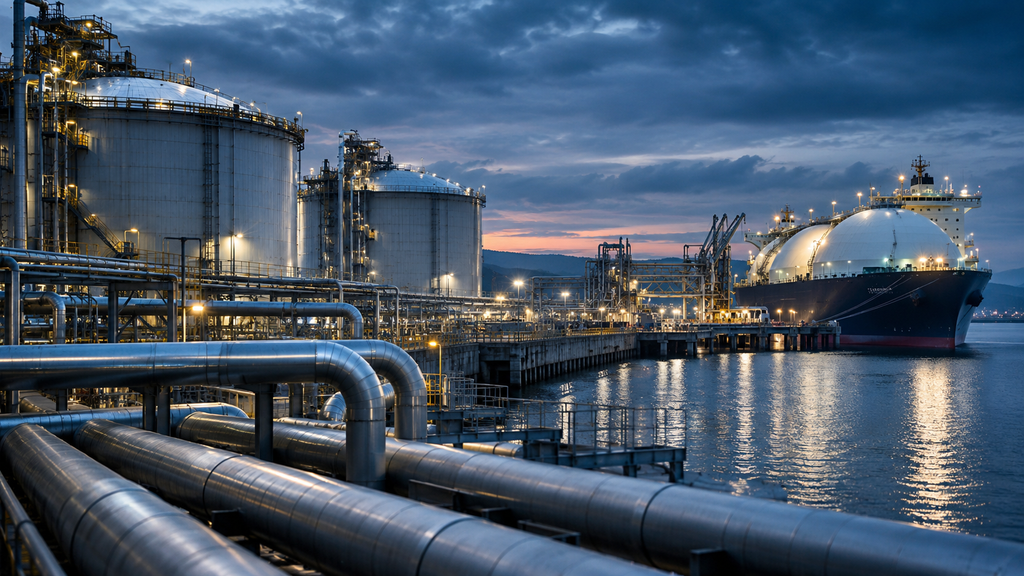
LNG Competition Intensifies
The European gas market is increasingly connected to developments in the global liquefied natural gas industry.
LNG has become one of the most important components of Europe’s energy supply following the reduction of Russian pipeline deliveries. This has increased the importance of imports from the United States, Qatar and other international producers.
However, the availability of LNG does not automatically translate into affordable supply.
European buyers must compete with Asian importers for flexible cargoes, particularly when demand increases during colder periods. If Asian buyers are willing to pay higher prices, shipments can be redirected away from European terminals.
The Middle East remains another important variable.
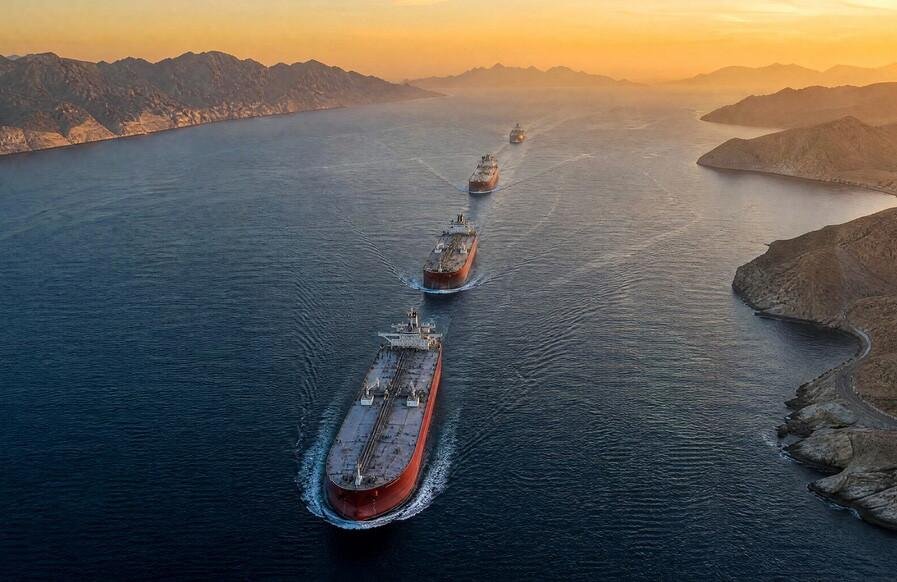
Disruptions affecting shipping routes through the Strait of Hormuz have created uncertainty around the movement of LNG from the Persian Gulf. Qatar is a major global LNG exporter, and prolonged restrictions on regional shipping could tighten the international market.
This is particularly relevant because Europe is entering winter with less storage flexibility than in a typical year.
The European market therefore faces two interconnected challenges: securing sufficient physical deliveries and maintaining competitive prices against other major importing regions.
Geopolitics and the Energy Risk Premium
Recent developments in the Middle East and Eastern Europe have created competing signals for energy markets.
Diplomatic developments involving Russia and Ukraine have introduced the possibility of a gradual reduction in geopolitical risk over the longer term.
At the same time, uncertainty surrounding Iran and regional energy infrastructure continues to influence near-term supply expectations.
This distinction helps explain why European gas prices can increase even when broader geopolitical headlines appear to improve.
The market is pricing different time horizons. A potential improvement in European pipeline supply could influence longer-dated contracts, while immediate winter delivery contracts remain sensitive to current LNG availability, shipping conditions and weather forecasts.
For traders, the distinction between prompt-month and longer-dated contracts is becoming increasingly important.
Natural Gas and Electricity Prices
The consequences of higher wholesale gas prices extend beyond the natural gas market itself.
Gas-fired power stations remain important components of Europe’s electricity generation system, particularly when renewable production is insufficient to meet demand.
When gas prices increase, electricity generation costs can rise, potentially influencing wholesale power prices across interconnected European markets.
The relationship is not always direct. Wind generation, hydroelectric output, nuclear availability, carbon allowances and electricity demand also influence power prices.
Nevertheless, sustained increases in gas prices can place additional pressure on industrial electricity consumers and energy-intensive businesses.
Industries such as chemicals, fertilisers, glass, steel and manufacturing are particularly exposed to changes in energy input costs.
For these companies, higher gas prices can affect operating margins, production decisions and international competitiveness.
The impact can also extend to households through electricity and heating contracts, although the timing and magnitude depend on national pricing structures and regulatory arrangements.
What the Market Is Watching
The next phase of European gas trading will depend on several interconnected developments.
Winter temperatures: Colder-than-average conditions could accelerate storage withdrawals and increase demand for heating.
LNG availability: Changes in Qatari exports, US LNG deliveries and shipping conditions could influence the availability of flexible cargoes.
European storage: The pace of withdrawals and the distribution of remaining inventories across individual countries will be important indicators of supply resilience.
Asian competition: Higher demand from China, Japan, South Korea and other LNG importers could increase competition for internationally traded cargoes.
Geopolitical developments: Any improvement or deterioration in the Middle East and Eastern Europe could alter expectations for future supply routes and energy prices.
These variables will determine whether the current price recovery represents a temporary correction or the beginning of another sustained period of elevated wholesale gas prices.
Europe’s Winter Energy Equation
The latest rally illustrates how sensitive the European natural gas market remains to changes in supply expectations.
Despite the diversification of supply sources over recent years, Europe remains exposed to international LNG competition, geopolitical developments and weather-related demand fluctuations.
The current market environment is particularly challenging because storage levels provide a smaller safety margin than in previous heating seasons.
At the same time, the relationship between natural gas, electricity generation and industrial activity means that price movements can have consequences across the wider European economy.
The central question for the coming months is whether LNG deliveries, pipeline imports and remaining storage capacity will be sufficient to absorb winter demand without another significant increase in wholesale prices.
For now, European gas markets are showing that supply security remains a dominant factor in energy pricing as the 2026–27 winter season develops.
Sources
- Investing.com – European Gas Extends Rally to Third Day (12 November 2026).
- Eurasia Business News – European Gas Prices Rebound (12 November 2026).
- GasRadar – European Gas Market Briefing (11 November 2026).
- Reuters – Europe Faces Another Year of High Gas Prices.
- S&P Global – IEA Warns of Low European Gas Stocks.
- Reuters – European Gas Supply and Storage Outlook.
- ACER – European Gas Wholesale Market Monitoring Report.
- Denarni Fokus – Editorial Disclosure & Transparency.