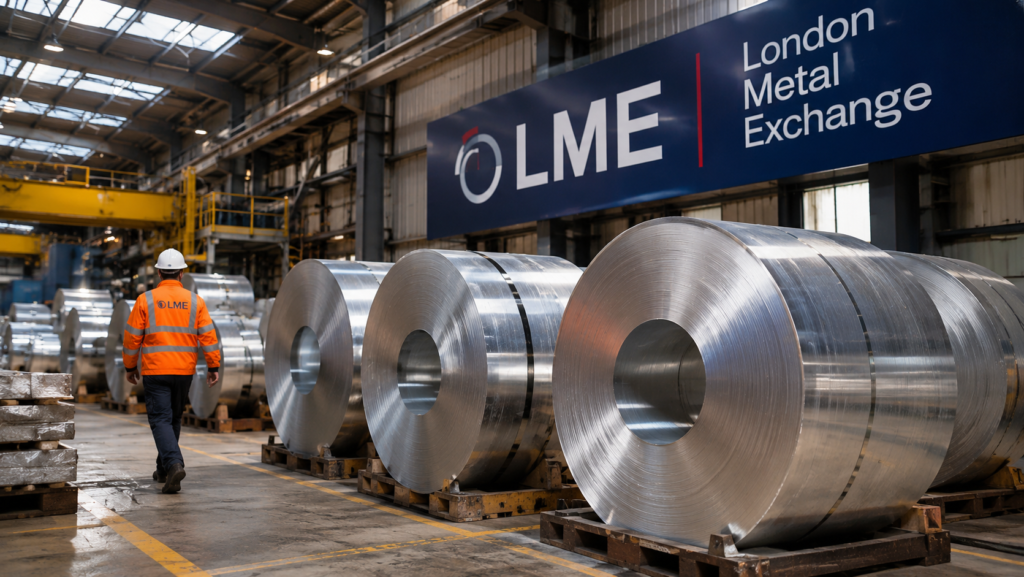
Summary: The London Metal Exchange aluminium market is experiencing its tightest physical supply conditions in decades, with inventories falling to their lowest level since 1990 and a small number of traders controlling a significant share of available metal. New Indonesian production may eventually ease the shortage, but immediate supply constraints are intensifying pressure on buyers.
◉ Stock in LME aluminium inventories have fallen 56% in 2026, reaching their lowest level since 1990 and exposing the market to an exceptional shortage of immediately deliverable metal.
◉ Spot aluminium traded at a record $151 per tonne premium over three-month futures on November 11, reflecting extreme competition for nearby supplies.
◉ Indonesia’s expanding production could push the global market towards surplus, but new metal is not yet registered for LME delivery, limiting its ability to resolve the immediate shortage.
A Historic Shortage in London
The global aluminium market is facing an unusual supply imbalance, with the London Metal Exchange (LME) experiencing one of its most severe physical shortages in decades.
The pressure is not simply a consequence of higher industrial demand. It reflects a combination of declining exchange inventories, disrupted supply routes, geopolitical risks and the concentration of available metal in the hands of a relatively small number of market participants.
According to Bloomberg’s November 11 reporting, LME aluminium inventories have fallen approximately 56% since the beginning of 2026, reaching their lowest level since 1990.
The decline has transformed the structure of the market.
Buyers requiring immediate physical delivery are increasingly competing for a limited pool of available aluminium, while expectations of additional production later in the year and beyond have not yet translated into sufficient metal available through the exchange’s delivery system.
The result is an increasingly pronounced separation between immediate physical availability and the longer-term global supply outlook.
Record Premiums Signal Market Stress
One of the clearest indicators of the shortage is the widening difference between spot aluminium and futures contracts.
On November 11, the LME cash aluminium contract traded as much as $151 per tonne above the three-month benchmark. This represented a record premium in data covering more than three decades.
The market structure is known as backwardation.
Under normal circumstances, industrial metals can trade at a premium for future delivery because of storage, financing and other carrying costs. Backwardation reverses this relationship, with metal available immediately commanding a higher price than metal scheduled for delivery later.
In aluminium, the current structure reflects the urgency of securing physical supplies.
The closely watched Tom/next spread, which measures the cost of postponing delivery obligations by one day, also reached $31.73 per tonne, its highest level since 2021.
These pricing signals indicate that the shortage is concentrated particularly in the near-term delivery market.
The development is important for manufacturers, traders and industrial consumers that depend on predictable access to raw materials.
Two Traders Hold a Significant Share
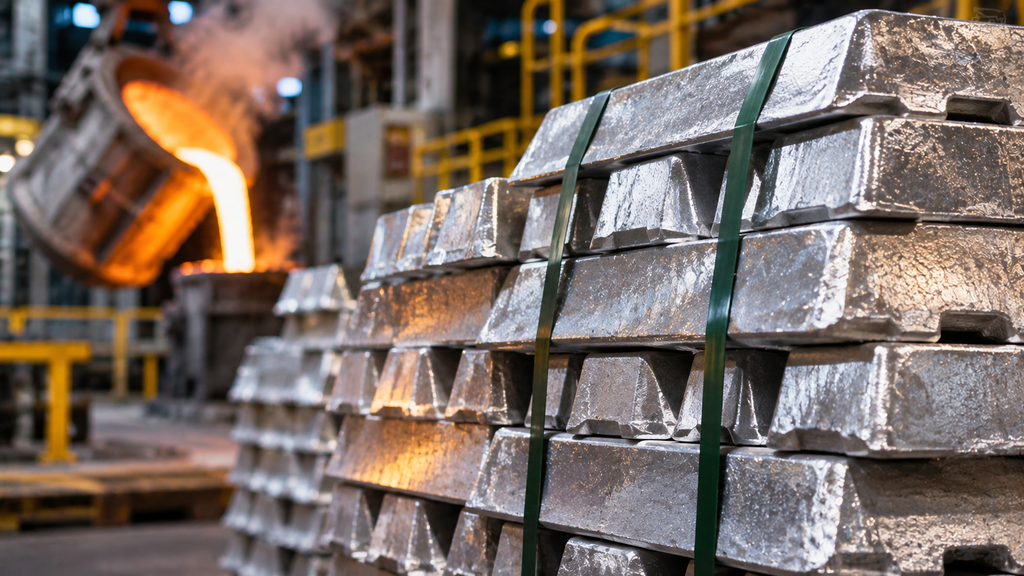
Another unusual feature of the current market is the concentration of available inventories.
LME position data indicated that two entities held accumulated long positions in warehouse warrants and spot contracts equivalent to approximately 60% to 80% of readily available exchange stocks as of November 9.
This concentration has increased market sensitivity to individual trading decisions.
When a substantial portion of available metal is controlled by a small number of participants, the remaining supply becomes more difficult to access for other buyers.
The situation can intensify competition for delivery and increase the cost of maintaining short positions.
Traders holding short contracts may face significant financial pressure when they need to obtain physical aluminium or roll their positions into later delivery dates.
The LME has mechanisms designed to limit the influence of dominant market positions, including requirements that large holders lend out positions under certain circumstances.
The exchange has also indicated that it monitors market participants and can request additional position-management information or require appropriate adjustments.
The situation therefore raises an important question about how effectively exchange regulations can maintain orderly trading when physical inventories become exceptionally concentrated.
Middle East Disruptions Continue to Affect Supply
The supply squeeze has developed against a complicated geopolitical backdrop.
The Middle East accounts for approximately 9% of global aluminium production, making the region an important component of international supply chains.
The conflict involving Iran and disruptions to regional logistics have affected aluminium shipments and created uncertainty around production and exports.
Although some producers have found alternative transportation routes, these workarounds have increased logistical costs and extended delivery times.
Certain smelters have also faced recovery challenges following damage to industrial infrastructure.
The consequences extend beyond the Middle East itself.
Aluminium is a highly energy-intensive metal, and production depends on reliable electricity supplies, transportation infrastructure and access to raw materials.
Any prolonged disruption across these areas can influence the economics of smelting and the availability of exportable metal.
The result has been additional pressure on a market that was already operating with relatively limited exchange inventories.
Russian Metal Creates an Additional Complication
The composition of LME inventories is another important part of the supply problem.
A substantial proportion of the aluminium remaining available in exchange warehouses is Russian-origin material.
Although certain Russian aluminium remains eligible for LME delivery under existing exchange rules, many Western consumers and traders avoid purchasing it because of sanctions-related restrictions, commercial policies and reputational considerations.
This creates a distinction between metal that is technically available through the exchange and metal that many industrial buyers are actually willing to purchase.
Consequently, headline inventory figures may overstate the amount of aluminium that is commercially acceptable to all market participants.
The issue is particularly relevant for European and North American manufacturers that operate under specific sourcing requirements.
In practical terms, the available pool of acceptable metal can be considerably narrower than total exchange inventory figures suggest.
Indonesia Could Change the Supply Outlook
While immediate availability remains constrained, the longer-term outlook is beginning to move in a different direction.
Indonesia is expanding its aluminium production capacity and emerging as an increasingly important source of additional global supply.
New smelting projects are expected to contribute significant volumes over the coming years, potentially changing the global market balance.
The additional production is particularly relevant because Indonesia offers access to substantial bauxite resources and has been developing its domestic mineral-processing industry.
However, there is an important distinction between increasing global production and increasing immediately deliverable LME inventory.
New Indonesian aluminium is not yet registered for delivery through the LME warehouse network.
Until this changes, additional production may improve the overall global supply balance without immediately resolving the shortage affecting exchange-based buyers.
This helps explain why the market can simultaneously anticipate future oversupply while experiencing exceptional premiums for immediate physical delivery.
China Adds Another Variable
China remains the world’s largest aluminium producer and consumer, making its production policy an important factor in determining global supply.
The country’s regulatory production ceiling has limited the potential for unlimited expansion of primary aluminium output.
At the same time, Chinese exports have increased.
China exported approximately 5.91 million tonnes of unwrought aluminium and aluminium products during the first ten months of 2026, compared with 5.02 million tonnes during the corresponding period a year earlier.
The increase represents an additional source of material for international markets.
However, export growth does not automatically resolve shortages in LME-registered warehouses.
Differences in product specifications, delivery locations, commercial contracts and exchange eligibility all influence whether additional material can reach buyers facing immediate shortages.
This is another reason why global production figures and exchange inventory data can tell very different stories about the same commodity market.
A Market Divided Between Immediate Scarcity and Future Surplus
The aluminium market is currently being shaped by two competing developments.
In the short term, falling inventories, concentrated positions and disrupted logistics are creating severe pressure on immediate availability.
Over the longer term, additional production from Indonesia and the recovery of Middle Eastern smelting capacity could significantly increase supply.
A Reuters survey of analysts projected a global aluminium surplus of approximately 410,000 tonnes in 2027, compared with an estimated deficit of 720,000 tonnes in 2026.
This potential transition illustrates the unusual dynamics currently affecting industrial metals.
The market is not necessarily facing a permanent shortage of aluminium. Instead, the immediate problem concerns the timing, location, origin and accessibility of available material.
For manufacturers, the distinction is critical.
Additional production arriving in the global market does not automatically translate into lower procurement costs if the metal cannot be delivered to the required location or through the necessary commercial channels.
Why the Aluminium Market Matters
Aluminium is one of the most important industrial metals in the global economy.
It is widely used in transportation, construction, packaging, electrical infrastructure, renewable energy and manufacturing.
Its relatively low weight, corrosion resistance and recyclability make it particularly important for industries undergoing structural changes.
Electric vehicle production, electricity-grid expansion and the development of modern industrial infrastructure all contribute to long-term aluminium consumption.
A prolonged shortage of immediately available metal could therefore create complications for manufacturers even if the broader market eventually moves towards surplus.
The current situation also demonstrates the importance of exchange inventories as an indicator of physical market conditions.
Commodity prices do not always reflect the availability of material at the location and time when industrial consumers need it.
The LME aluminium market is currently providing a clear example of that distinction.
The Next Phase of the Aluminium Market
The coming months will be important for determining whether the current shortage gradually eases or becomes more severe.
Market participants will be watching the pace of Indonesian production growth, the recovery of Middle Eastern smelters, Chinese exports and changes in LME warehouse inventories.
The concentration of available stocks will also remain an important factor in determining near-term market conditions.
For now, the aluminium market is facing an unusual combination of historically low exchange inventories and expectations of growing future production.
Whether the transition towards a global surplus will arrive quickly enough to relieve immediate physical shortages remains one of the most important questions facing the industrial metals market.
Read More
Codelco Opens Capital Debate on Copper
Chile’s copper giant faces production challenges, rising debt and growing pressure to attract private investment. Click to read the full article
Sources
- Bloomberg – London Aluminum Market Faces Biggest Supply Squeeze in Decades Stock Market News
- Reuters – Tight Stocks Drive Premium for Near-Term LME Aluminium Reuters
- Reuters – Aluminium Falls as Surging China Exports Revive Supply Concerns The Edge Malaysia
- Aegis Hedging – Aluminum Moves Higher; Backwardation Steepens AEGIS Hedging
- Mining.com – Aluminium Prices and Global Supply Outlook MINING.COM
- Editorial disclosure: Denarni Fokus – Editorial Disclosure & Transparency.