
Summary
Boeing recorded its strongest October order performance since 1997, securing 165 new aircraft orders without a single cancellation. However, deliveries declined 14% month-on-month, highlighting the gap between recovering airline demand and the manufacturer’s ability to increase production. The backlog offers long-term revenue potential, but execution remains critical.
◉ They secured 165 new aircraft orders in October, its strongest October net-order performance since 1997.
◉ Aircraft lessor Avolon accounted for 140 Boeing 737 MAX orders, representing the majority of the month’s new business.
◉ They delivered 49 aircraft in October, down 14% from September and 8% year-on-year.
◉ They recorded zero cancellations, while its total company backlog reached a record $745 billion in the third quarter.
◉ Shares traded around $173.45 in the November 11 market snapshot, remaining approximately 20.15% lower year-to-date.
Boeing Records Its Strongest October Since 1997
Boeing delivered a significant commercial signal in October, recording its strongest October performance for net aircraft orders in nearly three decades.
The US aircraft manufacturer secured 165 new orders without recording any cancellations during the month. The result represents an important indication of continuing demand for commercial aircraft despite operational challenges affecting the company’s production system.
The majority of the new business came from aircraft leasing company Avolon, which placed an order for 140 Boeing 737 MAX aircraft.
Additional orders included six 737 MAX aircraft for Allegiant Air, four further 737 MAX aircraft from unidentified customers and 15 Boeing 787 Dreamliners from undisclosed buyers.
The concentration of orders in the 737 MAX programme highlights the continued importance of narrowbody aircraft in the global aviation market.
Airlines and leasing companies continue to require fuel-efficient aircraft capable of supporting international passenger growth, fleet renewal and replacement of older aircraft.
For Boeing, the October figures provide evidence that commercial demand remains substantial even as the company works to restore production stability.
Avolon’s 140-Aircraft Order Strengthens Backlog
The Avolon transaction is particularly important because aircraft leasing companies play a central role in financing the global aviation industry.
Rather than purchasing every aircraft directly, many airlines obtain aircraft through leasing arrangements. This allows operators to manage capital requirements, adjust fleet capacity and maintain financial flexibility.
Avolon’s order for 140 Boeing 737 MAX aircraft therefore represents more than a single large customer commitment.
It reflects continued confidence in the long-term commercial relevance of the 737 family and the leasing market’s expectations for future airline fleet requirements.
Avolon had previously announced firm orders for 140 Boeing 737 MAX aircraft and 110 Airbus aircraft as part of a wider 250-aircraft commitment in October.
The company’s order demonstrates how aircraft lessors can provide manufacturers with substantial demand visibility, while distributing aircraft financing and delivery commitments across multiple airline customers.
For Boeing, the agreement also strengthens the importance of maintaining competitive positions in the global narrowbody market.
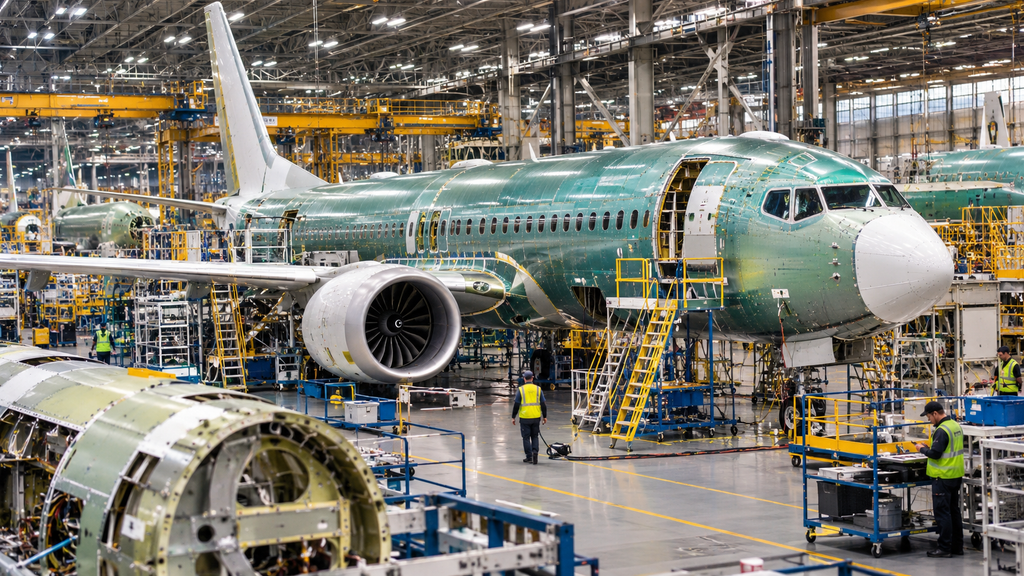
Deliveries Reveal Boeing’s Production Challenge
Despite the strong order figures, October deliveries presented a considerably weaker picture.
Boeing delivered 49 aircraft during the month, compared with 57 in September and 53 in October 2025.
This represents a 14% monthly decline and an approximately 8% year-on-year decrease.
The company delivered 32 Boeing 737 MAX aircraft, down from 43 in September. The remaining reported deliveries included 787 Dreamliners, 777 freighters and 767 aircraft.
The decline highlights the difference between securing orders and converting them into completed aircraft deliveries.
For aircraft manufacturers, deliveries are particularly important because they are closely linked to revenue recognition and cash generation.
A large order backlog can provide long-term commercial visibility, but the financial benefits depend on the manufacturer’s ability to produce aircraft, complete certification requirements and hand them over to customers on schedule.
Boeing is working to increase 737 production towards 47 aircraft per month, a rate management expects to reach in early 2027.
However, production constraints remain, particularly in the supply of aircraft wings. A separate supplier dispute has also affected production of wings for the 777 freighter and 767 programmes.
These challenges demonstrate that Boeing’s recovery remains dependent on improvements throughout its manufacturing and supplier network.
The Backlog Provides Long-Term Revenue Visibility
Boeing’s wider financial position provides another important part of the investment picture.
In its third-quarter 2026 results, the company reported a record total backlog of approximately $745 billion, including more than 6,300 commercial aircraft.
The commercial aircraft backlog alone was valued at approximately $612 billion.
This provides substantial visibility into future production requirements and customer demand.
Boeing also reported third-quarter revenue of $24.19 billion, an increase of 4% compared with the same period a year earlier.
Operating cash flow reached $1.5 billion, while free cash flow was approximately $500 million.
These figures indicate that the company continues to generate operating cash despite the significant costs associated with its recovery and production stabilisation efforts.
Nevertheless, the backlog should not be interpreted as immediate revenue or guaranteed future cash flow. Delivery schedules, customer financing, production capacity and potential changes in airline demand all influence when contracted orders translate into financial results.
Boeing Shares: Strong Orders, Weak Delivery Momentum
Boeing’s October order performance has to be considered alongside its share-price development.
Despite strong commercial demand, the stock remained under pressure in the reported November 11 snapshot, reflecting continuing concerns about production reliability, delivery schedules and the company’s financial recovery.
The investment picture is complicated by several competing factors.
Positive developments:
- Strong aircraft order intake.
- No cancellations in October.
- Record total company backlog.
- Improving operating cash flow.
- Continuing demand for the 737 MAX and 787 programmes.
Remaining challenges:
- Lower monthly aircraft deliveries.
- Production bottlenecks and supplier constraints.
- Workforce restructuring.
- Safety, certification and manufacturing quality requirements.
- The time required to convert backlog into cash generation.
The market’s central question is whether Boeing can translate its substantial commercial order pipeline into a sustained improvement in production, deliveries and profitability.
Boeing and Airbus: The Competitive Landscape
Boeing’s October performance also needs to be assessed against its European competitor, Airbus.
Through the first ten months of 2026, Boeing had delivered 524 aircraft, compared with 621 delivered by Airbus.
The difference illustrates the competitive pressure facing Boeing as it attempts to restore manufacturing output and strengthen its position in the global commercial aviation market.
Airbus has benefited from comparatively stronger delivery momentum, although the European manufacturer also faces supply-chain and production constraints.
For airlines and leasing companies, the ability to receive aircraft on schedule is increasingly important.
Production reliability influences fleet planning, financing costs, route expansion and the timing of new capacity entering service.
Consequently, Boeing’s recovery will depend not only on attracting new orders but also on demonstrating that it can fulfil existing commitments more consistently.
The Bigger Aviation Investment Picture
The October order figures highlight an important characteristic of the global aviation industry: long-term demand can remain strong even when manufacturers experience short-term operational difficulties.
Airline passenger demand, fleet replacement requirements and the need for more fuel-efficient aircraft continue to support the commercial aerospace market.
Aircraft leasing companies also remain important participants in this cycle, providing financing solutions and helping airlines manage fleet investment.
However, the economics of aircraft manufacturing are highly dependent on production efficiency.
Delays can increase costs, postpone customer payments and create additional pressure on working capital.
For Boeing, the challenge is therefore to balance a substantial commercial backlog with the operational discipline required to deliver aircraft at a higher and more predictable rate.
The October results provide encouraging evidence of demand recovery, but they do not yet demonstrate that the company’s manufacturing challenges have been resolved.
What Comes Next for Boeing?
The next important indicators will be production rates, monthly deliveries and the conversion of new orders into completed aircraft.
Investors will also be watching whether Boeing can achieve its targeted 737 production rate of 47 aircraft per month in early 2027.
Further improvements in supplier performance and manufacturing quality will be essential to restoring confidence among airlines, lessors and financial markets.
The record October order performance represents a positive commercial milestone for Boeing.
However, the longer-term investment case will depend on whether the manufacturer can turn that demand into reliable deliveries, stronger cash generation and sustainable financial performance.
For the global aerospace industry, Boeing’s recovery remains one of the most important developments to watch as aircraft demand continues to expand.
Sources
- Reuters – Boeing jet deliveries drop 14% in October
- AirInsight – Boeing October 2026 Orders and Deliveries
- CAPA – Boeing reports 165 aircraft orders
- Avolon – Q3 2026 update and aircraft orders
- Boeing – Third Quarter 2026 Financial Results
- Quartz – Boeing records strongest October orders since 1997
- Yahoo Finance – Boeing stock
- Editorial Disclosure & Transparency: https://denarnifokus.com/editorial-disclosure-transparency/