Summary
Oil prices rebounded on November 11 as renewed attacks on commercial shipping and escalating tensions involving Iran increased concerns over energy transportation through the Strait of Hormuz. Brent recovered to $92.77, while diplomatic uncertainty and rising US inventories continued to complicate the market outlook.
◉ Behind the latest market move, oil prices continued their upward trend, with Brent gaining 1.4% to $92.77 per barrel and WTI advancing 0.9% to $86.80.
◉ Thirty-seven vessels were attacked in October across the Strait of Hormuz and surrounding waterways, according to reported security data.
◉ An ADNOC Logistics and Services vessel sustained damage following an attack in UAE territorial waters on November 10.
◉ Behind the diplomatic stance, Iran continues to reject any proposal to remove its enriched uranium stockpile from national territory, complicating ongoing nuclear negotiations.
◉ Preliminary industry data indicated a 9-million-barrel increase in US crude inventories, with official figures expected later Wednesday.
Oil Markets Reverse Direction
Crude oil prices recovered on Wednesday after falling to their lowest levels in approximately two months during the previous session.
Brent crude rose 1.4% to $92.77 per barrel, while US West Texas Intermediate advanced 0.9% to $86.80.
The rebound reflects a shift in market sentiment as traders reassessed the balance between potential diplomatic progress and persistent geopolitical risks.
Earlier optimism surrounding a possible reduction in tensions between Washington and Tehran had contributed to selling pressure. However, reports of additional incidents involving commercial vessels in the Gulf region have reinforced concerns about the security of international energy transportation.
The market is now pricing two opposing scenarios: a potential reduction in geopolitical risk if negotiations progress, and the possibility of further supply disruptions if maritime security deteriorates.
Hormuz Becomes the Critical Pressure Point
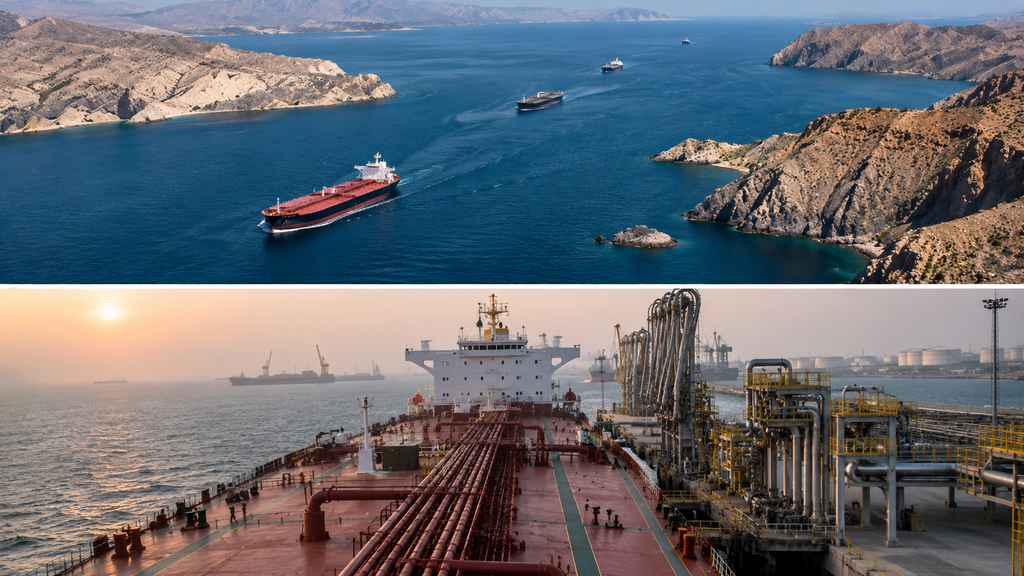
The Strait of Hormuz remains one of the most important energy transportation corridors in the world.
Approximately one-fifth of global petroleum liquids consumption passes through the strait, making it a critical connection between major Middle Eastern oil producers and international markets.
Recent security developments have increased concerns about the reliability of this route.
According to maritime security data cited in recent reporting, 37 vessels were attacked in October across the Strait of Hormuz and surrounding waterways, the highest monthly total since the beginning of the current Middle East conflict.
A further 10 attacks were recorded during the first part of November.
On November 10, ADNOC Logistics and Services confirmed that one of its vessels had sustained damage following an attack in UAE territorial waters in the Arabian Gulf. The company said response efforts were ongoing.
The incidents demonstrate that geopolitical risk is no longer limited to potential restrictions on oil exports. Commercial shipping itself has become an increasingly important part of the regional security equation.
Iran Negotiations Remain Uncertain
Diplomatic developments are creating additional uncertainty for energy markets.
Iran’s security leadership rejected the possibility of removing enriched nuclear material from the country, complicating expectations of an imminent diplomatic breakthrough.
Meanwhile, US Secretary of State Marco Rubio called on other countries to contribute to protecting commercial shipping through the Strait of Hormuz against Iranian drone attacks.
The diplomatic challenge is significant. Some US allies have indicated that additional maritime support would be more appropriate after hostilities end, while Washington has emphasised the importance of protecting international shipping during the conflict.
For oil traders, the distinction between diplomatic progress and actual improvements in maritime security is becoming increasingly important.
Even if negotiations produce a political agreement, shipping activity may not immediately return to normal. Insurance premiums, vessel availability, security assessments and potential mine-clearance requirements could continue affecting transportation costs.
Supply Risks Versus Rising Inventories
Despite the geopolitical premium returning to crude prices, the broader supply picture remains complicated.
Preliminary industry data indicated that US crude inventories increased by approximately 9 million barrels during the latest reporting week.
Official inventory figures from the US Energy Information Administration were expected later on Wednesday.
An increase of this magnitude could indicate weaker near-term demand, stronger domestic production or changes in refinery activity and import flows.
This creates a counterbalance to geopolitical concerns.
While the Middle East situation increases the risk of transportation disruptions, higher US inventories suggest that physical supply conditions outside the region may provide some protection against immediate shortages.
The relationship between inventory accumulation and geopolitical risk will remain an important driver of short-term oil price movements.
Why the Strait Matters to Global Energy Markets
The Strait of Hormuz is particularly important because alternative export routes cannot fully replace its transportation capacity.
Major producers, including Saudi Arabia, Iraq, Kuwait, the UAE and Iran, depend on Gulf infrastructure to deliver substantial volumes of crude and petroleum products to international customers.
A prolonged disruption could affect:
- Asian refiners dependent on Middle Eastern crude.
- European energy markets through changes in global oil prices.
- Shipping companies facing higher insurance and security costs.
- Refinery margins and international fuel prices.
- Inflation expectations through higher transportation and energy costs.
The impact would extend beyond crude oil. Liquefied natural gas shipments, particularly from Qatar, also depend heavily on the same maritime corridor.
Consequently, even without a complete closure of the strait, persistent security threats could increase the cost and complexity of global energy transportation.
What Comes Next for Oil?
The immediate direction of crude prices will depend on several interconnected developments.
First, investors will continue monitoring diplomatic communication between Washington and Tehran. Any credible progress could reduce the geopolitical premium currently embedded in oil prices.
Second, maritime security incidents will remain central to market sentiment. Additional attacks or restrictions on commercial shipping could quickly reverse expectations surrounding supply stability.
Third, US inventory figures will provide another indication of underlying market fundamentals, helping traders assess whether geopolitical concerns are developing alongside broader supply tightness.
The current recovery does not necessarily signal the beginning of a sustained upward trend. Instead, it reflects a market increasingly sensitive to geopolitical headlines while still responding to inventories, production and global demand.
For energy markets, the Strait of Hormuz has once again become a decisive variable in determining how geopolitical developments translate into crude oil prices.
Sources
- Reuters – Oil rebounds as Iran tensions affect shipping
- Associated Press – US calls for international shipping protection
- ADNOC – November 10 operational update
- UK Maritime Trade Operations – Shipping security incidents
- Euronext – Oil market developments
- International Maritime Organization – Middle East maritime security
- Editorial Disclosure & Transparency: https://denarnifokus.com/editorial-disclosure-transparency/