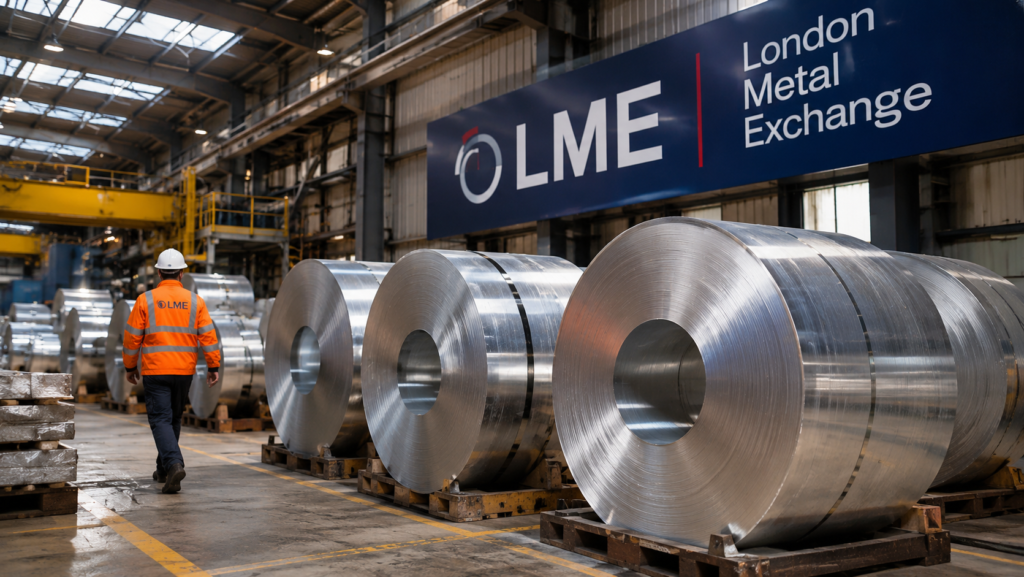
Summary: Global markets attempted a recovery on Wednesday as technology shares rallied, but renewed inflation concerns kept interest-rate expectations elevated. Aluminium emerged as a major industrial market story, caught between tightening physical inventories, rising Chinese exports and expectations of future supply growth. Thursday brings another important test through economic data, corporate earnings and government bond auctions.
◉ Aluminium is becoming a key market battleground: near-term physical supply remains tight, even as Chinese exports and expectations of future production growth put pressure on prices.
◉ Wall Street recovered on Wednesday, led by AI stocks and CoreWeave, but stronger US inflation data continued to challenge expectations for Federal Reserve policy.
◉ Thursday brings a concentrated global market calendar, including UK GDP, US employment and housing data, oil inventories, a US 30-year bond auction and major corporate earnings.
World Market Coverage
Wednesday’s Market Recovery
Wednesday delivered a noticeable change in global market sentiment, although the recovery was concentrated in technology rather than spread evenly across the market.
US equities advanced as investors returned to artificial intelligence-related shares following several sessions of pressure. CoreWeave became one of the most important drivers of the rebound, with its shares rising approximately 23% after the company reported strong quarterly revenue growth and raised its financial outlook.
The company reported third-quarter revenue of $3.66 billion, representing annual growth of 168%. Its contracted revenue backlog reached $132.5 billion, while management outlined a path towards adjusted profitability during the first half of 2028.
The results helped ease concerns about the financial sustainability of the AI infrastructure expansion. However, the sector remains exposed to substantial capital expenditure requirements, financing costs and the possibility that future computing demand may not fully justify current investment levels.
At Wednesday’s market close:
- Nasdaq Composite: +1.66% to 25,483.04.
- S&P 500: +1.12% to 7,605.33.
- Dow Jones Industrial Average: +0.03% to 52,248.80.
- STOXX Europe 600: +0.63%.
- MSCI global equities index: +0.98%.
The difference between the Nasdaq’s performance and the Dow’s almost unchanged close illustrates the concentration of the recovery in technology and growth-oriented companies.
The market is therefore showing signs of recovery, but the broader economic environment remains considerably more complicated.
Aluminium Takes Centre Stage
Aluminium deserves particular attention as one of the most important industrial commodity stories of the week.
The market is currently experiencing two opposing developments: physical availability remains unusually tight, while the longer-term supply outlook is becoming more comfortable.
This distinction is important because futures prices do not always reflect the immediate availability of metal for manufacturers.
The London Metal Exchange’s three-month aluminium contract was trading around the $3,000-per-tonne level on Wednesday. The latest official LME closing data listed the contract at approximately $3,010.50 per metric tonne.
The recent price weakness follows a substantial correction from the four-year high reached in June. Aluminium has lost approximately 20% from that peak as concerns about Middle Eastern supply disruptions have eased.
However, the physical market continues to show signs of significant tightness.
Available aluminium inventories in LME-registered warehouses have fallen approximately 51% since the conflict involving Iran disrupted shipments from the Middle East in February.
Available LME stocks stood at approximately 207,525 tonnes, their lowest level since March 2025.
The situation is further complicated by the composition of these inventories. Almost all available LME warehouse stocks were of Russian origin at the end of October, limiting the practical availability of metal for some Western buyers.
Meanwhile, inventories monitored by the Shanghai Futures Exchange also declined sharply, falling 31% in the latest reported week to approximately 132,605 tonnes.
These figures demonstrate that the aluminium market is not simply experiencing a conventional demand-driven price movement.
The availability, geographical location and commercial acceptability of physical metal are becoming increasingly important factors.
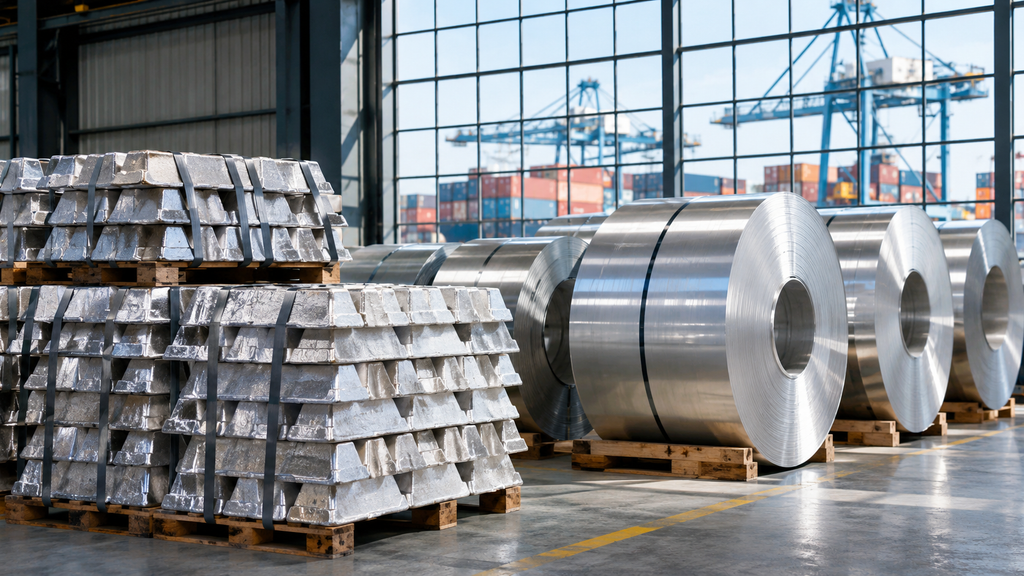
China Changes the Supply Picture
China remains central to the global aluminium market.
As the world’s leading producer and a major consumer of industrial metals, changes in Chinese production, exports and domestic demand can influence international pricing.
Chinese customs data showed that exports of aluminium and aluminium products increased 18% to approximately 5.9 million tonnes during the first ten months of 2026.
Higher exports create additional competition for international producers and can reduce the pressure created by supply disruptions elsewhere.
At the same time, the market is looking towards Indonesia, where additional production capacity is expected to enter the global supply chain.
The potential recovery of Middle Eastern production is another important variable.
These developments are changing expectations for the 2027 aluminium market balance.
Analysts surveyed in a recent industry poll expect the global aluminium market to move from an estimated deficit of approximately 720,000 tonnes in 2026 to a surplus of around 410,000 tonnes in 2027.
That would represent a substantial change in the market’s fundamental outlook.
However, the expected surplus does not mean that physical supply conditions will immediately normalise. New capacity must become operational, production must reach commercial levels, and metal must be delivered to the markets where it is needed.
The difference between future supply expectations and current physical availability could remain an important source of price volatility.
Aluminium and the Inflation Connection
The aluminium market also has a wider economic dimension.
Aluminium is used throughout the global economy, including construction, automotive manufacturing, packaging, transportation, electrical infrastructure, renewable energy and industrial equipment.
Its price therefore influences production costs across a wide range of industries.
When aluminium becomes more expensive, manufacturers may face higher input costs. Depending on market conditions, these costs can eventually be reflected in the prices of finished products.
However, the relationship is not immediate or automatic.
Manufacturing contracts, energy expenses, transportation costs, currency movements and regional physical premiums all influence the final price paid by businesses.
For this reason, a decline in the LME benchmark does not necessarily translate into an equivalent reduction in consumer prices.
Energy remains another major factor.
Aluminium production is electricity-intensive, making the industry particularly sensitive to changes in power prices and energy availability. Any renewed disruption to energy infrastructure or international shipping could change the economics of production.
The current market is therefore balancing three important forces:
- The possibility of additional global production.
- Tight inventories and regional physical supply constraints.
- Energy, transportation and financing costs.
For inflation monitoring, aluminium is particularly relevant because it connects commodity markets with industrial production costs and the wider price environment.
If industrial metal prices stabilise while energy costs remain elevated, the impact on inflation could be very different from a scenario in which both categories rise simultaneously.
Inflation Challenges the Market Recovery
While technology shares recovered on Wednesday, the inflation outlook remained a significant concern.
Fresh US October consumer price figures showed that headline inflation increased 0.4% month-on-month, compared with the 0.3% expected by economists.
Core inflation, excluding food and energy, increased 0.3%, against expectations of 0.2%.
The figures reinforced concerns that inflationary pressure has not disappeared despite previous monetary tightening.
There is also an important statistical qualification: the US statistical agency could not publish the standard annual inflation comparison for October because October 2025 survey data were unavailable following the previous year’s government funding disruption.
Consequently, the monthly increase should not be confused with a confirmed year-on-year inflation rate.
Nevertheless, the latest figures have strengthened expectations that the Federal Reserve could maintain a restrictive monetary position for longer.
Markets have increasingly priced in another rate increase in December, while discussion of a possible 50-basis-point increase has returned.
This creates a difficult environment for equities.
Technology companies benefit from strong structural demand for AI infrastructure, but higher interest rates increase financing costs and can place pressure on valuations.
The same monetary environment also affects industrial commodities.
A stronger US dollar can make dollar-denominated metals more expensive for international buyers, while higher financing costs increase the expense of holding physical inventories.
The result is a market in which positive corporate earnings do not necessarily eliminate macroeconomic risk.
Oil Adds Another Inflation Variable
Energy markets also moved higher on Wednesday.
Brent crude advanced approximately 2.68% to $93.94 per barrel, while US crude reached approximately $88.08.
Geopolitical developments involving Iran and renewed attention to regional security contributed to the move.
For global markets, higher oil prices create another potential inflationary challenge.
Energy costs influence transportation, manufacturing, electricity generation and logistics. Sustained increases can therefore affect both headline inflation and corporate operating expenses.
Thursday’s delayed US petroleum inventory report will provide another indication of the balance between supply and demand.
The combination of rising oil prices and elevated inflation expectations makes the energy market particularly relevant for the next trading session.
Europe and Slovenia: A Different Market Picture
Wednesday’s developments were also relevant for European investors.
Germany confirmed an October inflation rate of 2.8%, down from 3.3% in September. However, energy-related costs remained elevated in several categories.
In Slovenia, the latest October figures showed annual inflation of 3.3%.
Housing, water, electricity, gas and other fuels increased 8.6% year-on-year, while transportation costs increased 5.9%.
Food prices also increased 1.8% compared with September, despite overall monthly consumer prices remaining unchanged.
This illustrates an important distinction between headline inflation and the actual cost pressures experienced by households.
Slovenia also faces a regulatory change in household lending. From January 2027, the minimum protected monthly income retained after loan repayments will increase from €745 to €840.
The change could affect borrowing capacity, particularly among households with lower monthly incomes.
On the domestic equity market, Krka remained the centre of trading activity in the latest reported Ljubljana session.
The pharmaceutical company’s shares generated approximately €1.43 million in turnover, while the SBITOP index closed at 2,983.17 points, gaining 0.18%.
Krka’s upcoming nine-month financial results add another domestic corporate development to Thursday’s calendar.

Corporate Recovery Beyond Technology
Wednesday’s corporate developments also highlighted the difference between improving business demand and the ability to convert that demand into financial performance.
Boeing recorded 165 new aircraft orders in October, its strongest October order performance since 1997.
The company reported no cancellations, while its total backlog reached approximately $745 billion in the third quarter.
However, October deliveries declined to 49 aircraft, down 14% from September.
The figures illustrate a familiar theme across several industries: demand can recover before production capacity, operational efficiency and cash generation fully catch up.
European investment flows also remain strong.
European ETFs attracted approximately €40.8 billion in October, bringing year-to-date inflows to €396.3 billion, according to Morningstar estimates.
The continued demand for equity and fixed-income products highlights the importance of institutional and retail capital flows even as market volatility increases.
Meanwhile, luxury markets delivered another product development with Vacheron Constantin updating its Fiftysix collection with two new stainless-steel models.
Although outside the immediate macroeconomic picture, the announcement illustrates the continuing activity in the premium consumer and luxury goods segment.
Thursday’s Global Market Calendar
Thursday, 12 November 2026, brings a concentrated schedule of economic releases, corporate earnings and financial-market events.
The most important developments will come from the United Kingdom, United States and major global companies.
All times below are Central European Time (CET).
| Time (CET) | Event | Why it matters |
|---|---|---|
| 08:00 | UK Q3 GDP – First Estimate | Growth outlook, sterling and Bank of England expectations |
| 13:00 | Brookfield Q3 2026 results | Infrastructure, real estate and alternative assets |
| 14:30 | US Initial Jobless Claims | Fresh indication of labour-market conditions |
| 16:00 | US Existing Home Sales – October | Housing demand and consumer financing conditions |
| 16:00 | Brookfield conference call | Management outlook and investment strategy |
| 18:00 | US EIA Crude Oil Inventories | Oil supply, demand and energy prices |
| 19:00 | US 30-Year Treasury Bond Auction | Long-term borrowing costs and bond-market demand |
| Time TBC | Trinzic Investor Day | Strategy and outlook for the planned standalone business |
| Time TBC | Sonova Half-Year Results 2026/27 | Healthcare technology and hearing-care demand |
| 22:30 | Cisco Q1 FY2027 earnings call | Networking infrastructure and AI-related investment |
| 22:30 | Applied Materials Q4 FY2026 earnings call | Semiconductor equipment and global chip investment |
The EIA’s holiday-adjusted schedule also includes a second report release at 20:00 CET. Brookfield’s results are scheduled for approximately 13:00 CET, with its conference call at 16:00 CET. The 30-year Treasury auction is scheduled for 19:00 CET.
The Three Biggest Market Tests
1. UK Economic Growth
The first important event comes from the United Kingdom.
The Q3 GDP release will provide an updated picture of economic momentum and help markets assess the outlook for sterling, British equities and Bank of England policy.
Weak growth could increase pressure for monetary easing, while stronger-than-expected activity could complicate expectations for interest-rate reductions.
2. US Economic Resilience
The combination of initial jobless claims and existing home sales will provide two different perspectives on the US economy.
Employment remains central to the Federal Reserve’s assessment of economic conditions.
Housing is equally important because mortgage costs, affordability and transaction activity provide insight into the sensitivity of consumers to higher interest rates.
Together, the releases will help determine whether the economy is slowing sufficiently to change the current inflation and monetary-policy outlook.
3. AI Infrastructure and Corporate Earnings
The technology sector remains a major driver of equity-market sentiment.
Cisco and Applied Materials will provide additional insight into demand for networking equipment, semiconductor manufacturing technology and the infrastructure required to support artificial intelligence.
Their results are particularly relevant following CoreWeave’s strong quarterly performance.
Investors will be looking beyond revenue growth, focusing on order visibility, capital expenditure, margins and management expectations.
Sources
- Reuters – Global markets: Wednesday recovery Reuters+1
- Reuters – Aluminium inventories and supply outlook Reuters+1
- Shanghai Metals Market – Aluminium market update, November 11 Shanghai Metals Market (SMM)
- London Metal Exchange – Official aluminium prices London Metal Exchange+1
- Office for National Statistics – UK economic release calendar Office for National Statistics+1
- Brookfield Corporation – Q3 2026 results Brookfield Corporation
- US Energy Information Administration – Petroleum report schedule eia.gov+1
- US Treasury – November 30-year bond auction U.S. Department of the Treasury
- KBR – Trinzic Investor Day Spin-Off Information+1
- Sonova – Half-Year Results 2026/27 Sonova International+1
- Cisco – Q1 FY2027 earnings calendar Events & Presentations
- Applied Materials – Q4 FY2026 results announcement Applied Materials
- Editorial Disclosure & Transparency: https://denarnifokus.com/editorial-disclosure-transparency/