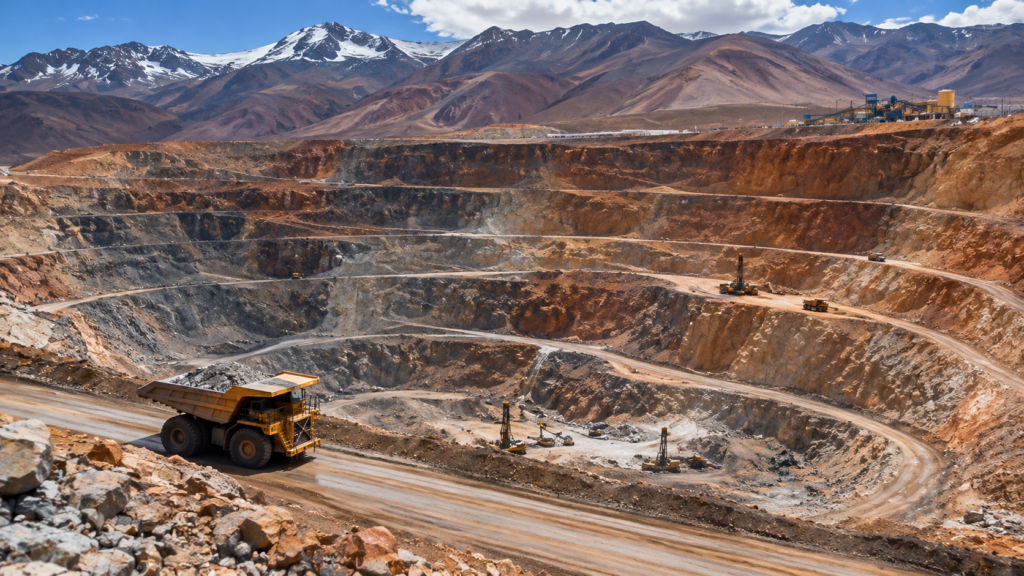
Summary:Chile’s state-owned copper giant Codelco is facing growing pressure to consider private investment as declining production, operational setbacks and financial constraints challenge its long-term position. The debate could reshape how Chile finances its most strategically important mining company while retaining state control.
◉ They are considering opening Codelco, the world’s largest state-owned copper producer, to private investment under Finance Minister Jorge Quiroz.
◉ Declining copper production, project delays, rising operational challenges and substantial debt have increased pressure on the company to reconsider its investment model.
◉ The government says private participation could support future development without surrendering state control, although any structural changes would require broader political discussion.
A New Chapter for Chile’s Copper Industry
Chile’s relationship with its copper industry may be approaching an important turning point.
Codelco, the country’s state-owned mining giant, has traditionally operated under a model in which the state maintains control over one of its most important strategic assets. However, declining production, increasing investment requirements and operational difficulties are bringing a previously sensitive subject back into the economic debate: private capital.
On November 11, Finance Minister Jorge Quiroz publicly acknowledged that Chile may eventually need to consider allowing private investment directly into Codelco.
His comments represent an important development in the discussion surrounding the company’s future financing structure. While the government has not announced an immediate privatisation programme, the possibility of expanding private participation marks a notable shift in the conversation around the country’s mining sector.
Quiroz has emphasised that the immediate priority is to stabilise the company’s operations, improve management and restore its financial position before considering broader structural changes.
The distinction is important. The discussion is not necessarily about transferring ownership away from the state, but about identifying additional sources of capital for future development.
Production Problems Increase Pressure
Codelco’s financial and operational challenges have become increasingly difficult to separate.
The company has experienced declining copper production, delays in major development projects, lower ore grades and operational interruptions at several important mining operations.
Its difficulties reflect a broader challenge facing mature copper producers: extracting economically viable resources from increasingly complex deposits requires larger investments, more sophisticated technology and longer development timelines.
The company’s production trajectory has also raised questions about the effectiveness of its previous investment strategy.
Codelco’s management has acknowledged the need for a more realistic operational outlook, with chairman Bernardo Fontaine indicating that the company must work with private-sector partners if it wants to stabilise production over the longer term.
Fontaine has highlighted approximately one million hectares of mining concessions that remain undeveloped, arguing that Codelco does not have sufficient management capacity and capital to develop all of these resources independently.
The company has already established partnerships with international mining groups, including BHP and Rio Tinto. Expanding this approach could become an important component of its future development strategy.
Private Capital Becomes a Political Question
The possibility of private investment in Codelco extends beyond conventional corporate financing.
For decades, the company has represented an important part of Chile’s economic identity and public ownership model. Copper revenues have played a significant role in government finances, while Codelco has maintained a central position in the country’s mining industry.
Consequently, any discussion about introducing private capital into the company carries political implications.
Quiroz has clarified that attracting additional private investment does not necessarily mean privatisation. The government intends to retain state control, while considering whether private investors could participate in financing individual development projects or potentially contribute capital directly to the company over the longer term.
He has also stressed that any changes to the ownership structure would require broad political discussion and are not part of an immediate government programme.
This distinction could become central to future negotiations between the government, mining unions, political parties and potential international investors.
For investors, the important question is how Chile could create a framework that attracts long-term capital while preserving public control over strategic mining resources.
The Financial Challenge Behind the Debate
Codelco’s investment requirements are substantial.
Developing new mining areas, modernising existing operations and replacing declining reserves require significant capital expenditure. These investments must also compete with the company’s existing financial obligations.
The company ended 2025 with net debt of approximately $25.1 billion, according to industry reporting.
Although higher copper prices can support revenue and operating profitability, they do not automatically resolve structural production problems or eliminate the need for substantial investment.
In August 2026, the Chilean government authorised Codelco to retain the equivalent of approximately $2.42 billion in 2025 profits.
The decision was an important change in the company’s financing arrangements, allowing resources that would traditionally have flowed to the state to remain within the business.
However, retained earnings alone may not be sufficient to finance the full investment programme required to modernise ageing mines and develop new resources.
Private partnerships, joint ventures, asset disposals and potential changes to the capital structure are therefore becoming increasingly relevant to the company’s financial outlook.
US Investors and Copper Refining
Another important element of Quiroz’s comments concerns the potential role of American investment in Chile’s copper-processing industry.
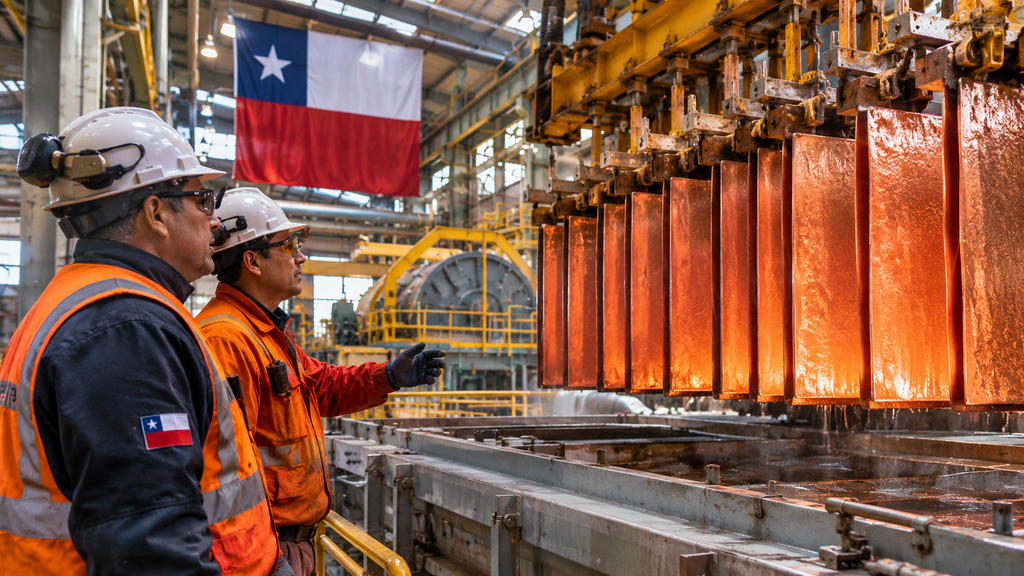
The minister has expressed interest in attracting US financial participation in domestic refining capacity, particularly facilities capable of producing copper cathodes for export to the American market.
This proposal comes at a time when industrial economies are paying greater attention to the security of critical mineral supply chains.
Copper is essential to electricity networks, renewable energy systems, electric vehicles, industrial equipment and data-centre infrastructure.
As demand from electrification and artificial intelligence infrastructure expands, access to reliable supplies of refined copper is becoming increasingly important.
Chile has a substantial resource base and an established mining industry, but expanding its domestic processing capacity could require significant additional investment.
The possibility of greater US participation could therefore connect Chile’s mining financing debate with broader international efforts to secure strategic raw materials.
For Chile, attracting investment into refining could also increase the domestic economic value generated by its copper resources rather than relying predominantly on exports of less-processed materials.
Operational Reform Comes First
Despite the growing discussion about private capital, Codelco’s immediate challenge remains operational.
The company must address production reliability, improve project execution and strengthen financial discipline.
Its recent reporting problems have also increased scrutiny of management transparency and corporate governance.
The discovery of improperly reported production figures has raised additional questions about internal controls and the reliability of previous operational projections.
For a company of Codelco’s importance, restoring confidence among the government, investors, employees and international partners will be an essential part of any future financing strategy.
Private investors are unlikely to evaluate opportunities solely on the size of Chile’s copper reserves. They will also consider governance standards, project execution, regulatory certainty, capital allocation and the ability to generate predictable returns.
This makes operational reform a prerequisite for any meaningful expansion of private-sector participation.
What It Means for Global Copper Markets
Codelco’s difficulties matter beyond Chile’s domestic economy.
The company is one of the most important producers in the global copper industry, and its ability to maintain production has implications for the international supply outlook.
Copper demand is being supported by several structural developments, including electricity-grid expansion, renewable energy, electric mobility, industrial automation and artificial intelligence infrastructure.
At the same time, bringing new copper production online is becoming increasingly complicated. Existing mines are ageing, ore grades are declining and new projects often require years of development before reaching commercial production.
This creates a difficult supply environment in which operational disruptions at major producers can become increasingly important for global markets.
If Codelco succeeds in attracting additional investment and improving its production performance, the company could strengthen its position in the international copper industry.
However, if financial and operational constraints persist, the company’s production challenges could become another factor contributing to long-term supply uncertainty.
A Strategic Decision for the Next Decade
The debate surrounding Codelco reflects a broader question facing resource-rich economies: how can governments finance the development of strategically important natural resources without losing control over them?
Chile is now confronting that question through one of its most important national companies.
The government’s position suggests that private investment may eventually become part of the solution, but only after operational reforms and broader discussions about the company’s future structure.
The outcome could influence not only Codelco’s investment model but also how other state-owned mining companies approach financing, partnerships and long-term production development.
For global copper markets, the central issue is ultimately whether Chile can translate its enormous mineral resources into reliable future production.
The answer will depend on capital availability, governance, technology and the ability to execute complex mining projects in an increasingly demanding operating environment.
Sources
- Reporte Minero – Quiroz considers opening Codelco to private capital El portal de minería en Chile
- BioBioChile – Quiroz clarifies private capital does not mean privatisation BioBioChile
- Reuters – Codelco needs private partners to halt output decline Mining Weekly
- La Tercera – Chile’s economy, Codelco and private investment La Tercera
- Bloomberg – Chile Copper Giant’s Woes Put Private Capital Taboo in Spotlight
- Editorial disclosure: Denarni Fokus – Editorial Disclosure & Transparency.