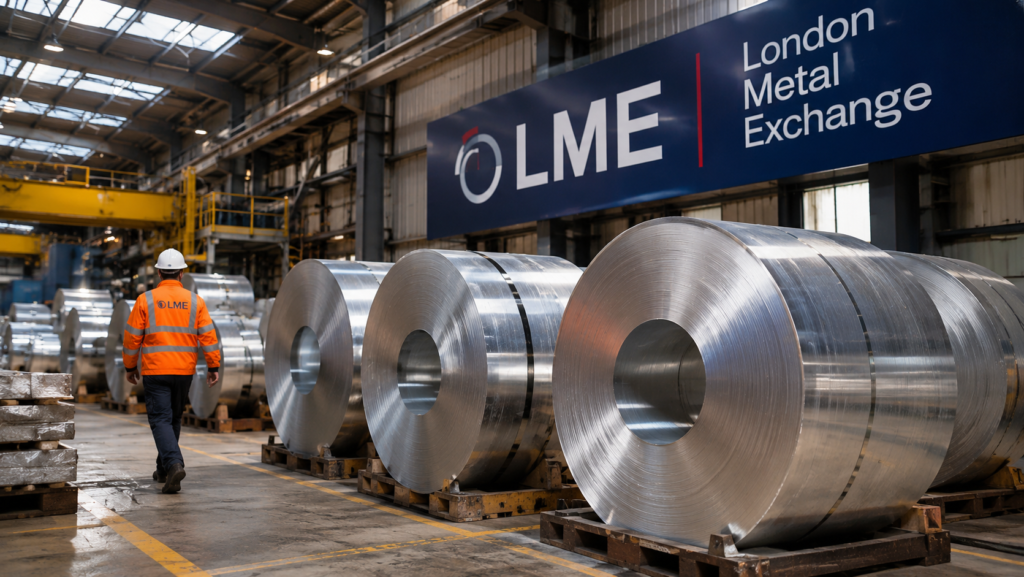
Summary: European stocks closed mostly higher on Wednesday, 11 November 2026, as strong corporate earnings, AI-related demand and a rally in Siemens Energy lifted sentiment. The STOXX Europe 600 approached its August record, while inflation and interest-rate concerns continued to influence investor positioning.
◉ The STOXX Europe 600 advanced 0.20% to 660.06 points, moving closer to its August record.
◉ Germany’s DAX outperformed major European indices, gaining 0.73% as technology and industrial shares supported the market.
◉ Siemens Energy became a major market driver after reporting record annual results, stronger profitability and ambitious targets through 2030.
◉ Inflation concerns, higher oil prices and expectations surrounding Federal Reserve policy remained important risks for European equities.
European Markets Close Higher
European equities ended Wednesday’s trading session predominantly in positive territory, extending the market’s recent strength as investors continued to assess corporate earnings, artificial intelligence investment and the outlook for global economic growth.
The STOXX Europe 600 finished at 660.06 points, gaining 0.20%. Although the advance was relatively modest, the index remained close to the record territory reached in August, highlighting the resilience of European equities despite persistent macroeconomic uncertainty.
Germany led the major continental markets. The DAX climbed 0.73% to 26,540.20 points, supported by strength in industrial and technology-related companies. The Netherlands’ AEX gained 0.69%, while France’s CAC 40 advanced 0.34%.
The UK’s FTSE 100 also finished higher, adding 0.38% to 10,792.10 points.
Performance was less positive in Southern Europe. Spain’s IBEX 35 slipped 0.07%, while Italy’s FTSE MIB declined 0.17%.
The overall picture reflected selective buying rather than a uniform rally. Investors continued to differentiate between companies benefiting from structural investment trends and businesses facing weaker earnings expectations or higher operating costs.
Siemens Energy Drives Market Attention
One of Wednesday’s most significant corporate developments came from Siemens Energy, whose shares rallied following the publication of its fiscal 2026 results and updated long-term financial ambitions.
The German energy technology group reported revenue of €44.2 billion for the financial year, representing comparable growth of 15.5%. Profit before special items more than doubled to €5.49 billion, while net income increased to €4.13 billion.
The company’s financial performance was accompanied by a substantial improvement in cash generation. Free cash flow before tax reached approximately €8.8 billion, compared with €4.7 billion in the previous financial year.
Another important development was the recovery of Siemens Gamesa, which reached break-even on profit before special items, marking a significant milestone in its restructuring process.
The company’s order backlog also reached a record €164 billion, providing considerable visibility into future business activity.
Management outlined an ambitious growth strategy extending to 2030, targeting annual revenue growth of 12% to 14% and a profit margin before special items of 20% to 22%.
For fiscal 2027, Siemens Energy expects further revenue growth and a profit margin of 14% to 16%.
The company also proposed increasing its dividend to €2.30 per share and announced an additional share buyback programme of up to €9 billion through fiscal 2030.
These figures underline the growing importance of electricity infrastructure, grid expansion, gas power generation and energy equipment in the global investment cycle.
European Closing Performance
Wednesday, 11 November 2026 · Closing figures · Local market indices
| Index | Closing level | Daily change |
|---|---|---|
| STOXX Europe 600 | 660.06 | +0.20% |
| Germany DAX | 26,540.20 | +0.73% |
| France CAC 40 | 8,307.00 | +0.34% |
| UK FTSE 100 | 10,792.10 | +0.38% |
| Netherlands AEX | 1,140.20 | +0.69% |
| Spain IBEX 35 | 19,923.20 | -0.07% |
| Italy FTSE MIB | 51,668.00 | -0.17% |
Artificial Intelligence Supports Technology Stocks
Artificial intelligence remained an important theme across European equity markets, particularly for companies involved in semiconductor equipment, electrical infrastructure and industrial automation.
The latest developments in the AI investment cycle provided additional support for technology-related shares.
US-based CoreWeave strengthened market sentiment after outlining expectations of reaching adjusted profitability in the first half of 2028. Its outlook helped reinforce confidence in the infrastructure supporting artificial intelligence, although questions remain about the profitability and sustainability of the enormous capital expenditure being directed towards data centres.
European companies also benefited from this investment theme.
Siemens Energy, Schneider Electric and Legrand represent different parts of the expanding electricity infrastructure ecosystem. Their exposure includes power generation, electrical distribution, grid technologies and equipment required to support growing electricity consumption.
The market’s attention is increasingly shifting beyond semiconductor manufacturers towards the companies supplying the physical infrastructure required to operate AI systems.
This development creates a broader industrial dimension to the AI investment cycle, extending its influence across European technology and industrial sectors.
Inflation and Oil Prices Remain Risks
Despite the positive market performance, the macroeconomic environment continued to create uncertainty.
Higher-than-expected US inflation data increased concerns about the possibility of a more restrictive Federal Reserve policy outlook. The prospect of interest rates remaining elevated for longer can influence equity valuations, financing conditions and corporate investment decisions.
European investors were also monitoring developments in energy markets.
Brent crude prices strengthened following reports of shipping attacks in the Strait of Hormuz, an important international energy transportation corridor.
Any prolonged disruption to shipping through the region could increase energy costs and complicate the inflation outlook.
For Europe, the relationship between energy prices and inflation remains particularly important because higher oil and gas costs can affect industrial production, transportation, consumer spending and corporate margins.
The combination of elevated energy prices and uncertainty surrounding monetary policy therefore remained a counterweight to positive corporate earnings.
Corporate Earnings Create Diverging Performances
Wednesday’s trading also highlighted the growing differences between individual companies during the current earnings season.
While Siemens Energy delivered a strong set of results, not every European company benefited from the same market environment.
Wind turbine manufacturer Vestas faced pressure following quarterly operating profitability that fell short of market expectations.
Czech industrial and defence company CSG also experienced significant selling pressure after reducing its full-year operating margin forecast.
These developments illustrate an important feature of the current European equity market: investors are rewarding companies demonstrating stronger profitability, credible growth expectations and improved cash generation, while reacting negatively to weaker forecasts.
The earnings season is consequently becoming an important test of the sustainability of European equity valuations.
What Comes Next for European Markets?
The STOXX Europe 600’s proximity to its August record places additional attention on the next phase of the European earnings season.
Several factors are likely to remain central to market performance:
- Corporate profitability: Whether companies can maintain earnings growth despite higher operating costs.
- AI infrastructure investment: Whether growing demand for data centres, semiconductors and electricity infrastructure translates into sustainable earnings.
- Energy prices: Whether geopolitical developments create further pressure on oil and European industrial costs.
- Monetary policy: How inflation developments influence expectations for Federal Reserve and European Central Bank interest rates.
- Economic growth: Whether improving industrial activity can support broader European corporate performance.
Wednesday’s session demonstrated that strong company-specific results can continue to support European equities even when the broader macroeconomic environment remains uncertain.
The next important question is whether earnings growth can provide sufficient support for the market to move beyond its previous record levels.
Sources
- Reuters – European market closing performance and sector developments.
- Siemens Energy – Fiscal 2026 earnings release, financial results and 2030 targets.
- The Wall Street Journal – Siemens Energy earnings and long-term profitability outlook.
- Investing.com – Siemens Energy earnings and market reaction.
- Reuters – AI infrastructure, energy prices and monetary policy developments.
- Editorial Disclosure: Denarni Fokus – Editorial Disclosure & Transparency