Summary
Europe’s property market is heading towards a longer and more uneven recovery than investors previously expected. A new PwC and Urban Land Institute report highlights a shift towards reliable rental income, operational efficiency and asset-specific opportunities, as higher financing costs, political uncertainty and construction expenses continue to challenge valuations.
◉ Only 45% of surveyed European property executives expect business profitability to improve in 2027, down from 50% in the previous year’s survey.
◉ Investors are increasingly prioritising resilient rental income, asset repositioning and operational improvements over broad property price appreciation.
◉ London, Madrid and Paris remain Europe’s three leading real estate investment destinations, while Munich and Milan are gaining ground.
◉ Data centres and energy infrastructure rank among the most attractive investment sectors, reflecting growing demand for digital capacity and energy security.
◉ Housing affordability, construction costs, regulatory uncertainty and climate risks remain major structural challenges for European property markets.
Europe’s Property Recovery Takes Longer
The European real estate market is entering another phase of adjustment, with investors preparing for a recovery that could take longer than previously anticipated.
The latest Emerging Trends in Real Estate Europe 2027 report, published by PwC and the Urban Land Institute, suggests that the industry’s next growth phase will be driven less by broad market appreciation and more by the financial performance of individual properties.
The research is based on surveys and interviews with 1,498 senior real estate professionals across Europe.
Its findings reveal a more cautious investment environment. Only 45% of respondents expect business profitability to increase in 2027, compared with 50% in the previous survey.
The decline reflects several interconnected pressures, including elevated borrowing costs, inflation, geopolitical uncertainty, volatile construction expenses and increasing regulatory complexity.
The report does not suggest that European real estate has lost its investment appeal. Instead, it points towards a market in which performance will increasingly depend on location, asset quality, financing structure and the ability to generate sustainable operating income.
Rental Income Becomes More Important
One of the most significant changes in investor sentiment is the growing emphasis on recurring income.
During periods of rapid property appreciation, investors can generate substantial returns through rising valuations and favourable market conditions.
That environment has become more difficult.
Higher interest rates have increased financing costs, while uncertainty surrounding economic growth and property valuations has made capital appreciation less predictable.
As a result, investors are placing greater importance on the income generated by existing assets.
Properties with reliable tenants, attractive locations, manageable operating costs and opportunities to improve efficiency are becoming increasingly relevant.
This approach places greater emphasis on active asset management.
Rather than relying primarily on rising market prices, property owners are increasingly looking at rental optimisation, refurbishment, energy efficiency, tenant retention and more effective property management.
The distinction is important for institutional investors. A property that generates consistent operating income can remain commercially attractive even when the wider market experiences limited capital growth.
Europe’s Leading Investment Cities
Despite the more cautious outlook, several European cities continue to attract substantial investor attention.
London, Madrid and Paris retained the top three positions in the report’s rankings for investment and development prospects.
Munich moved into fourth place, overtaking Berlin, while Milan climbed to fifth.
Lisbon also entered the top ten, highlighting the increasing interest in selected Southern European markets.
European investment outlook – leading destinations
| Ranking | City | Market position |
|---|---|---|
| 1 | London | Leading investment destination |
| 2 | Madrid | Strong investment prospects |
| 3 | Paris | Major institutional market |
| 4 | Munich | Rising investor interest |
| 5 | Milan | Improving market position |
| Top 10 | Lisbon | Newly entered top group |
The rankings reflect more than the size of individual property markets. Investors are also evaluating liquidity, economic growth, rental demand, financing availability and the long-term competitiveness of each location.
London continues to benefit from its international financial position and established property investment ecosystem. Madrid and Paris maintain their appeal through their economic scale, diversified tenant demand and international investor networks.
Munich’s improved position highlights the attractiveness of markets with strong economic fundamentals, while Milan’s progress reflects growing interest in Italy’s commercial and residential property sectors.
Data Centres Lead Investment Prospects
One of the clearest investment themes emerging from the report is the growing importance of digital infrastructure.
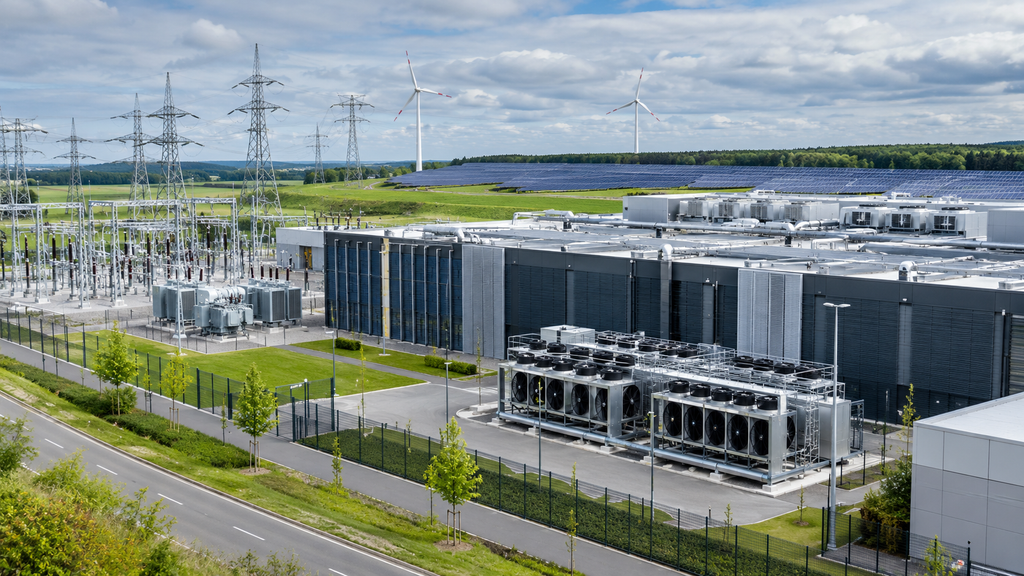
Data centres rank first among European real estate sectors for investment prospects, reflecting the expansion of artificial intelligence, cloud computing and digital services.
The demand for computing capacity is creating new requirements for specialised property infrastructure, including:
- High-capacity electricity connections.
- Advanced cooling systems.
- Reliable digital connectivity.
- Large-scale industrial sites.
- Long-term infrastructure financing.
Energy infrastructure is also attracting increasing investor attention.
The expansion of artificial intelligence and cloud computing is placing additional pressure on electricity networks and energy supply. This creates opportunities for developments connected to power generation, storage, grid infrastructure and energy distribution.
However, data-centre investment also involves considerable challenges. Electricity availability, planning permissions, construction costs and environmental requirements can significantly influence project economics.
The long-term commercial success of these assets will depend on whether rental and service revenues justify their substantial capital requirements.
Housing Shortages Create Structural Opportunities
Residential real estate remains one of Europe’s most important long-term investment themes.
The report identifies housing affordability and supply constraints as the biggest challenges facing European cities over the next decade.
The problem extends across major metropolitan areas, where population growth, limited housing construction and high development costs have created significant pressure on residential markets.
The consequences reach beyond property prices.
Housing shortages can affect labour mobility, economic competitiveness and the ability of cities to attract skilled workers.
For property developers and institutional investors, this creates a complicated environment.
Demand for housing remains substantial, but the economics of new construction are increasingly challenging. Land prices, financing expenses, building materials, labour costs and planning procedures can make affordable residential developments difficult to deliver.
This situation could increase the importance of rental housing, professionally managed residential portfolios and redevelopment projects.
It also highlights the potential role of public-private partnerships in addressing structural housing shortages.
Regulation and Climate Risk Reshape Investment Decisions
Political and regulatory uncertainty remain important obstacles to investment.
According to the report, 38% of respondents identified regulatory uncertainty as one of their three leading business concerns. National political stability was highlighted by 41% of participants as an important issue for the coming year.
These concerns are particularly relevant for international investors, who must evaluate differences in taxation, planning procedures, rental regulation and environmental requirements across European jurisdictions.
Climate risk is becoming another major consideration.
Some 53% of respondents expect the importance of adapting to physical climate risks to increase over the next 18 months, rising to 59% over the next five years.
This suggests that climate resilience is moving beyond a secondary sustainability consideration and becoming an increasingly important part of property valuation and investment analysis.
Buildings exposed to flooding, extreme temperatures and other physical risks may require additional capital expenditure.
At the same time, older properties may need substantial refurbishment to improve energy efficiency and meet evolving environmental standards.
For owners of existing portfolios, these requirements can influence operating expenses, rental competitiveness and long-term asset values.
Central and Eastern Europe Gain Attention
Central and Eastern Europe also offers an increasingly interesting part of the investment landscape.
Poland stands out as a major regional growth market, supported by economic expansion, relatively competitive debt financing and strong banking liquidity.
Investment volumes in Poland reached €4.8 billion during the first nine months of 2026, representing a 77% increase compared with the same period a year earlier, according to MSCI data cited in the report.
Warsaw retained 12th position in the European investment and development rankings.
The city’s attractiveness is supported by its growing economy, expanding business services sector and demand for modern commercial property.
Oxford Economics forecasts cited in the report project average annual real GDP growth of 3.1% for Warsaw between 2027 and 2029.
For comparison, the corresponding forecasts are 2.2% for Madrid, 1.6% for London and 1.3% for Paris.
Nevertheless, international investors continue to account for geopolitical exposure, currency fluctuations and lower market liquidity when evaluating Central and Eastern European opportunities.
The region’s investment appeal therefore combines stronger growth potential with a different risk profile from established Western European markets.
A Different Real Estate Investment Cycle
The findings of the PwC and ULI report point towards a structural change in how European real estate investments are evaluated.
The next phase of the market is unlikely to reward investors simply for acquiring property and waiting for valuations to rise.
Instead, financial performance will increasingly depend on the quality of individual assets, sustainable rental income, operational efficiency and the ability to adapt properties to changing economic and environmental conditions.
Data centres, energy infrastructure, residential rental housing and strategically located commercial properties are emerging as important areas of interest.
At the same time, higher financing costs, regulatory uncertainty and climate-related investment requirements will continue to influence returns.
For Europe’s real estate industry, the recovery is therefore becoming less about a broad rebound in property prices and more about identifying assets capable of delivering consistent economic value throughout a prolonged period of adjustment.
Sources
- Real Asset Insight – Emerging Trends Report 2027
- IPE Real Assets – European Recovery Takes Longer
- Property Forum – PwC and ULI Report
- Bisnow – Five Key Findings From Emerging Trends 2027
- Institutional Real Estate – European Market Outlook
- PwC – Official Research
- Urban Land Institute Europe
- Editorial Disclosure & Transparency