Summary: The global AI boom is intensifying the memory-chip shortage, with Micron warning that supply constraints could become even tighter in 2027. Expanding production remains a slow process as AI infrastructure demand accelerates.
◉ Memory supply is unlikely to balance with demand in 2027, according to Micron’s CTO.
◉ AI data centres are absorbing increasing volumes of advanced memory, particularly DRAM and high-bandwidth memory (HBM).
◉ New manufacturing capacity will take time to deliver meaningful additional supply, leaving consumer electronics exposed to higher component costs.
The AI Industry Is Running Into a Memory Bottleneck
The global artificial intelligence expansion is creating a new challenge for the semiconductor industry: securing enough memory to support increasingly powerful computing systems.
Micron Technology’s president and chief technology officer, Scott DeBoer, has warned that the memory market could become even tighter in 2027. In a recent interview, he said the company currently sees no clear timeline for supply and demand to return to balance.
His comments highlight how the AI investment cycle is changing the semiconductor market. While processors and graphics units have attracted much of the attention, memory is becoming an equally important component in the construction of modern AI infrastructure.
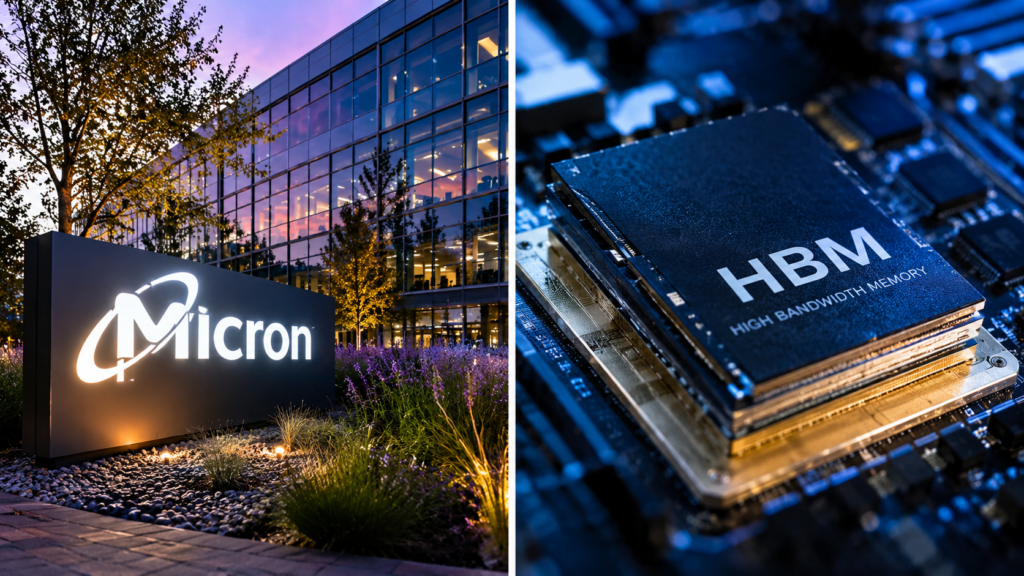
Large language models, AI agents and increasingly complex workloads require substantial amounts of memory to process and retain information efficiently. This is increasing demand for conventional DRAM, advanced HBM and enterprise storage.
Why Supply Cannot Keep Up
The pressure is partly structural. Memory manufacturers cannot increase production overnight. Building semiconductor facilities requires significant capital investment, specialised equipment, clean-room infrastructure and lengthy qualification processes.
Micron has outlined more than $250 billion in planned US investment through 2035, alongside expansion projects at existing facilities worldwide. However, these investments will not immediately translate into additional market supply.
Another important factor is the production economics of high-bandwidth memory. HBM requires more wafer capacity per delivered bit than conventional DRAM, meaning that manufacturers must allocate more resources to produce memory designed for AI accelerators.
This creates a competitive allocation problem. As manufacturers prioritise higher-value AI products, the available production capacity for other memory categories can become increasingly constrained.

AI Infrastructure Changes The Market
The scale of AI investment is adding another layer of pressure.
Technology companies are building increasingly large data centres to support generative AI, autonomous systems and agent-based computing. These systems require not only powerful processors but also substantial quantities of high-performance memory.
Nvidia’s latest financial commentary has also highlighted the growing impact of memory costs on the semiconductor supply chain. Rising component expenses are becoming an important consideration even for companies benefiting directly from AI infrastructure spending.
The situation creates an unusual market dynamic: demand for AI hardware remains strong, but the availability and cost of essential components could influence how quickly infrastructure projects expand.
Consumer Electronics Face Higher Costs
The effects are extending beyond data centres.
PC manufacturers, laptop producers and smartphone companies depend on the same broader memory manufacturing ecosystem. When production capacity is increasingly directed towards enterprise and AI customers, consumer electronics manufacturers can face higher procurement costs and tighter component availability.
This could translate into more expensive devices, changes in product specifications and pressure on manufacturers’ margins.
The impact may be particularly significant for lower-margin hardware producers, which have less flexibility to absorb increases in memory prices.
The 2027 Supply Outlook
Industry forecasts suggest that the shortage may not affect all memory categories equally.
TrendForce has previously projected that DRAM supply conditions could remain particularly tight in 2027, while NAND flash could gradually move towards a more balanced market as additional production capacity becomes available.
The distinction matters because DRAM and HBM are central to AI computing performance, whereas NAND is primarily used for data storage.
The next phase of the semiconductor cycle will therefore depend on how quickly manufacturers can expand production, how much additional memory AI systems require and whether technology companies maintain their current infrastructure spending plans.
For Micron and its competitors, the opportunity is substantial. However, the same supply constraints supporting pricing power could also become a limitation for the broader technology industry.
The central question heading into 2027 is no longer simply how quickly AI computing capacity can grow, but whether the semiconductor supply chain can expand quickly enough to support it.
Supply Is Already Being Reserved
The shortage is also changing how memory manufacturers negotiate with customers. Micron has entered into long-term strategic supply agreements, with commitments designed to secure future production for major customers.
The concentration of global memory production adds another vulnerability. Micron, Samsung Electronics and SK hynix dominate the DRAM and HBM supply chain. When these manufacturers allocate more capacity to AI infrastructure, other industries have limited alternatives.
Industry analysis published on November 19 also highlighted the strategic implications of this concentration, particularly for companies dependent on conventional DRAM supplies.
The result is a market where access to production capacity is becoming as important as the price of memory itself.