[df_language_switch slug=”cena-zlata-srebra-padec-fed-obrestne-mere-november-2026″]
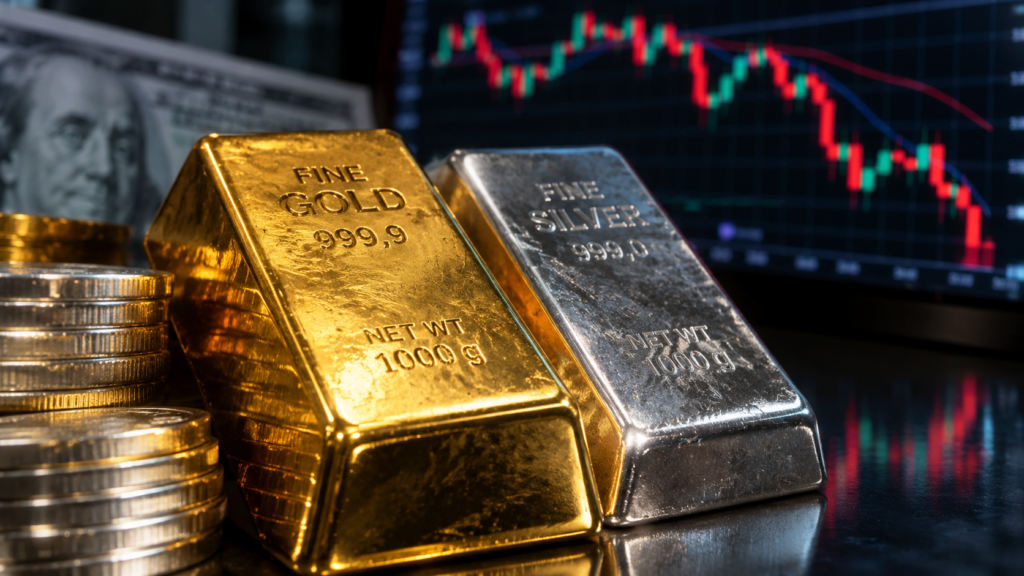
Summary: Gold has fallen to its lowest level in more than a year, breaking below the $3,800-per-ounce threshold as a stronger US dollar, rising Treasury yields and expectations of further Federal Reserve tightening weigh on precious metals. Silver is experiencing an even sharper decline, with losses approaching 3%. Investors are now awaiting the Federal Reserve’s October meeting minutes for further signals on interest rates.
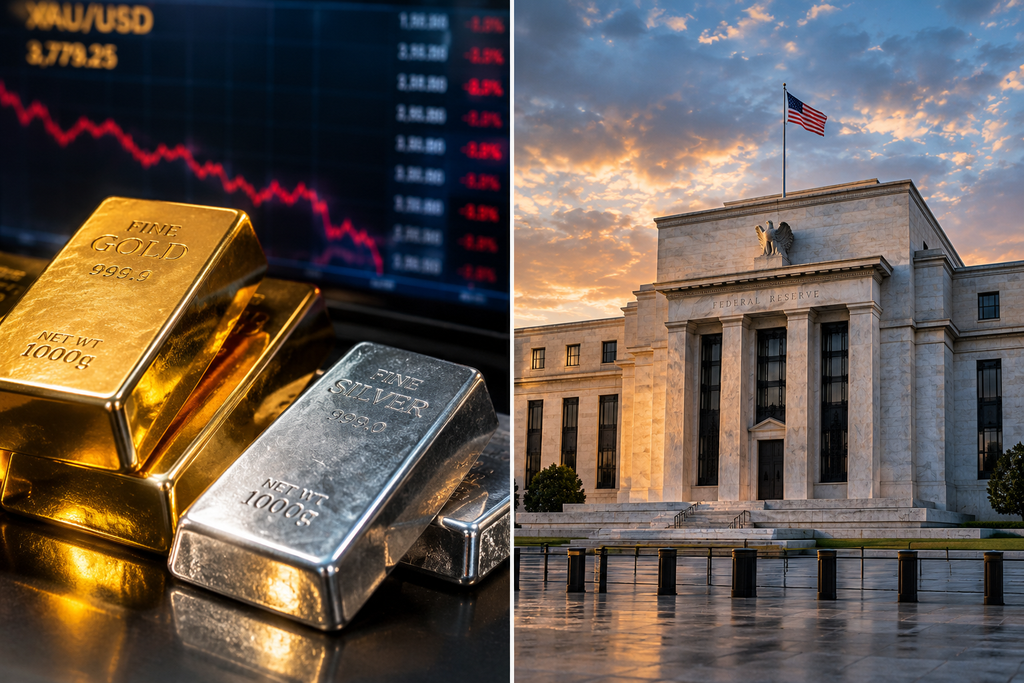
◉ Gold fell nearly 2% to approximately $3,778 per ounce on November 18, reaching its lowest level since September 2025.
◉ Silver declined approximately 2.9% to $46.01 per ounce, underperforming gold as selling pressure spread across the precious metals market.
◉ Markets are pricing in approximately a 96.7% probability of a 25-basis-point Federal Reserve rate increase in December, increasing pressure on non-yielding assets.
◉ The October 27–28 FOMC meeting minutes, scheduled for November 18 at 19:00 GMT, represent the next major catalyst for precious metals.
Gold: Break Below $3,800
Gold prices extended their decline on November 18, falling below the psychologically important $3,800-per-ounce threshold and reaching their lowest level in more than a year.
Spot gold declined nearly 2% to approximately $3,777.83 per ounce, while December US gold futures also moved lower, trading around $3,779.50.
The decline reflects a combination of monetary policy expectations, currency movements and technical selling.
The US dollar remains near a 19-month high, making dollar-denominated bullion more expensive for international buyers. At the same time, rising US Treasury yields are increasing the opportunity cost of holding gold, which does not generate interest income.
The latest comments from Federal Reserve officials have reinforced expectations that monetary policy may need to remain restrictive for longer.
New York Fed President John Williams indicated that another interest rate increase could be necessary to contain inflationary pressures, although he opposed a more aggressive tightening approach.
Markets have consequently increased their expectations of a December rate increase, creating another headwind for gold.
Fed Expectations Drive Precious Metals Lower
Interest rate expectations have become one of the most important short-term drivers of the gold market.
According to CME FedWatch market pricing, investors were assigning approximately a 96.7% probability to a 25-basis-point rate increase in December, while the probability of a larger 50-basis-point increase stood at approximately 3.3%.
Higher interest rates generally reduce the relative attractiveness of gold because investors can obtain greater returns from interest-bearing financial instruments.
The stronger dollar adds another layer of pressure by reducing the purchasing power of international buyers.
Market volatility is also contributing to the decline. Some investors are reducing precious metals positions to raise liquidity and cover losses or margin requirements in other financial markets.
This means that the current sell-off is not driven exclusively by changing expectations for gold’s long-term fundamentals. Liquidity requirements and technical selling are also influencing short-term price movements.
Silver: Losses Approach 3%
Silver is experiencing a deeper correction than gold, highlighting its greater sensitivity to changes in financial-market sentiment.
Spot silver declined approximately 2.9% to $46.01 per ounce on November 18.
The decline follows several sessions of pressure across precious metals, with the stronger dollar and expectations of higher US interest rates reducing investor appetite.
Unlike gold, silver has a significant industrial component to its demand profile.
Its applications include solar panels, electronics, electrical equipment and various manufacturing processes. This means that silver prices are influenced by both monetary conditions and expectations for industrial activity.
However, the industrial-demand component has not been sufficient to offset the latest wave of selling.
Technical pressure is also increasing as prices move lower and investors reassess their exposure to the metal.
Gold and Silver Face Different Market Pressures
Although both metals are declining, their underlying market dynamics are not identical.
Gold remains particularly sensitive to the US dollar, real interest rates, central-bank expectations and investment demand.
Silver faces these same monetary pressures but also responds to changes in industrial consumption and manufacturing activity.
This distinction becomes important during periods of market stress. Silver can experience larger percentage movements because its investment and industrial demand components react differently to economic developments.
The latest decline has therefore reinforced the divergence in risk characteristics between the two metals, even as both remain exposed to the same tightening financial environment.
Fed Minutes: The Next Market Catalyst
Investors are now focusing on the publication of the Federal Reserve’s October 27–28 meeting minutes, scheduled for November 18 at 19:00 GMT (20:00 CET).
The minutes could provide further insight into policymakers’ assessment of inflation, economic activity and the appropriate direction of interest rates.
Three elements will be particularly important:
- Inflation: Whether policymakers remain concerned about persistent price pressures.
- Interest rates: How broadly members support another increase in December.
- Economic conditions: Whether slowing growth could eventually limit the scope for further monetary tightening.
A more hawkish interpretation could maintain pressure on gold and silver through higher yield expectations and continued dollar strength.
Alternatively, indications of greater caution among policymakers could create room for stabilisation in precious metals.
Precious Metals at a Critical Turning Point
The November sell-off highlights the sensitivity of precious metals to changes in monetary policy expectations.
Gold has broken below $3,800, while silver has moved towards $46 per ounce, with both markets experiencing increased selling pressure.
The immediate direction will depend heavily on the Federal Reserve’s communication and the movement of US Treasury yields and the dollar.
Beyond the upcoming meeting minutes, investors will also monitor institutional positioning, exchange-traded fund flows and signs of stabilisation in broader financial markets.
For now, the precious metals market remains under pressure as expectations of tighter monetary conditions challenge the investment appeal of non-yielding assets.
Sources
- Reuters – Gold Falls Nearly 2% to More Than One-Year Low. Reuters
- FXEmpire – Gold and Silver Forecast Ahead of Fed Minutes. FXEmpire
- Investing.com – Gold Falls as Fed Officials Reinforce Rate-Hike Outlook. Investing.com Philippines
- Kitco – Precious Metals Spot Prices. KITCO
- Editorial Disclosure & Transparency.