Short description: The global semiconductor industry could approach $1.94 trillion in revenue by 2027 as artificial intelligence accelerates demand for advanced memory, high-performance processors and data-centre infrastructure. The next phase of AI investment may reshape the global chip market.
◉ Global semiconductor revenue could reach $1.94 trillion in 2027, according to Gartner’s forecast.
◉ Memory chips are emerging as one of the biggest beneficiaries of AI infrastructure investment, with revenue potentially exceeding $1 trillion.
◉ Cloud providers are increasingly developing their own AI processors, creating a more competitive market beyond traditional GPU suppliers.
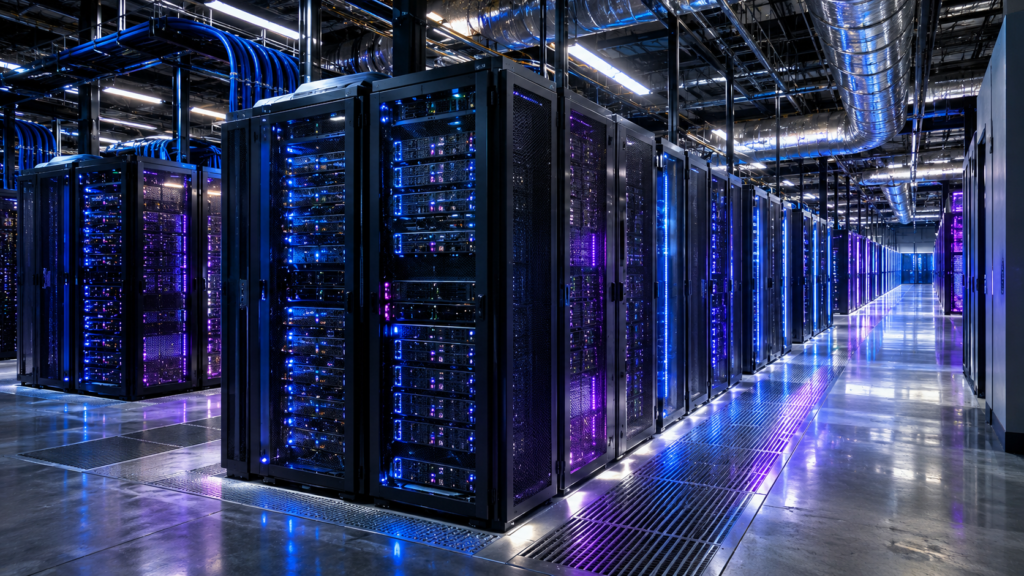
◉ The expansion of AI data centres is shifting semiconductor demand towards high-bandwidth memory, advanced packaging and specialised computing hardware.
The $1.94 Trillion Semiconductor Market
The global semiconductor industry is approaching a scale that would have appeared ambitious only a few years ago. The expansion of artificial intelligence infrastructure is changing the economics of chip manufacturing, memory production and advanced computing.
According to Gartner’s August 2026 forecast, worldwide semiconductor revenue is projected to reach $1.94 trillion in 2027, compared with approximately $809 billion in 2025. This represents an increase of around 140% over two years.
The forecast includes the entire semiconductor industry, not exclusively AI processors. However, artificial intelligence infrastructure and the associated memory demand are becoming major forces behind the expansion.
The projected market breakdown is particularly significant:
| Semiconductor segment | 2025 | 2026 forecast | 2027 forecast |
|---|---|---|---|
| Memory | $220.1B | $837.3B | $1,075.5B |
| Non-memory | $589.0B | $717.9B | $864.4B |
| Total market | $809.0B | $1,555.2B | $1,939.9B |
Figures in US dollars. Forecast estimates.
Memory could account for approximately 55% of total semiconductor revenue in 2027. This is a remarkable change in the industry’s composition and highlights how AI computing requires more than increasingly powerful processors.
The growing importance of high-bandwidth memory (HBM), DRAM and NAND storage is becoming central to the next phase of semiconductor expansion.
Memory Becomes the Strategic Bottleneck
The performance of artificial intelligence systems increasingly depends on how quickly processors can access and transfer information.
Modern AI models require enormous quantities of data to be processed simultaneously. High-bandwidth memory allows processors to access information at significantly higher speeds than conventional memory configurations, making it essential for advanced AI accelerators.
This creates a different competitive environment for semiconductor manufacturers.
Companies producing memory components are becoming increasingly important to the AI infrastructure supply chain. The industry is also facing manufacturing challenges because HBM production requires sophisticated packaging, specialised manufacturing processes and substantial investment.
Gartner forecasts memory revenue to exceed $1 trillion in 2027, reaching approximately $1.076 trillion.
This projection reflects both higher demand and the impact of pricing conditions. It should not be interpreted as a pure measure of increased physical chip production: semiconductor revenue is also influenced by selling prices, product mix and available supply.
The expansion of memory production capacity will therefore be one of the important factors determining whether manufacturers can meet demand without creating further supply constraints.
The Battle Beyond Nvidia
The next stage of the AI semiconductor market may be defined by a broader range of specialised processors rather than dependence on a single category of graphics processing units.
Industry development · 9 November 2026
Recent developments illustrate this shift. Google has introduced two specialised versions of its eighth-generation Tensor Processing Unit architecture, the TPU 8tx and TPU 8i Max.
The new processors address different requirements. The 8tx focuses on confidential AI computing, while the 8i Max is designed for workloads requiring substantially greater memory and computing capacity.
The development highlights an important change in the semiconductor market: cloud providers increasingly want processors designed around their own infrastructure, workloads and performance requirements.
This does not mean that general-purpose GPUs are becoming irrelevant. Rather, specialised processors are creating additional competition in areas where energy efficiency, processing costs and workload optimisation matter.
The expansion of Google’s TPU portfolio also demonstrates how semiconductor competition is increasingly connected to cloud computing services and the commercial distribution of AI models.
Another important development is taking place at Qualcomm. Its transition into data-centre processors and custom silicon is creating an additional competitive front. The company has indicated a fiscal 2027 data-centre revenue target of $5 billion, with initial custom accelerator shipments already underway.
These developments suggest that the future AI chip market will involve several competing architectures, business models and infrastructure providers.
AWS and the Expanding AI Infrastructure
Amazon Web Services is also developing its position in specialised AI computing through its Trainium processor family.
Its Project Rainier infrastructure, developed to support Anthropic’s Claude models, illustrates the scale of computing resources being assembled to support advanced AI systems.
The strategic importance of this development extends beyond the number of processors deployed. Cloud providers are attempting to control more of the computing infrastructure behind AI services, potentially reducing their dependence on external chip suppliers.
For hyperscalers, custom silicon can offer greater control over computing costs, energy efficiency and hardware availability.
This creates a more complex semiconductor supply chain in which traditional chip designers, cloud operators, memory manufacturers and advanced packaging companies all compete for a larger share of AI infrastructure spending.
Advanced Manufacturing and Packaging
The semiconductor expansion is also creating demand beyond processors and memory.
Advanced packaging has become an increasingly important part of AI chip manufacturing. High-performance computing systems often combine multiple chip components and memory stacks within sophisticated packages to improve processing performance and data transfer.
As chip architectures become more complex, packaging capacity can become a limiting factor even when the underlying semiconductor components are available.
Manufacturing equipment, specialised materials, foundry capacity and semiconductor testing are consequently becoming important parts of the AI investment cycle.
The opportunity extends across several layers of the industry:
- Chip designers: Developing GPUs, custom accelerators and specialised AI processors.
- Memory manufacturers: Producing HBM, DRAM and NAND components.
- Foundries: Manufacturing advanced semiconductor designs.
- Equipment suppliers: Providing machinery for fabrication and packaging.
- Networking companies: Developing high-speed connectivity between processors and data-centre systems.
This broader ecosystem is important because the value generated by AI infrastructure is distributed across multiple suppliers rather than concentrated entirely in processor manufacturing.
The $2 Trillion Forecast Comes With Risks
Despite the scale of the projections, the semiconductor industry’s expansion is not without significant uncertainties.
The first challenge is whether AI infrastructure investment can generate sufficient commercial returns. Technology companies are committing substantial capital to data centres, computing capacity and specialised processors. However, the long-term profitability of these investments will depend on enterprise adoption, AI service revenue and the cost of operating increasingly complex infrastructure.
The second challenge is supply-chain concentration. Advanced memory production and semiconductor manufacturing require substantial capital expenditure, technical expertise and long development periods. Any disruption in manufacturing capacity could affect the availability and pricing of critical components.
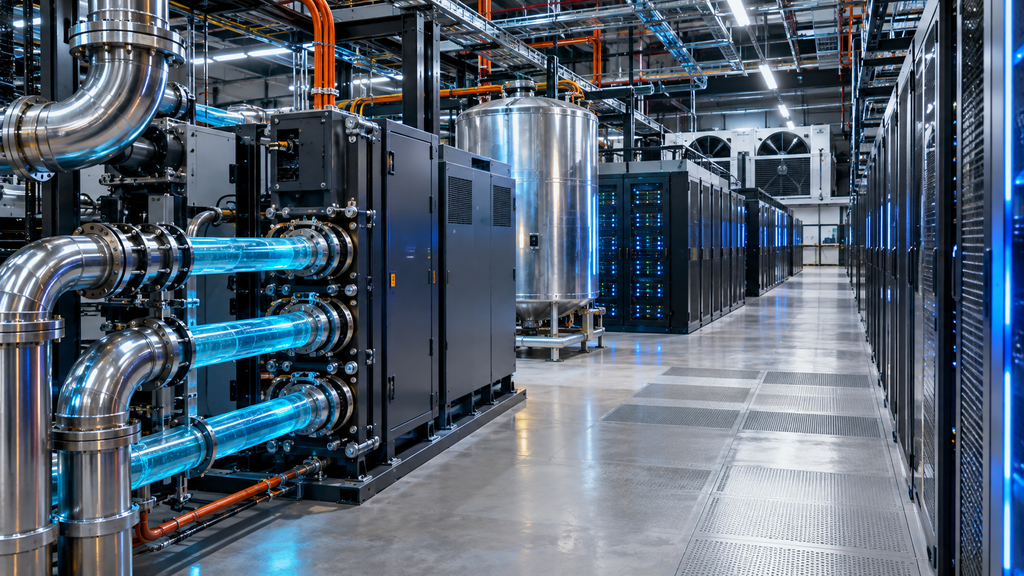
Energy consumption is another major consideration. Large AI data centres require substantial electricity, cooling infrastructure and reliable power distribution. These requirements could influence where new facilities are constructed and how quickly additional computing capacity can become operational.
There is also the possibility that AI infrastructure spending could grow more slowly than currently expected. If demand for computing capacity moderates or hardware efficiency improves faster than anticipated, some planned investments could be delayed.
Consequently, the projected $1.94 trillion market represents a substantial industry opportunity, but it also reflects an unusually high level of investment expectations.
What Could Define 2027?
The semiconductor industry is entering a period in which the balance of power may increasingly depend on access to memory, manufacturing capacity and specialised computing architectures.
Gartner’s forecast points towards a market approaching $2 trillion, while recent developments from major technology companies demonstrate how quickly competition is expanding beyond traditional processor categories.
Three developments will be particularly important in determining how the market evolves:
First, whether memory manufacturers can expand HBM and DRAM production sufficiently to support the next generation of AI systems.
Second, whether custom AI processors from cloud providers and semiconductor companies can capture a larger share of computing workloads.
Third, whether investment in AI infrastructure translates into sustainable revenue growth and measurable economic returns.
The semiconductor industry is no longer simply responding to demand for faster computers and consumer electronics. It is becoming one of the central industrial foundations of the global AI economy.
The $1.94 trillion forecast for 2027 reflects that transformation. The next phase will reveal which parts of the semiconductor supply chain can convert unprecedented demand into lasting business growth.
Semiconductor Companies to Watch
The competitive landscape is developing across several major segments:
| Company | Market position |
|---|---|
| NVIDIA | AI GPUs and accelerated computing |
| AMD | AI accelerators and data-centre processors |
| Broadcom | Custom AI chips and networking |
| Micron Technology | High-bandwidth memory and DRAM |
| SK Hynix | HBM and advanced memory |
| Samsung Electronics | Memory and semiconductor manufacturing |
| TSMC | Advanced chip manufacturing |
| Qualcomm | Custom silicon and data-centre processors |
These companies have different business models and exposure to the AI semiconductor cycle. Their future performance will depend on technology development, manufacturing capacity, customer demand and profitability.
Sources
Research references and industry developments:
- Gartner – Worldwide Semiconductor Revenue Forecast, August 2026.
- Reuters – Google Introduces New AI Chip Variants, November 9, 2026.
- Futurum Research – Qualcomm Custom Silicon and Data Centre Expansion, November 9, 2026.
- TechInsights – AI Chip Outlook 2027, November 4, 2026.
- Reuters – AMD Data-Centre Growth Forecast, November 3, 2026.
- Editorial Disclosure & Transparency