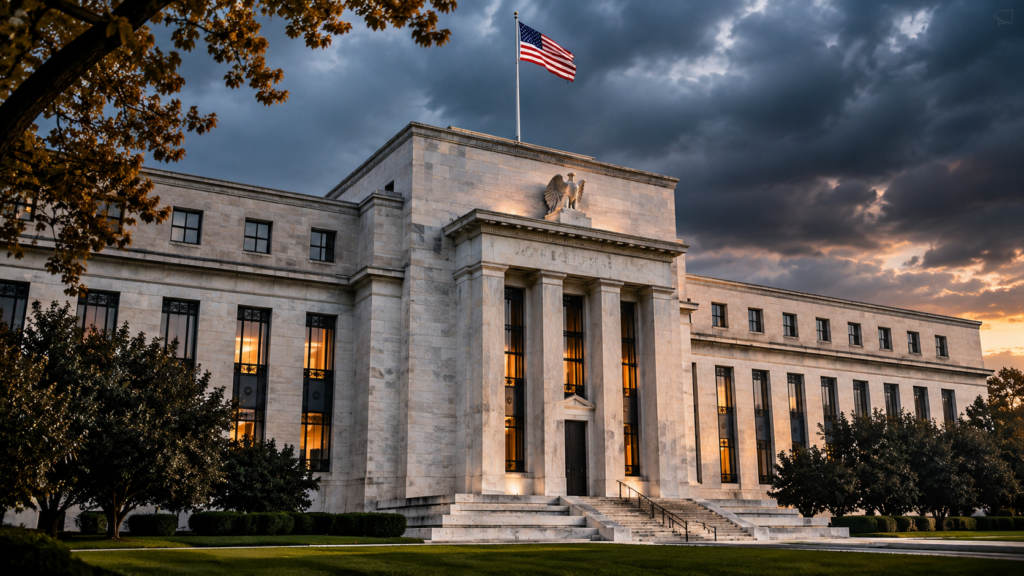
Short description: ECB chief economist Philip Lane has strengthened expectations of another European interest rate increase in December, as rising energy costs push eurozone inflation further above the central bank’s 2% target.
◉ ECB chief economist Philip Lane says a December rate increase would be prudent if the current economic and inflation outlook remains unchanged.
◉ Eurozone inflation accelerated to 4.0% in October, double the ECB’s 2% target, with energy prices rising 20.8% year-on-year.
◉ A potential December increase would represent the ECB’s third rate hike in 2026, creating additional pressure on borrowing costs, financial markets and the European economy.
ECB Signals a More Restrictive Policy
The European Central Bank is moving closer to another monetary tightening decision as persistent inflation pressures reshape expectations for the final policy meeting of 2026.
Chief economist Philip Lane said on November 10 that raising interest rates in December would be a prudent decision if the available economic information remains consistent with the current outlook.
His comments represent a significant development in the ECB’s communication strategy. While policymakers have previously maintained a data-dependent approach, the latest statements suggest that another increase is becoming an increasingly serious possibility.
Lane also indicated that inflation could continue reaching higher levels before the current price pressures begin to ease.
The remarks strengthen expectations that the ECB could deliver its third interest rate increase this year.
Energy Prices Drive Inflation Higher
The latest inflation figures provide an important explanation for the changing monetary policy outlook.
Eurostat’s October flash estimate showed annual eurozone inflation increasing to 4.0%, compared with 3.8% in September.
Energy prices remain the principal source of pressure, with annual energy inflation accelerating to 20.8%, up from 18.9% a month earlier.
Other components also recorded increases:
- Services inflation reached 3.3%, compared with 3.2% in September.
- Food, alcohol and tobacco inflation increased to 1.6%, from 1.3%.
- Non-energy industrial goods inflation reached 1.2%, compared with 1.1%.
Meanwhile, core inflation, excluding energy and food, remained at 2.5%.
The distinction is important for monetary policymakers. Although the latest headline increase is heavily influenced by energy, the ECB must also assess whether higher production, transportation and household costs could gradually spread into broader prices.
If energy-related inflation persists, businesses may increasingly transfer higher operating costs to consumers, potentially extending the inflationary cycle.
Third Rate Increase in 2026
The ECB has already increased borrowing costs twice during 2026, with the deposit facility rate reaching 2.50% following the previous adjustments.
A further quarter-point increase would bring the deposit rate to 2.75%.
Other policymakers have also strengthened the case for December tightening. Recent market coverage indicates that Governing Council members are increasingly concerned about the persistence of inflation and the potential consequences of allowing energy-driven price increases to become embedded in the wider economy.
However, the decision remains dependent on incoming economic information rather than an unconditional commitment to another increase.
The central bank must balance inflation control against the risk of restricting economic activity too aggressively.
Economic Growth Creates a Difficult Balance
The ECB faces a particularly complicated environment because inflationary pressures are developing alongside an economy that remains vulnerable to higher financing costs.
Eurozone economic growth reached 0.4% in the third quarter, according to figures cited in recent monetary policy coverage.
While this suggests some economic resilience, higher interest rates could gradually affect household consumption, corporate investment and credit demand.
For businesses, more expensive financing can influence investment decisions, expansion plans and working capital requirements.
Households could also face additional pressure through mortgages and other variable-rate borrowing arrangements.
The implications extend beyond individual borrowers. Higher interest rates can influence government financing costs, bond valuations and the relative attractiveness of euro-denominated assets.
Markets Focus on December
Financial markets are increasingly focused on the ECB’s December decision and the possibility of another tightening move.
A higher deposit rate could provide additional support to the euro through changing interest-rate expectations, although currency movements will also depend on developments in the United States and other major economies.
European government bond yields remain another important area of attention. Expectations of higher central bank rates can influence short-term yields, while longer-term borrowing costs also reflect fiscal conditions, economic growth expectations and investor demand.
The upcoming inflation releases and additional economic indicators will therefore play an important role in determining whether the ECB proceeds with another increase.
For now, Philip Lane’s comments have shifted the policy discussion closer to a potential December hike.
The central question is no longer simply whether inflation remains elevated, but whether the latest price pressures are persistent enough to justify another tightening step despite the potential consequences for European economic growth.
Sources
- Reuters – ECB may need to hike in December, chief economist says
- Eurostat – Euro area annual inflation up to 4.0%
- FXStreet – ECB’s Lane: Prudent to hike again
- Bloomberg – ECB gathers data for December rate decision
- Additional same-day coverage – Lane and Kazaks build case for December ECB hike
- Editorial Disclosure & Transparency