Artificial intelligence is becoming one of the most important investment themes among wealthy families and institutional investors. But the opportunity extends far beyond software companies, as private capital increasingly targets the infrastructure, energy and technology systems required to support the next phase of AI expansion.
◉ Approximately 65% of surveyed family offices already have investments across the artificial intelligence value chain.
◉ Energy, data centres, semiconductor production and infrastructure are attracting attention as essential components of the AI economy.
◉ Private equity and direct investments are becoming important channels through which wealthy investors seek exposure to the next generation of technology businesses.
The Investment Beyond Artificial Intelligence
Artificial intelligence has evolved from a technology-sector investment theme into a much broader economic opportunity.
The first phase of the AI investment cycle was largely associated with semiconductor manufacturers, software developers and companies building large language models.
The next phase is increasingly concerned with the infrastructure needed to commercialise and scale these technologies.
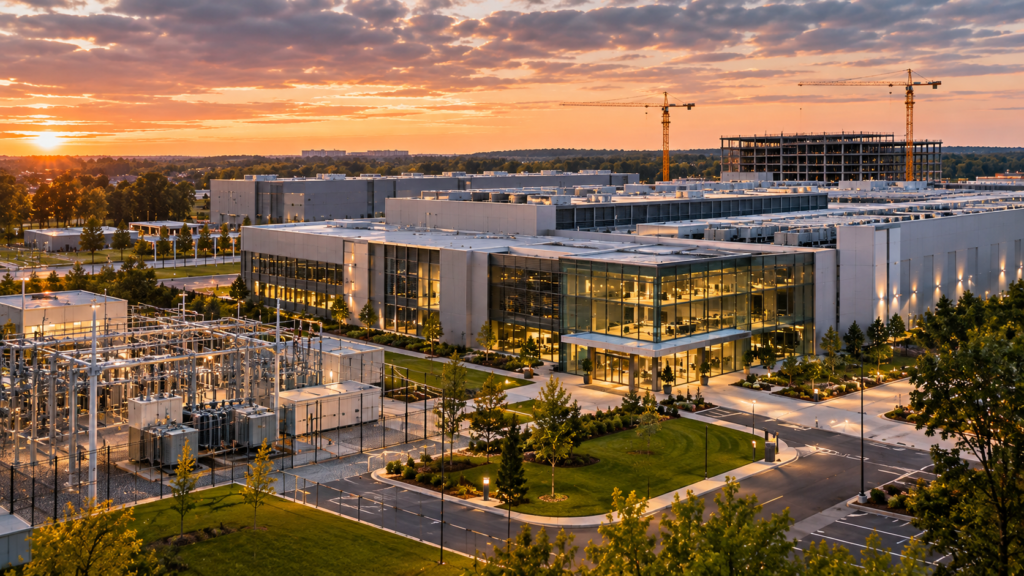
The expansion of AI requires substantial computing capacity, reliable electricity, advanced cooling systems, telecommunications infrastructure and specialised hardware.
These requirements are creating investment opportunities across industries that previously had limited direct exposure to artificial intelligence.
For wealthy investors, the attraction is increasingly found not only in the companies developing AI products, but also in the businesses supplying the infrastructure behind them.
Where Family Offices Are Investing
Advanced semiconductor manufacturing and AI processors
Artificial intelligence has become the leading investment theme among surveyed family offices.
Approximately 65% already have exposure somewhere across the AI value chain, including data-centre infrastructure, software platforms and semiconductor producers.
Other investment areas are closely connected to the same economic transformation.
Around 37% of surveyed family offices reported exposure to infrastructure, while another 37% invested in power and resources. Approximately 33% reported investments in AI-enabled healthcare.
The figures demonstrate that institutional private wealth is looking at the wider ecosystem required for AI adoption.
Healthcare represents another important opportunity. Artificial intelligence is increasingly being applied to diagnostics, medical imaging, drug discovery and operational efficiency.
These developments connect technological innovation with established industries that have substantial economic demand.

The Energy Behind the AI Economy
Electricity infrastructure supporting AI data centres
One of the most significant investment questions concerns electricity.
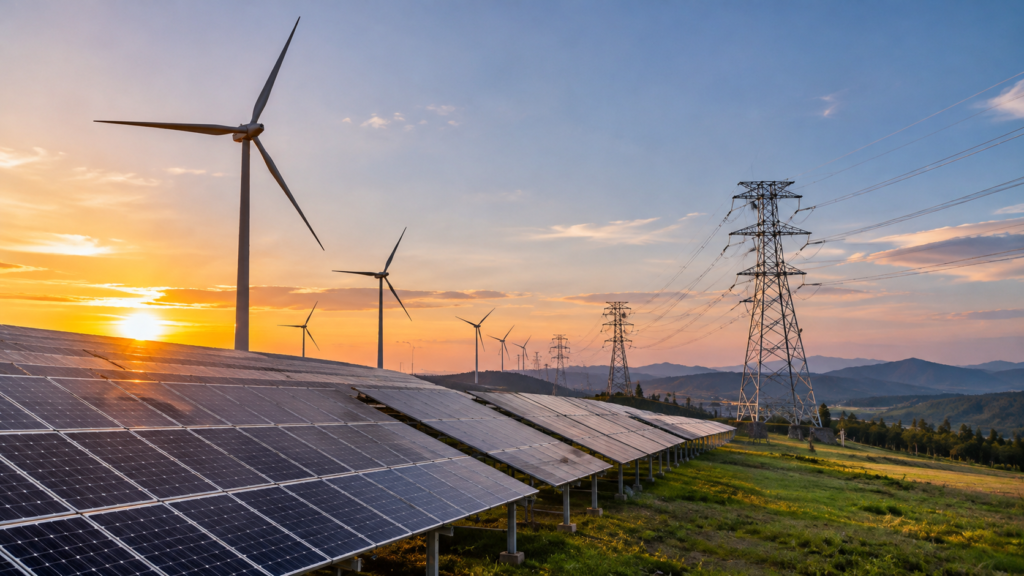
Large-scale AI computing facilities require considerable amounts of energy. As data-centre capacity expands, electricity availability and grid infrastructure are becoming increasingly important considerations for technology companies.
This creates opportunities across several connected industries:
- Electricity generation and transmission.
- Energy storage and battery systems.
- Nuclear and other low-carbon energy technologies.
- Natural gas and supporting energy infrastructure.
- Industrial cooling and data-centre equipment.
- Semiconductor manufacturing and advanced computing.
The economic relationship is straightforward: expanding computing capacity requires expanding physical infrastructure.
This is one reason why AI-related investment is increasingly attracting attention from infrastructure funds, private equity firms and long-term institutional capital.
The investment opportunity is not limited to predicting which AI platform will dominate. It also involves identifying the businesses that provide the resources necessary for the entire industry to function.
Private Equity Enters the AI Opportunity
The growth of AI is also influencing the structure of private investment markets.
Private equity investors are examining opportunities in specialised technology businesses, computing infrastructure, energy suppliers and companies developing AI applications for established industries.
A significant proportion of affluent investors are also expressing interest in increasing private-equity exposure.
Research covering high-net-worth investors found that 68% intended to increase their private-equity allocations.
The same research highlighted the growing importance of access to alternative investments. A substantial majority of wealthy investors reported working with multiple financial institutions to gain access to a wider range of investment products.
This reflects a changing relationship between wealthy clients and traditional financial institutions.
Rather than relying exclusively on one investment provider, affluent investors increasingly seek specialised expertise and broader investment access.
At the institutional level, principal investors are also becoming more active in private markets through direct deals and co-investments.
These structures can provide access to opportunities that are not available through ordinary public-market trading.
However, private-market investments typically involve longer holding periods, limited liquidity and more complex valuation processes.
The Gap Between AI Interest and Actual Investment
Despite the enthusiasm, there is an important difference between identifying an attractive investment theme and successfully allocating capital.
Research covering 333 family offices across 30 countries found that 65% planned to prioritise artificial intelligence.
Yet more than half had no exposure to venture and growth markets, where many emerging AI businesses operate.
The same research found that 79% had no allocation to infrastructure.
This reveals an interesting contradiction: investors recognise the importance of AI infrastructure, but actual portfolio exposure remains limited in several areas.
The gap may reflect investment restrictions, valuation concerns, lack of suitable opportunities or the difficulty of evaluating complex infrastructure projects.
It also highlights the difference between strategic investment intentions and completed transactions.

Technology Meets Capital Allocation
The next phase of AI investment is likely to be shaped by the interaction between technology, energy and financial markets.
As AI applications become more commercially integrated, the economic value of supporting infrastructure could become increasingly important.
Semiconductor manufacturers, electricity providers, data-centre operators, infrastructure developers and specialised software companies all participate in this expanding ecosystem.
For private investors, the challenge is increasingly about identifying where durable economic value is being created rather than simply following the most visible technology companies.
Artificial intelligence is therefore becoming more than a technology-sector story. It is developing into a major capital-allocation theme with implications for global infrastructure, energy markets, private equity and long-term wealth management.