
Gold and silver recorded their strongest weekly gains since August as improving market sentiment, central-bank purchases and renewed ETF demand supported precious metals. However, a stronger US jobs report and expectations of tighter Federal Reserve policy triggered a Friday retreat, while Goldman Sachs lowered its year-end gold price forecast.
◉ Gold gained 4.60% during the week, while silver advanced 5.51%, marking the strongest weekly performances for both metals since August.
◉ Global physically backed gold ETFs attracted $2.7 billion in October, lifting total holdings to a record 4,275 tonnes.
◉ European funds led October’s gold ETF inflows, attracting approximately $1.8 billion, while Asian funds added another $1.3 billion.
◉ Goldman Sachs reduced its year-end 2026 gold price forecast from $4,650 to $4,150 per ounce, citing a more hawkish Federal Reserve outlook.
Precious Metals Recover After Three Weeks of Losses
Gold and silver delivered a significant recovery during the first week of November, reversing three consecutive weeks of declines and restoring some confidence in the precious metals market.
Gold futures settled Friday at approximately $4,064.50 per ounce, representing a weekly increase of 4.60%. Silver performed even more strongly, rising 5.51% to approximately $51.80 per ounce.
Despite Friday’s retreat, both metals maintained most of their weekly gains.
The recovery reflected several developments in the global financial environment. Improved geopolitical sentiment, changing expectations surrounding US monetary policy and movements in the dollar and Treasury yields contributed to renewed interest in precious metals.
Gold benefited from a combination of investment demand and its traditional role as a reserve asset. Silver, meanwhile, received support from both financial market positioning and its importance in industrial applications.
The distinction is relevant. While gold is primarily influenced by monetary conditions, central-bank reserves and investment demand, silver also responds to industrial activity, manufacturing expectations and demand from sectors such as electronics and renewable energy.
Central Banks Continue Supporting Gold
One of the strongest structural factors supporting the gold market remains central-bank purchasing.
According to the latest available quarterly data, global central banks added a net 321 tonnes of gold to their reserves during the third quarter of 2026.
This represented a 42% increase compared with the same period last year and the strongest quarterly purchasing activity since the fourth quarter of 2024.
Total central-bank purchases during the first nine months of 2026 reached 675 tonnes.
The continued accumulation reflects a broader effort by monetary authorities to diversify foreign exchange reserves and reduce concentration in traditional reserve currencies.
Gold’s role in central-bank portfolios differs from that of conventional financial investments. It does not generate interest income, but it also does not carry the credit risk associated with another country’s sovereign debt.
This makes the metal strategically relevant during periods of geopolitical uncertainty, changes in international financial relationships and concerns about long-term monetary stability.
The latest purchasing figures suggest that institutional demand remains an important foundation for the gold market, even when short-term investor sentiment changes.
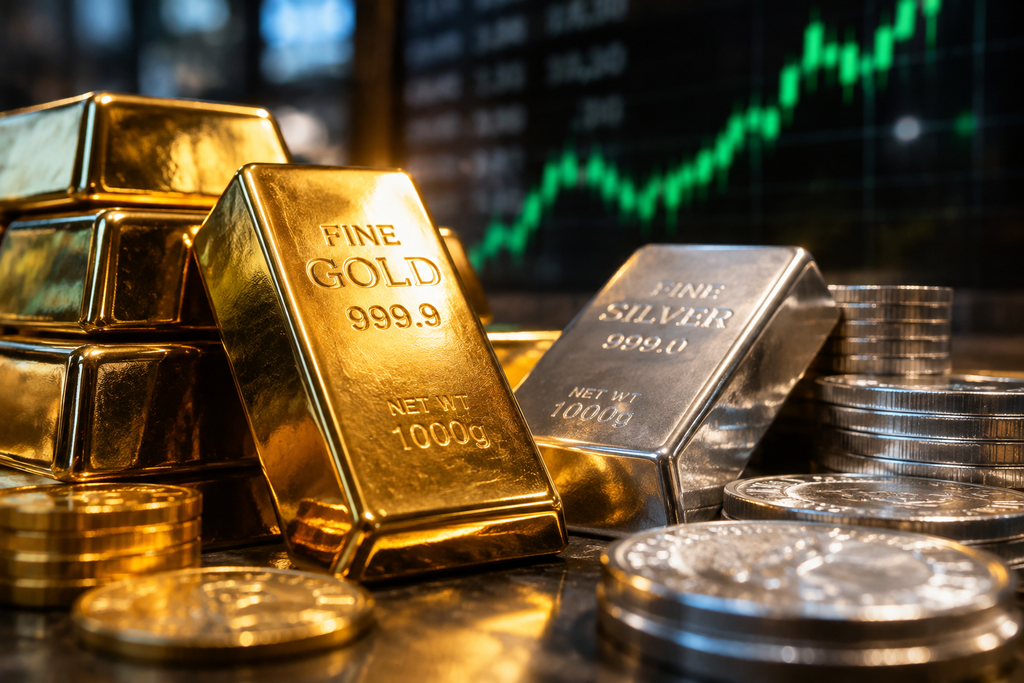
Gold ETFs Reach Record Holdings
Investment demand through exchange-traded funds provided another important source of support.
Global physically backed gold ETFs attracted approximately $2.7 billion in net inflows during October, extending a sequence of four consecutive months of positive flows.
Total global holdings increased by approximately 19 tonnes to a record 4,275 tonnes.
European funds led regional demand, attracting approximately $1.8 billion. Asian funds recorded another $1.3 billion in inflows, while North American funds experienced net outflows of approximately $512 million.
The regional distribution is particularly interesting.
European investors accounted for the largest share of October’s inflows, indicating continued interest in gold as a portfolio diversification instrument despite recent price volatility.
Year-to-date global ETF inflows reached approximately $41 billion, placing 2026 among the strongest years for gold investment demand.
Importantly, ETF assets under management declined during October because of lower gold prices, even as physical holdings increased.
This distinction illustrates why the amount of gold held by funds and the market value of those holdings should not be interpreted as identical indicators.
Goldman Sachs Reduces Its Gold Forecast
Despite the latest recovery, the outlook from major financial institutions has become more cautious.
Goldman Sachs reduced its year-end 2026 gold price forecast from $4,650 to $4,150 per ounce.
The revision reflects a more hawkish assessment of US monetary policy and the possibility that the Federal Reserve could maintain higher interest rates for longer.
Higher interest rates generally create a less favourable environment for gold because the metal does not generate interest or dividends. When yields on government securities rise, the opportunity cost of holding non-yielding assets increases.
A stronger US dollar can create additional pressure because gold is predominantly priced in dollars, making it more expensive for buyers using other currencies.
Goldman’s revised forecast therefore highlights an important tension in the current market: central-bank purchases and ETF demand remain supportive, but monetary policy could limit the pace of further appreciation.
The bank nevertheless maintains a constructive longer-term outlook, with its revised end-2027 forecast also reduced, from $5,400 to $4,800 per ounce.
Why Friday’s Retreat Matters
The final trading session of the week demonstrated how quickly macroeconomic developments can influence precious metals.
Stronger-than-expected US employment data increased expectations of another potential Federal Reserve rate increase in December.
The resulting movement in Treasury yields and the US dollar reduced some of the support that had helped gold and silver earlier in the week.
This reaction highlights the continuing importance of US economic data for the precious metals market.
Employment, inflation and monetary policy expectations influence real interest rates, currency movements and investor demand for defensive assets.
Consequently, even when structural demand remains strong, short-term price movements can be dominated by changes in interest-rate expectations.
The Precious Metals Market Faces Two Different Forces
The latest weekly performance reveals two competing forces shaping the gold and silver markets.
On one side, central-bank purchases, record ETF holdings and continued portfolio diversification provide structural support for gold.
On the other, a potentially more restrictive Federal Reserve policy, stronger employment data and changing dollar expectations create near-term obstacles.
Silver adds another dimension through its industrial exposure, making its price behaviour sensitive to developments beyond traditional monetary demand.
For global commodity markets, the combination of institutional demand and monetary-policy uncertainty is becoming increasingly important.
The latest rally demonstrates that investor interest in precious metals remains substantial. However, Goldman Sachs’ forecast revision shows that strong demand does not necessarily translate into uninterrupted price appreciation.
The coming weeks will provide further evidence of whether central-bank accumulation and ETF inflows can maintain their influence as investors reassess the outlook for US interest rates.
Sources
- Wall Street Journal – Gold and Silver Post Strongest Weekly Gains Since August The Wall Street Journal
- World Gold Council – Gold ETF Flows, October 2026 World Gold Council+1
- World Gold Council – Central Bank Gold Purchases in Q3 World Gold Council
- Investing.com – Goldman Sachs Reduces Gold Forecast Investing.com UK
- GoldSilverPortfolio – Gold’s Weekly Rally and Interest-Rate Outlook GoldSilverPortfolio
- Denarni Fokus – Editorial Disclosure & Transparency