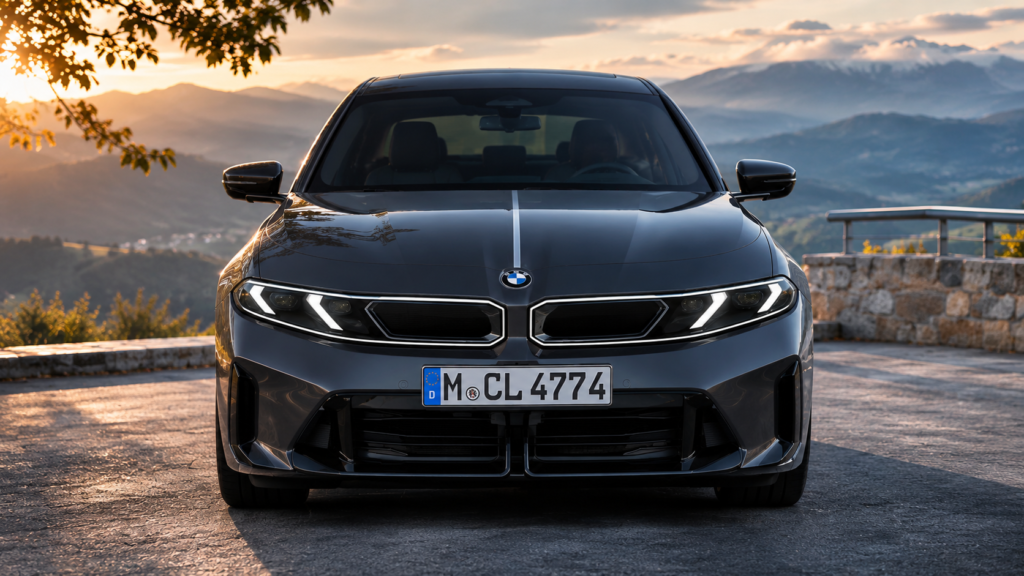
Short description: BMW has started production of its eighth-generation 3 Series at Dingolfing, Germany, bringing Neue Klasse technology into one of its most important model families. With combustion engines, future plug-in hybrids and a redesigned digital experience, the launch represents a major step in BMW’s multi-powertrain strategy for 2027.
◉ Production started at Dingolfing, Germany, with its market launch scheduled from the first quarter of 2027.
◉ The new generation introduces Neue Klasse technologies, including Panoramic iDrive, a redesigned electronic architecture and enhanced driver assistance systems.
◉ Plan is to expand the range with plug-in hybrid versions from 2027, while the fully electric BMW i3 is produced separately in Munich.
A New Chapter for BMW’s Bestselling Sedan
BMW has officially started series production of the eighth-generation 3 Series Sedan at its Dingolfing manufacturing facility, marking another important milestone for one of the company’s most recognisable automotive nameplates.
The new generation arrives at a particularly important moment for the German manufacturer. The automotive industry is undergoing a major technological transition, with electrification, software integration and advanced driver assistance systems increasingly shaping competition between premium manufacturers.
The 3 Series has remained central to BMW’s identity for more than five decades. Since its introduction in 1975, the model family has recorded approximately 18 million sales worldwide.
The return of the sedan to Dingolfing also has historical significance. The factory previously produced several generations of the 3 Series, and more than 1.15 million examples have been manufactured there.
The new model therefore combines an established production heritage with a substantially updated technological foundation.
Neue Klasse Technology Reaches the Core Range
One of the most important developments is the integration of Neue Klasse technologies into the combustion-powered 3 Series.
BMW is introducing its Panoramic iDrive cockpit concept, a new electrical and electronic architecture and upgraded driver assistance systems.
The redesigned digital environment changes how drivers interact with vehicle information, navigation, entertainment and vehicle functions.
Rather than treating software and connectivity as secondary features, BMW is positioning them as central elements of the driving experience.
The Neue Klasse programme also introduces a broader technological foundation intended to support future generations of BMW vehicles.
Importantly, the new 3 Series does not abandon conventional powertrains. Instead, BMW is adapting the technology across different propulsion systems, maintaining a distinction between its combustion-powered models and the fully electric BMW i3.
This approach reflects the manufacturer’s belief that different markets and customer groups will continue to require different powertrain solutions.
Combustion Engines Remain Part of the Strategy
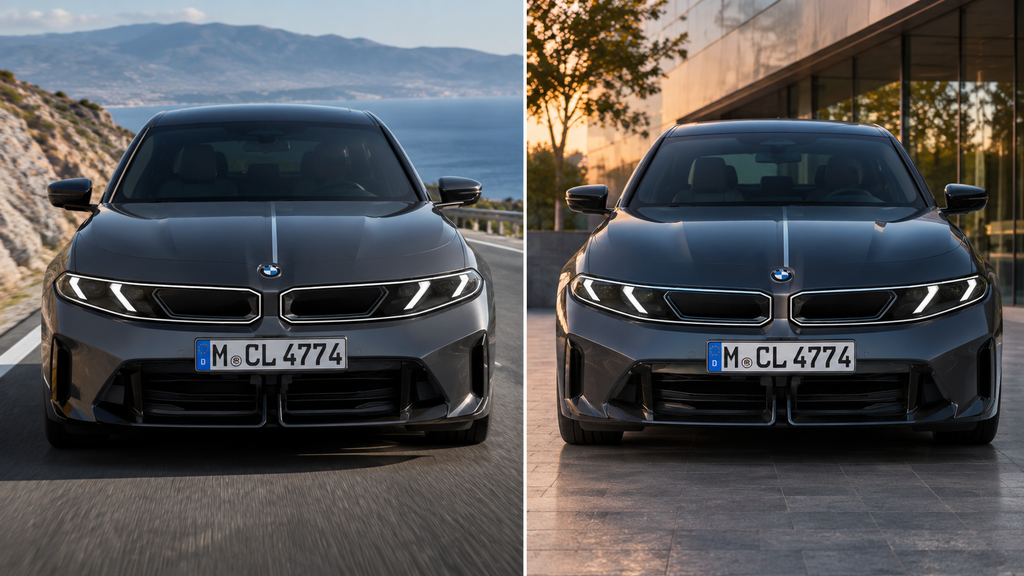
The new 3 Series Sedan initially enters production with combustion-engine variants, including mild-hybrid technology.
The range includes four-cylinder petrol models and the six-cylinder BMW M350 xDrive, which replaces the previous M340i position in the line-up.
The M350 xDrive combines a 3.0-litre inline-six petrol engine with 48-volt mild-hybrid assistance and all-wheel drive.
BMW is also preparing plug-in hybrid versions for introduction from 2027.
This is strategically significant because the premium sedan segment continues to serve customers who want electrified driving without moving entirely to battery-electric vehicles.
Plug-in hybrids provide an intermediate solution, combining electric-only driving capability for shorter journeys with a combustion engine for longer distances.
For BMW, maintaining several propulsion options allows the company to compete across markets with different charging infrastructure, regulatory requirements and consumer preferences.
Dingolfing Becomes a Flexible Production Centre
The production strategy is another important part of the new generation.
BMW is manufacturing the combustion-powered 3 Series at Dingolfing alongside selected 4 Series and 5 Series models on a shared production line.
The facility has been adapted to accommodate different powertrain configurations while making use of existing manufacturing infrastructure.
BMW reports that approximately one-third of the roughly 750 robots used in the relevant production operations have been reused from existing facilities.
The company has also introduced automated logistics systems, digital quality controls and advanced production technologies to improve manufacturing flexibility.
This approach is economically relevant. Instead of constructing an entirely separate production environment for every new model, BMW is attempting to increase the efficiency of its existing industrial network.
The strategy also reduces the complexity associated with manufacturing vehicles using different propulsion technologies within the same production ecosystem.
Munich and Dingolfing: Different Roles
BMW has divided production responsibilities between two important German facilities.
The fully electric BMW i3 is manufactured in Munich, while Dingolfing handles the combustion-powered 3 Series Sedan and future plug-in hybrid versions.
This distinction is important because the new 3 Series family is not based on a single production or propulsion concept.
Both vehicles benefit from Neue Klasse technology, but their underlying powertrain architectures and manufacturing arrangements differ.
BMW has invested approximately €1 billion in the further development of its Munich and Dingolfing production facilities to support this transition.
The wider production network also includes the Steyr plant in Austria, which supplies important engine components, and the new battery manufacturing facility at Irlbach-Straßkirchen.
The result is a more integrated European manufacturing structure supporting BMW’s next generation of vehicles.
Competition in the Premium Sedan Market
The eighth-generation 3 Series enters a market facing increasing competitive pressure.
Traditional premium competitors, particularly Mercedes-Benz and Audi, are also investing heavily in electrification, digital vehicle platforms and updated combustion technologies.
At the same time, Chinese manufacturers are expanding their presence in premium electric vehicles, creating additional pressure on established European brands.
BMW’s strategy is to protect the identity of the 3 Series while modernising the technologies that define the ownership experience.
The challenge is not simply to introduce a more advanced dashboard or a more efficient engine. The company must preserve the driving characteristics and brand positioning that have supported the model’s commercial success.
The combination of combustion engines, plug-in hybrids and fully electric alternatives gives BMW greater flexibility in addressing this challenge.
However, the long-term success of the strategy will depend on customer demand, production costs, software reliability and the ability to compete with increasingly sophisticated alternatives.
A Strategic Model for 2027
The start of production marks the beginning of a new phase for BMW’s most recognisable sedan.
The eighth generation brings Neue Klasse technologies into a core model family while preserving a multi-powertrain approach.
The market launch is scheduled to begin in the first quarter of 2027, with additional variants expected to follow.
For BMW, the new 3 Series represents more than a model replacement. It demonstrates how the company intends to combine its established combustion-engine business with the technologies and manufacturing systems required for the next generation of premium mobility.
The broader significance is clear: BMW is not treating electrification as an immediate replacement of every existing powertrain, but as part of a wider transformation of its products, software and production network.
The 3 Series will be one of the most important tests of whether this strategy can remain commercially competitive in an automotive industry undergoing rapid structural change.
Sources
- BMW Group – Production of the new BMW 3 Series starts at Dingolfing (November 4, 2026).
- BMW Group – What does Neue Klasse change for the new BMW 3 Series? (October 26, 2026).
- Autocar India – Eighth-generation BMW 3 Series revealed (September 30, 2026).
- Autoevolution – New BMW 3 Series production begins in Germany (November 4, 2026).
- Editorial Disclosure: Denarni Fokus – Editorial Disclosure & Transparency.