Short description: Audi is considering an additional $3 billion investment in its planned Georgia manufacturing facility, potentially increasing the total project to $7 billion and creating 3,000 more jobs. The expansion highlights the German automaker’s growing commitment to US production amid trade pressures and changing global automotive economics.
◉ OOOO is considering a second investment phase worth $3 billion, potentially bringing its total US factory commitment to $7 billion.
◉ The expansion could create another 3,000 jobs by 2033, on top of approximately 4,500 positions planned for the initial facility.
◉ US tariffs, government incentives and the strategic importance of local manufacturing are becoming central factors in Audi’s North American expansion.
A Bigger Automotive Investment
Audi’s planned manufacturing presence in the United States could become significantly larger than initially announced.
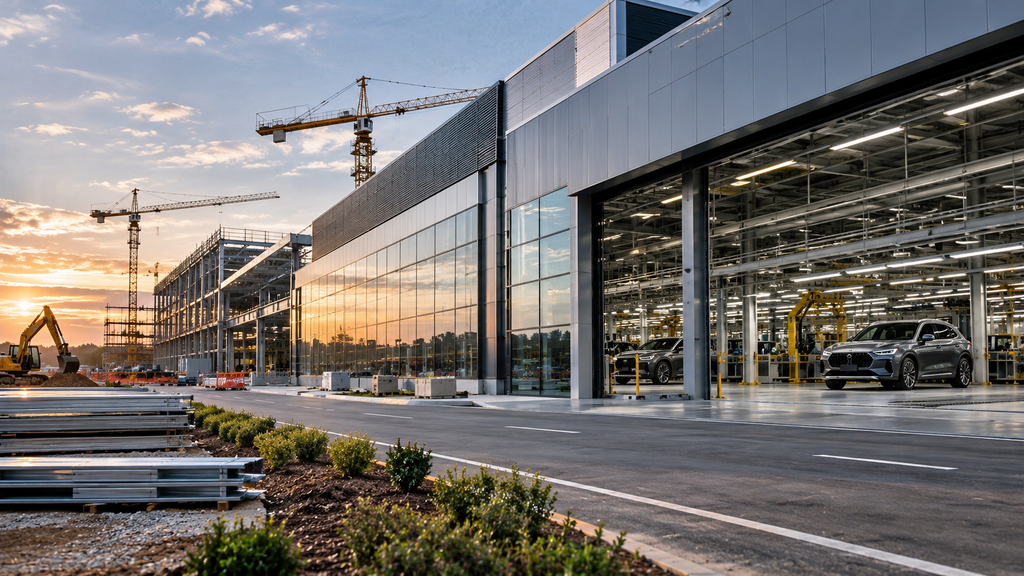
The Volkswagen-owned premium manufacturer is considering an additional investment of approximately $3 billion in a second phase of its proposed production facility near Macon, Georgia. According to documents released by the Mid-Georgia Gateway Development Authority, the expansion could generate another 3,000 jobs by 2033.
The development would increase the potential investment from the original $4 billion to approximately $7 billion, making the project one of the more significant European automotive manufacturing commitments in the American market.
However, the second phase remains under consideration rather than a confirmed construction commitment. Audi has not publicly confirmed the additional investment.
The initial project is designed to produce approximately 200,000 SUVs annually, with construction expected to begin in 2027 and production planned for the early 2030s.
Georgia Positions Itself as an Automotive Hub
Georgia has offered substantial financial and infrastructure support to attract Audi.
The initial project includes a 1,500-acre development site, approximately $458 million in tax incentives and more than $550 million in additional grants and infrastructure support.
The package covers road and water improvements, rail infrastructure, environmental preparation, utilities and workforce development.
For Georgia, the attraction extends beyond the factory itself. A major automotive manufacturing operation can generate demand across a broader industrial ecosystem, including component suppliers, logistics providers, engineering services, maintenance businesses and specialist workforce training.
If both phases proceed, the project could support approximately 7,500 direct manufacturing jobs, with additional employment potentially emerging throughout the regional supplier network.
This creates an important economic development opportunity for central Georgia, although the final benefits will depend on investment execution, employment commitments and the long-term performance of the facility.
Tariffs Change the Manufacturing Equation
Audi’s expansion plans also reflect a changing economic environment for international automakers.
The company currently imports vehicles sold in the United States from production facilities in Europe and Mexico. This structure exposes its business to trade policy changes, transportation costs and currency movements.
According to the reported figures, tariffs on automobiles, steel, aluminium and components cost Audi approximately €1.2 billion ($1.4 billion) last year.
The proposed Georgia facility could therefore provide more than additional production capacity. It would give Audi a stronger local manufacturing position in one of the world’s largest premium vehicle markets.
US tariff policy has also become an important part of the investment discussion. Reports indicate that the Trump administration has discussed tariff relief for automakers committing substantial capital to domestic production.
Audi has reportedly sought a reduction in tariffs on vehicles imported from the European Union, while US officials have considered a lower rate.
This creates a direct connection between industrial investment decisions and international trade negotiations.
For manufacturers, building locally may increasingly become a way to manage trade exposure rather than simply a decision based on labour costs or production efficiency.
The Competitive Pressure on European Automakers
Audi’s proposed investment comes at a challenging time for Europe’s automotive industry.
German manufacturers are navigating several structural pressures, including competition from Chinese electric vehicle producers, high industrial costs, changing consumer demand and the transition towards electrification.
The United States remains a strategically important market because of its purchasing power and demand for premium SUVs.
Local manufacturing could help Audi adapt vehicle specifications to American customers, shorten supply chains and improve its ability to respond to regional demand.
It could also strengthen the company’s competitive position against established American manufacturers and international brands already operating production facilities in North America.
However, a large investment also creates long-term financial commitments. The economics of the project will depend on production volumes, labour productivity, supplier costs, regulatory conditions and the commercial success of the vehicles manufactured at the site.
The proposed expansion should therefore be viewed as a strategic possibility rather than evidence that the additional capacity is already commercially justified.
A $7 Billion Strategic Signal
Audi’s Georgia project illustrates how global automotive manufacturing is being reshaped by trade policy, industrial incentives and regional competition.
The initial $4 billion commitment already represents a major step in Audi’s North American strategy. A potential additional $3 billion would take that commitment to another level, creating a larger production footprint and a more substantial employment base.
For Georgia, the opportunity is to establish a long-term automotive manufacturing centre. For Audi, it is an opportunity to strengthen its position in the US market while reducing some of the risks associated with cross-border vehicle imports.
The key question now is whether the company moves from evaluating the second phase to making a formal investment decision.
If realised, the project could become an important example of how global automakers are reorganising production around the growing influence of trade policy and regional manufacturing strategies.
Sources
- Reuters – Audi may boost size of new US auto plant by $3 billion, add 3,000 jobs (November 5, 2026).
- CBT News – Audi could expand planned $4B Georgia plant with another $3B investment (November 6, 2026).
- Audi Official – First US production site in Georgia: $4 billion investment and 4,500 jobs (October 25, 2026).
- The Atlanta Journal-Constitution – Audi’s future Georgia plant could reach $7 billion (November 2, 2026).
- Editorial Disclosure: Denarni Fokus – Editorial Disclosure & Transparency.