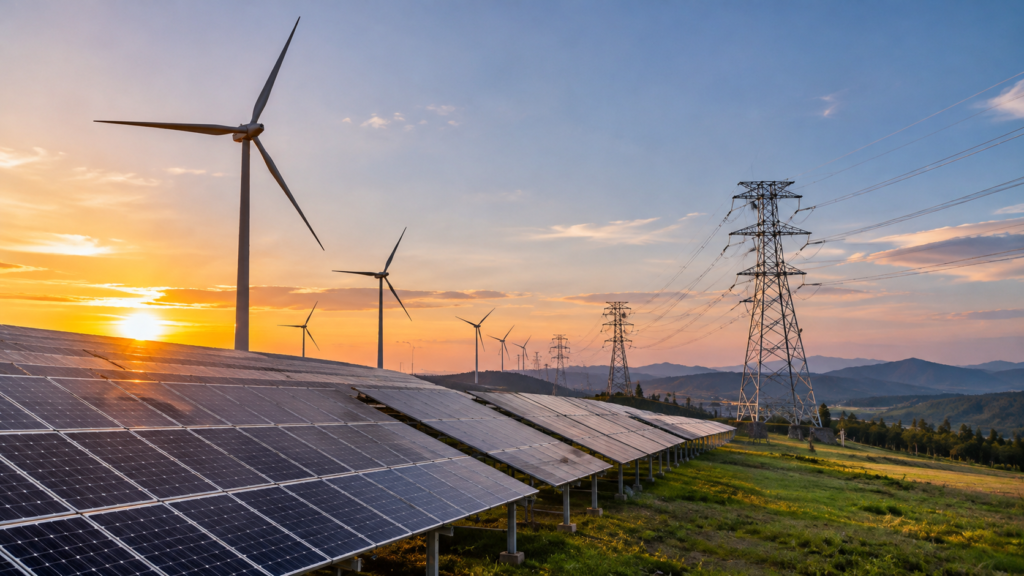
Short description: China is projected to invest $940 billion in energy in 2026, positioning it as the world’s largest energy investor. The spending shift towards electricity grids and renewable infrastructure highlights a new phase in the global energy transition.
◉ China’s projected energy investment will reach $940 billion in 2026, the highest national total worldwide.
◉ Renewables represented 60.1% of China’s installed power capacity at the end of 2025.
◉ Power grid investment is expected to reach approximately $140 billion in 2026 as China focuses increasingly on electricity transmission and infrastructure.
The World’s Biggest Energy Investor
China is preparing to reinforce its position at the centre of the global energy industry, with projected energy investment of approximately $940 billion in 2026.
The estimate comes from the Global Energy Transition Report 2026, released by the China Enterprise Reform and Development Society and reported by Chinese state broadcaster CCTV on November 8.
The scale of the projected spending highlights the importance of energy infrastructure to China’s industrial strategy, economic competitiveness and long-term electricity security.
More importantly, the composition of investment is changing. After years of rapidly expanding renewable generation capacity, China is increasingly directing capital towards the infrastructure required to transport, distribute and integrate electricity across its economy.
Renewable Capacity Reaches New Scale
China’s renewable energy expansion provides the foundation for the investment forecast.
At the end of 2025, the country had approximately 2,337 gigawatts of installed renewable power capacity. This represented 60.1% of its total installed electricity generation capacity and accounted for 63.6% of global renewable capacity additions during the year.
Renewable electricity generation reached 3.99 trillion kilowatt-hours, equivalent to 38.3% of China’s total electricity output.
One particularly important development is that the increase in renewable electricity generation was sufficient to cover the entire increase in national electricity consumption.
This marks a significant shift in the country’s power system. Renewable energy is no longer simply adding capacity to the existing electricity mix; it is becoming a major contributor to meeting incremental demand.
Grid Infrastructure Becomes Critical
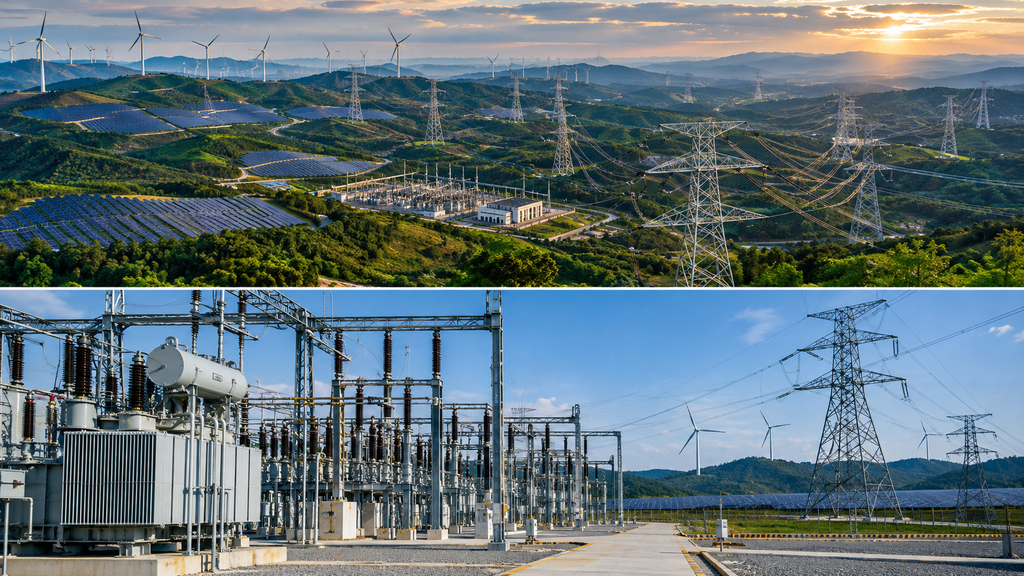
The next phase of China’s energy investment is increasingly focused on electricity networks.
The International Energy Agency expects China’s investment in power grids to reach approximately $140 billion in 2026. This reflects the growing need for transmission lines, distribution networks and supporting infrastructure capable of moving electricity from generation centres to industrial regions and major consumption markets.
The challenge is substantial.
Solar and wind installations are often located far from the largest industrial and urban electricity consumers. Without sufficient transmission capacity, additional renewable generation cannot always be delivered efficiently.
Grid investment is therefore becoming just as important as investment in new generating capacity.
The development also creates a wider industrial opportunity for manufacturers of transformers, high-voltage equipment, cables, power electronics and energy storage systems.
Coal Remains Part of the Equation
Despite the rapid expansion of renewable electricity, China’s energy transition remains incomplete.
Coal-fired generation accounted for 49.7% of electricity generation in the first half of 2026, falling below 50% for the first time, according to the report.
The development illustrates the changing structure of China’s electricity market, but it does not mean that coal has disappeared from the system.
Coal-fired power plants continue to provide dispatchable electricity, supporting grid stability when renewable production fluctuates or demand increases.
China’s energy-related carbon dioxide emissions declined by 0.5% in 2025, according to the same report. Nevertheless, the country remains the world’s largest emitter of greenhouse gases.
The transition is therefore taking place alongside continuing demand for conventional energy sources.
Global Energy Markets Watch China
China’s investment plans have implications far beyond its domestic electricity market.
The country reportedly supplies around 70% of global wind-power equipment and 80% of photovoltaic module equipment. Its manufacturing scale has helped reduce the cost of renewable technologies internationally.
A sustained investment programme could reinforce China’s position across renewable manufacturing, electrical infrastructure and associated supply chains.
The consequences extend to industrial commodities.
Copper is particularly important because electricity transmission, transformers, substations and power distribution networks require substantial quantities of conductive materials. Aluminium, electrical steel and other industrial inputs also play important roles in grid expansion.
The scale and timing of demand will depend on project execution, infrastructure requirements and the pace of investment.
A Wider Energy Investment Race
China’s projected $940 billion commitment is part of a much larger global investment cycle.
The International Energy Agency estimates that worldwide energy investment will reach approximately $3.4 trillion in 2026. Around $2.2 trillion is expected to flow into clean energy, including renewables, nuclear power, grids, storage and electrification.
The figures highlight a broader transformation in the global energy industry.
Capital is increasingly moving beyond traditional fuel production towards electricity generation, transmission, storage and energy security.
For China, the challenge is no longer simply to build more renewable capacity. It is to ensure that the electricity generated can be transported, integrated and consumed efficiently.
The next stage of the energy transition will increasingly be determined by the infrastructure connecting power generation to the global economy.