Slovenia’s housing market reached new price records in the first half of 2026, with the median resale apartment price in Ljubljana rising to €5,630 per square metre. National apartment prices increased 8% over the previous half-year, while limited supply and higher construction costs continued to support prices despite emerging pressure on mortgage affordability.
◉ Ljubljana sets a new record — The median resale apartment price reached €5,630/m², up €740 from the first half of 2025.
◉ National prices accelerate — Apartment prices across Slovenia rose 8% in the first half of 2026 compared with the previous six months, while house prices increased 4%.
◉ Supply and financing remain key — High construction costs and limited new housing supply support prices, but higher mortgage rates could reduce transaction activity.
Ljubljana Leads the Market
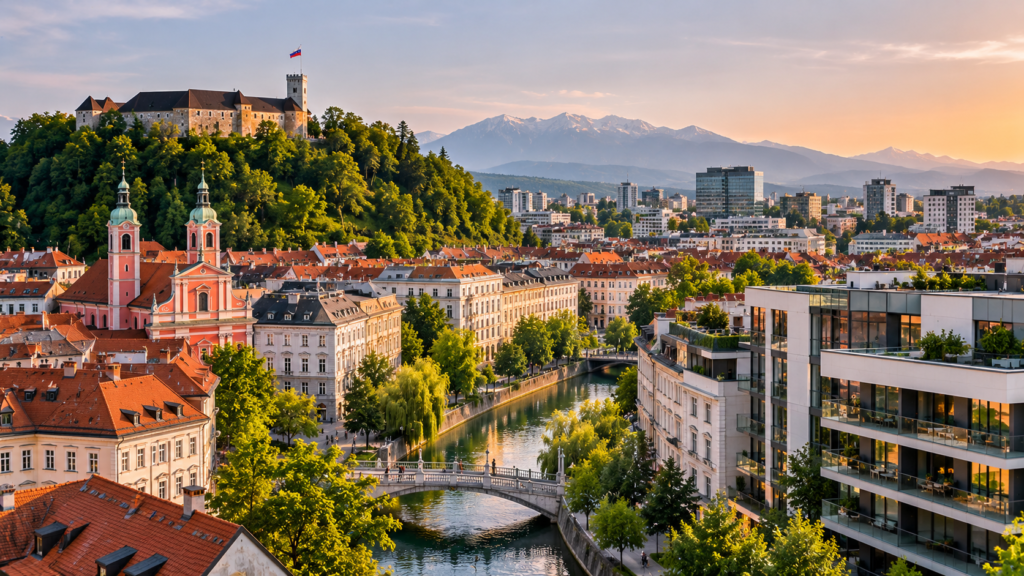
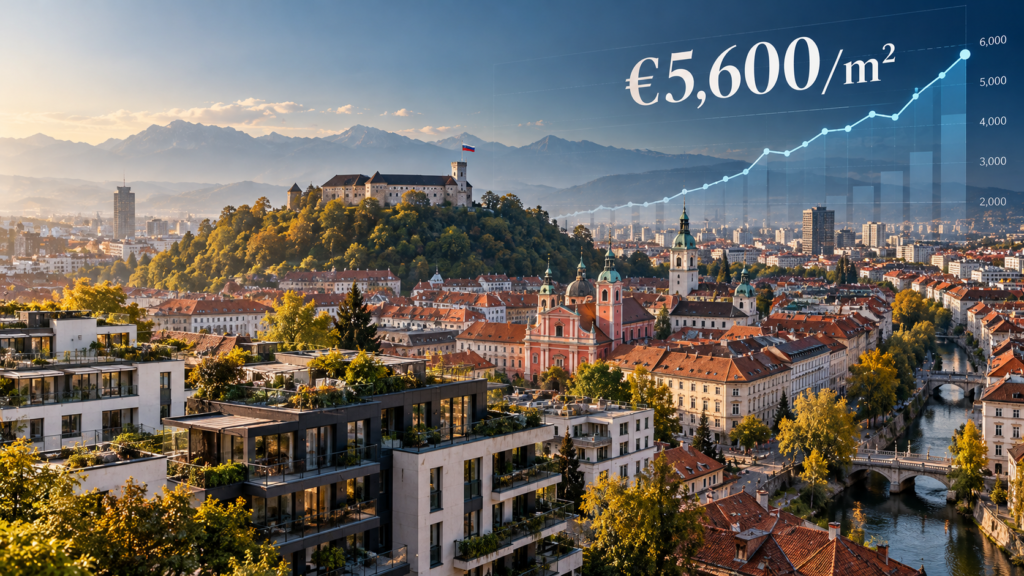
Ljubljana remains Slovenia’s most expensive residential property market. In the first half of 2026, the median price of a second-hand apartment reached €5,630/m², crossing the €5,600 threshold for the first time.
The increase was particularly pronounced in the capital. Apartment prices in Ljubljana rose 11% compared with the second half of 2025, outpacing the national increase of 8%.
The capital’s premium extends beyond resale apartments. According to the published market report, new apartments in Ljubljana generally sold for between €6,000 and €8,000/m², with some higher-end properties reaching €10,000/m².
These figures describe different segments of the market: the €5,630 median refers to completed sales of second-hand apartments, while new-build prices vary according to project, location, size and specification.

Slovenia’s Housing Prices Rise
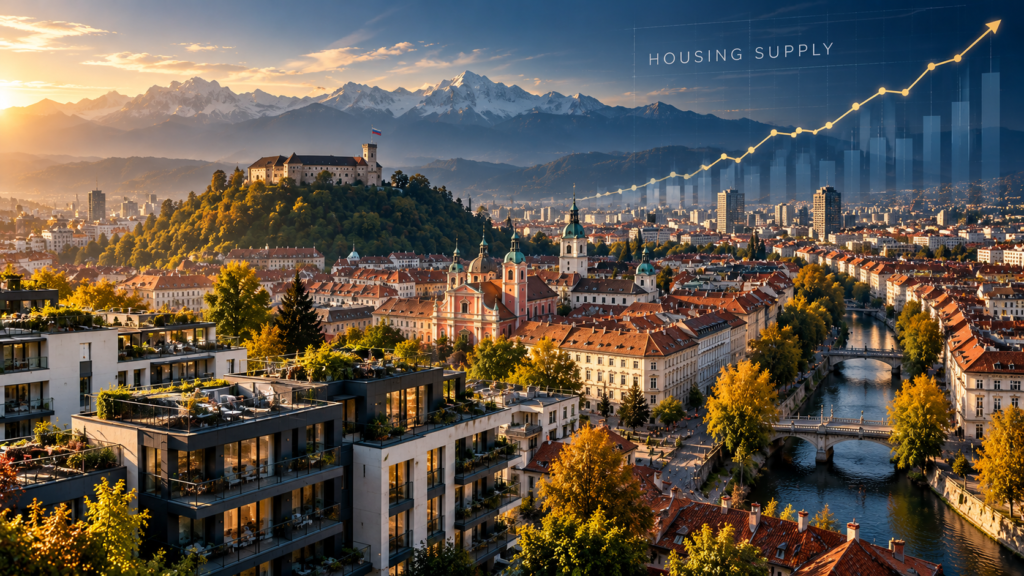
The national market also reached new records. The median price of a second-hand apartment rose to €3,520/m², exceeding €3,500 for the first time. That was €450 higher than in the first half of 2025.
House prices increased at a slower rate. The median transaction price for a second-hand house reached €210,000, up €30,000 from the same period a year earlier.
Price differences between regions remained substantial. The Coast recorded a median apartment price of €5,070/m², while northern Ljubljana’s surrounding area reached €4,580/m². Kranj and its surrounding area crossed €4,000/m² for the first time, while Maribor reached €3,010/m².
Ljubljana accounted for approximately one-quarter of all apartment transactions nationwide. However, the capital’s transaction count fell by around 2% compared with the previous half-year, even as prices continued to rise.
Construction Land Adds Pressure
The price increases extended beyond completed residential properties. Land intended for residential construction became 15% more expensive in the first half of 2026 compared with the preceding six months. Prices were 35% higher than in the second half of 2023.
Higher land costs can increase the financial burden of new development, particularly in locations where demand is strongest. Developers must also contend with construction costs, financing expenses and the practical constraints of bringing additional homes to market.
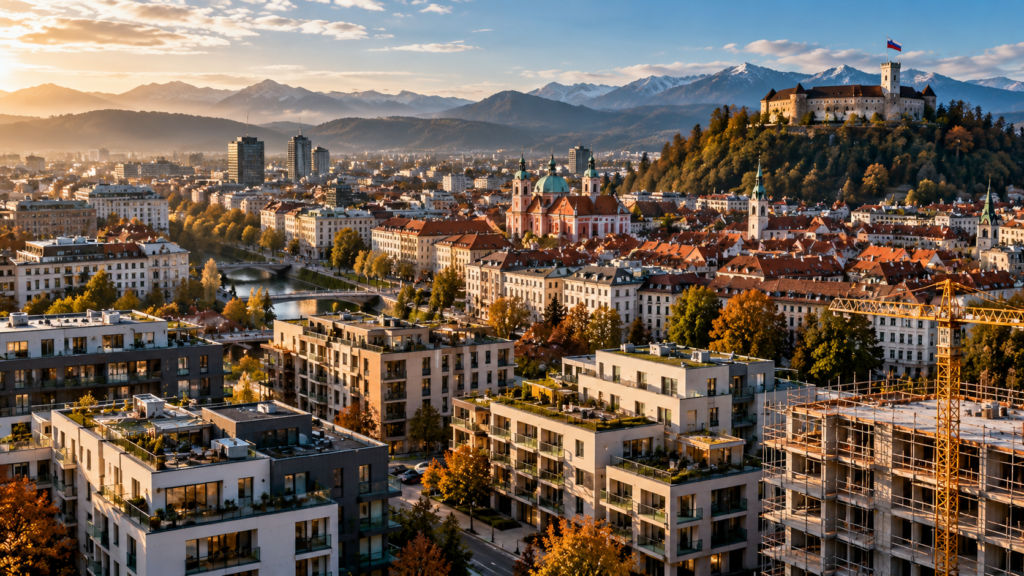
The supply picture remains tight. According to the market report, many newly built apartments—particularly in Ljubljana and other larger cities—are sold or reserved during construction, sometimes before building work begins. As a result, fewer units remain available once projects are completed, and the remaining properties may disproportionately include larger, more expensive apartments.
Affordability Becomes a Greater Concern
The record prices create a growing challenge for households trying to purchase a home, especially first-time buyers who depend on mortgage financing.
A median price of €5,630/m² means that a 60-square-metre resale apartment would cost approximately €337,800 before taxes, transaction costs, renovation expenses or other fees. This is a simple illustration based on the reported median, not a valuation of any specific property.
Actual affordability depends on household income, available savings, mortgage terms, interest rates and the property’s condition and location. Buyers also face competition from households with existing property wealth, which can make it difficult for those entering the market for the first time.
The widening gap between Ljubljana and less expensive regions may also influence where households search for housing, particularly when commuting costs and access to employment are considered.
Mortgage Rates Could Slow Transactions
Despite rising prices, the number of residential property transactions increased by 3% in the first half of 2026 compared with the previous half-year. Across the wider property market, the number of sales contracts increased by approximately 6%, while their combined value rose around 13% to €1.84 billion.
However, the Surveying and Mapping Authority expects higher mortgage interest rates to put renewed pressure on transaction volumes. Housing credit has been a significant factor in determining how much demand can translate into completed purchases.
This creates a potential divergence between prices and activity. If financing becomes less affordable, fewer buyers may be able to complete transactions even while limited supply continues to support prices.
The official report does not forecast an imminent reversal in residential prices. It points instead to high construction costs, constrained new supply, strong employment and wage growth as factors supporting the market.
A Market Defined by Scarcity
Slovenia’s latest housing figures show that price growth is not confined to Ljubljana, although the capital remains the clearest example of the affordability challenge. National apartment prices, house prices and residential building land all reached higher levels in the first half of 2026.
The central tension is between demand that remains supported by economic conditions and a supply pipeline that has not expanded sufficiently to ease price pressure. Higher mortgage rates may slow transactions, but reduced activity alone would not necessarily produce lower prices.
Future market conditions will depend on the interaction between housing construction, household purchasing power, financing costs and the number of homes available for sale. For now, the latest data points to continued price pressure alongside the possibility of a more subdued transaction market.
Sources
- Delo — Property Prices Reach New Records, Ljubljana Crosses a New Threshold, October 28, 2026: https://www.delo.si/novice/slovenija/cene-nepremicnin-znova-rekordne-ljubljana-presegla-novo-mejo
- GOV.SI — First-Half 2026 Report on Slovenia’s Real Estate Market, October 19, 2026: https://www.gov.si/novice/2026-10-19-objavljeno-je-polletno-porocilo-o-slovenskem-trgu-nepremicnin-za-leto-2026/
- Denarni Fokus — Editorial Disclosure & Transparency: https://denarnifokus.com/editorial-disclosure-transparency/