Short Description: Bentley’s first fully electric production car, the Torcal, puts a central question facing traditional luxury automakers into sharp focus: can a heritage brand embrace electric technology without losing the craftsmanship, emotional appeal and exclusivity that justify its premium prices? Starting at about £173,000 in the UK, the SUV also reflects the financial challenge of developing new technology while preserving a business built around combustion-engine vehicles and hybrids.
Hot Points
◉ A £173,000 entry point: Bentley has positioned the Torcal as a new gateway into the brand, potentially attracting younger customers and first-time buyers without abandoning its premium identity.
◉ Luxury beyond the powertrain: Materials, craftsmanship, performance, comfort and distinctive design remain central to the proposition. Bentley is treating electrification as a new way to deliver its established experience rather than a complete break with its past.
◉ A costly strategic transition: A £350 million investment in the Crewe manufacturing site supports the launch, while Bentley continues to develop combustion-engine and hybrid models. The commercial test is whether customer demand can justify the cost of the electric programme. Bloomberg
A New Chapter for Bentley
For a century, Bentley has sold more than transportation. Its identity has been built around powerful engines, carefully finished interiors, imposing design and the sense that each vehicle represents a particular tradition of British luxury.
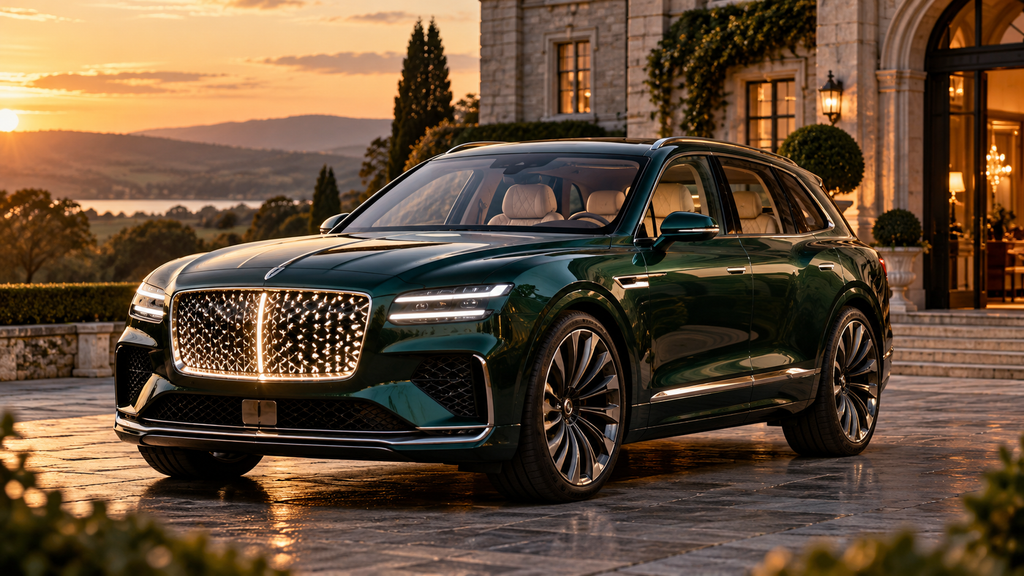
The Torcal introduces a different powertrain into that proposition. It is an all-electric SUV designed to expand the brand’s appeal while retaining recognisable design cues and an emphasis on premium materials. Its interior includes Merino wool, while the exterior uses illuminated diamond-inspired details to connect a modern electric vehicle with the brand’s established visual language.
The strategy is significant because luxury buyers do not necessarily evaluate vehicles on the same terms as mainstream customers. Range, charging speed and acceleration matter, but so do tactile quality, comfort, design, exclusivity and the image associated with the badge.
Bentley’s challenge is to make the electric powertrain feel like a natural extension of its identity rather than a compromise imposed by technological change.
Performance Without the Engine Note
Electric propulsion changes the way a luxury car delivers performance. Instant torque can produce rapid acceleration, while the absence of a conventional combustion engine changes the sound and feel of the driving experience.
The Torcal S is specified to deliver up to 888 PS and 1,350 Nm of torque, with a claimed 0–100 km/h acceleration time of 2.9 seconds under launch-control conditions. These figures place it firmly within high-performance territory, despite its SUV format.
Bentley has also addressed the emotional role of sound. The vehicle uses a designed acoustic experience intended to give acceleration a more distinctive character, rather than leaving the cabin entirely without the familiar auditory feedback associated with powerful combustion engines.
This highlights a broader issue for premium manufacturers. As electric powertrains become increasingly capable, performance figures alone may be less effective at differentiating products. Brands must find other ways to make the driving experience feel distinctive.
For Bentley, that means combining electric acceleration with the comfort, materials, design and sense of occasion expected of the marque.
Craftsmanship as Competitive Advantage
A premium electric vehicle competes in two markets at once: the technology market and the luxury market.
On the technology side, buyers compare range, charging capability, software, driver-assistance systems and the convenience of everyday use. On the luxury side, they assess the quality of materials, the feel of controls, cabin comfort, design and the service associated with the brand.
Bentley’s positioning places considerable weight on the second category. Merino wool, carefully finished surfaces and an interior designed around comfort help distinguish the Torcal from electric SUVs that compete primarily through software features, battery specifications or price.
This approach also creates a challenge. Craftsmanship is expensive, and buyers must perceive enough value in the finished product to support a substantial premium over more conventional electric vehicles.
The brand must therefore deliver technology that feels contemporary without allowing digital features to overwhelm the physical qualities that customers associate with a Bentley. In a market where screens, sensors and electric motors are increasingly widespread, materials and execution can become important points of differentiation.
The Investment Behind the Electric Era
Developing an electric vehicle requires investment across multiple areas, from battery integration and electrical architecture to software, testing, manufacturing equipment and employee training. For an established luxury manufacturer, the transition is more complicated than simply replacing an engine with an electric motor.
Bentley has committed £350 million to its Crewe manufacturing operations in connection with the Torcal. The investment supports the facilities, production capabilities and skills needed to manufacture the vehicle in the United Kingdom.
The financial challenge is that the company must manage this transition while continuing to serve customers who prefer conventional engines or hybrid powertrains. Those existing models remain important to the business, but supporting several powertrain technologies can increase development and manufacturing complexity.
The Torcal is therefore part of a wider portfolio decision. Bentley must determine how quickly demand for electric vehicles will develop among its customers, how much production capacity to allocate to the new model and how to balance its investment across different technologies.
A successful launch would help the company establish an electric product line and potentially bring new customers into the brand. A weaker response could leave it facing substantial development costs without the sales volume needed to generate an adequate return.
The financial outcome will depend on more than the vehicle’s starting price. Production costs, sales volumes, product mix, incentives, warranty obligations and the pace of future development will all influence profitability. Publicly available launch information does not establish the Torcal’s expected margin or break-even sales volume.
Competing in a Changing Market
Bentley is entering an electric market where premium manufacturers face different competitive pressures from those affecting mass-market carmakers.
At the top end, a high price does not necessarily prevent customers from considering a vehicle, but it raises expectations. Buyers may demand exceptional materials, strong performance, advanced technology and a seamless ownership experience. They may also compare a new electric model with established luxury vehicles that have spent years building customer loyalty.
The Torcal’s positioning below some of the most expensive electric offerings could broaden its potential audience. However, a lower entry price within Bentley’s range does not make it an affordable vehicle in the wider automotive market. Its commercial opportunity depends on attracting buyers who value the brand while also being prepared to adopt electric propulsion.
The shift also creates an opportunity to attract customers who might not previously have considered a Bentley. Younger buyers and first-time customers could expand the brand’s future market, although the extent of that opportunity will only become clear through sustained sales and customer-retention data.
Brand Identity Meets Financial Reality
The Torcal represents a strategic test for Bentley rather than simply a new model launch. It asks whether a traditional luxury manufacturer can translate its established strengths into a product category defined by rapidly evolving technology.
The brand’s approach is to retain familiar signals of luxury—materials, craftsmanship, performance and distinctive design—while adapting the underlying engineering to electric propulsion. That strategy avoids treating electrification as a reason to discard the brand’s heritage.
But heritage alone cannot guarantee success. Customers must be willing to buy the vehicle, manufacturing costs must remain manageable, and the product must compete effectively as battery technology and premium electric offerings evolve.
The wider industry is also moving at different speeds. Some luxury manufacturers are pursuing full electrification, while others are extending the role of hybrids and combustion engines in response to uncertain demand. Bentley’s decision to maintain a mixed powertrain portfolio reflects the commercial importance of flexibility during the transition.
The Torcal’s significance will ultimately be measured not only by its technology or launch reception, but by its ability to bring new customers to the brand, sustain premium pricing and contribute to the company’s long-term financial performance.
For Bentley, electric luxury is no longer just a future concept. It is a capital-intensive business proposition whose success will depend on whether customers believe the experience remains unmistakably Bentley—even without the traditional engine.
Sources
- Bloomberg — Bentley Debuts First Electric Car, a Merino-Lined Luxury SUV, 23 September 2026. Pricing, brand strategy and positioning. Bloomberg report
- Bentley Motors — Official Torcal model information, specifications and design positioning. Bentley Torcal official page
- UK Department for Business and Trade — Bentley’s £350 million investment in its Crewe manufacturing operations, 24 September 2026. UK Government announcement
- Reuters — Bentley tests wealthy buyers’ interest in going electric with first EV, 23 September 2026. Customer strategy, design continuity and the broader luxury EV transition. Reuters report
- The Guardian — Bentley launches first fully electric car – with fake engine sounds to replace classic growl, 23 September 2026. Vehicle positioning and the role of sound in the electric driving experience. The Guardian report
- International Energy Agency — Global EV Outlook 2026. Wider electric-vehicle market trends and price competitiveness. IEA Global EV Outlook 2026