
Asian equities staged a powerful recovery on November 10 as South Korea and Japan led regional gains. Technology shares regained momentum following last week’s AI-driven selloff, while easing oil prices improved investor sentiment. However, concerns over AI valuations, geopolitical risks and US inflation continue to shape the market outlook.
◉ Index from South Korea’s KOSPI surged more than 5% in early trading, while Japan’s Nikkei advanced approximately 3%, leading the regional recovery.
◉ The MSCI Asia-Pacific index gained around 1.5%, reflecting a broader improvement in investor sentiment across Asian markets.
◉ Technology and semiconductor shares attracted renewed buying interest, although uncertainty surrounding AI investment returns and upcoming US inflation data remains a significant market risk.
A Broad Recovery Across Asian Markets
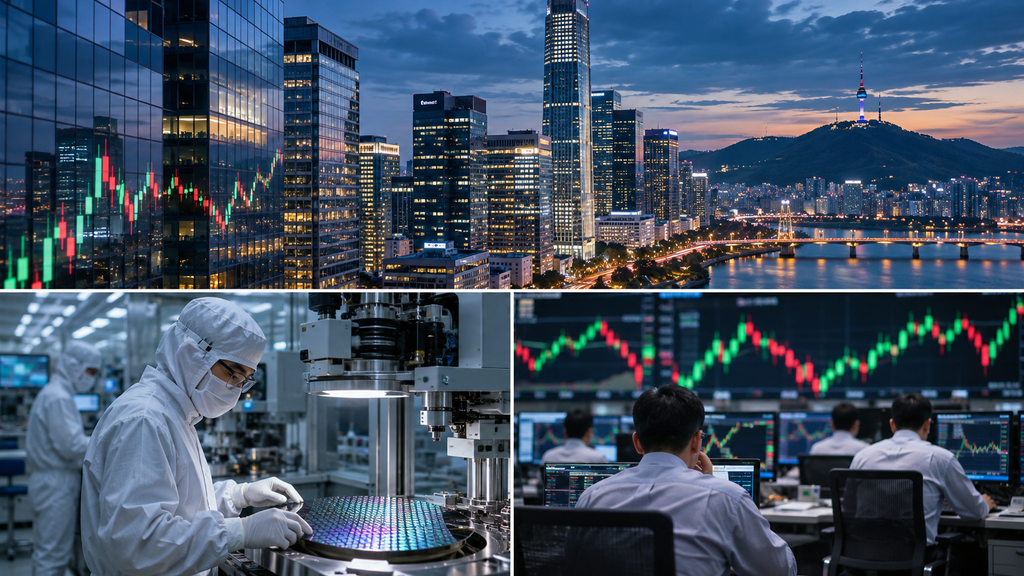
Asian equity markets rebounded sharply on Tuesday, November 10, reversing part of last week’s technology-led losses as investors returned to some of the region’s most heavily sold technology stocks.
South Korea and Japan were at the centre of the recovery. The KOSPI advanced more than 5% during early trading, while Japan’s Nikkei gained approximately 3%. The MSCI Asia-Pacific index also moved higher, rising around 1.5%.
The recovery followed a difficult period for global technology shares, during which concerns about elevated valuations, artificial intelligence investment costs and the sustainability of the AI growth cycle triggered significant selling pressure.
The latest movement suggests that investors are becoming more willing to re-enter positions in technology companies after the recent correction. However, the strength of the rebound should be assessed against the preceding losses rather than viewed as evidence that market uncertainty has disappeared.
Technology Shares Drive the Recovery
Semiconductor manufacturers and technology-related companies remain central to the Asian market outlook.
South Korea’s equity market is particularly sensitive to movements in the global semiconductor industry, given the importance of companies such as Samsung Electronics and SK Hynix. Both businesses are closely connected to demand for memory chips, high-performance computing and AI infrastructure.
Japan also maintains significant exposure to the global technology supply chain through semiconductor equipment manufacturers, electronic component producers and industrial technology companies.
The return of buying interest in these sectors indicates that investors are reassessing valuations following last week’s decline.
Nevertheless, the underlying investment question remains unchanged: whether the substantial capital expenditure directed towards AI infrastructure will translate into sustainable revenue growth, operating margins and long-term profitability.
The distinction between strong demand for AI technology and attractive investment returns is becoming increasingly important for equity valuations.
Wall Street Supports Asian Sentiment
The recovery in Asian markets followed a strong performance on Wall Street.
US equities recorded a broad advance on Monday, with the S&P 500 gaining approximately 2.35% and the Nasdaq Composite rising around 2.7%.
Semiconductor shares were among the strongest performers, with the Philadelphia Semiconductor Index advancing approximately 6.9%.
The recovery in US technology stocks provided an important reference point for Asian investors, particularly in markets where semiconductor manufacturers represent a substantial portion of benchmark indices.
However, the performance of individual companies remains uneven. Nvidia shares declined despite the broader US market rally, illustrating that investors are continuing to differentiate between companies and reassess company-specific risks.
The upcoming corporate earnings calendar is therefore particularly important. Results from AI infrastructure and semiconductor-related businesses could provide additional evidence about demand conditions, spending commitments and the profitability of the AI ecosystem.
Oil Prices Ease Inflation Concerns
The equity recovery was not driven exclusively by technology stocks. Developments in energy markets also contributed to the improvement in investor sentiment.
Brent crude fell approximately 1% to $91.56 per barrel during Tuesday’s Asian trading, extending the previous session’s decline. The movement followed renewed hopes for diplomatic progress between the United States and Iran, after Washington indicated that further military strikes could be delayed if negotiations advanced.
Lower oil prices are particularly relevant for Asian economies, many of which depend heavily on imported energy.
A sustained reduction in crude prices could ease pressure on transportation costs, industrial production expenses and broader inflation. This could provide additional support for corporate margins and consumer spending.
However, the geopolitical situation remains uncertain. Any deterioration in negotiations could quickly restore a risk premium in energy markets, potentially reversing part of the recent decline in oil prices.
US Inflation Becomes the Next Catalyst
Attention is now shifting towards the US October Consumer Price Index (CPI), an important indicator for global financial markets.
Economists surveyed by Reuters expected headline inflation to increase by 0.3% month-on-month, while core inflation, excluding food and energy, was forecast to rise by 0.2%.
The figures are particularly important because stronger-than-expected employment data have increased expectations of further monetary tightening.
Market pricing indicated an approximately 84% probability of a Federal Reserve rate increase next month, compared with 74% a week earlier.
A stronger inflation reading could reinforce expectations of higher interest rates, potentially putting pressure on technology valuations and growth-oriented equities.
Conversely, softer inflation could provide additional support for risk assets by reducing concerns about the future cost of capital.
For Asian markets, the implications extend beyond the United States. Changes in US monetary policy influence international capital flows, currency valuations and financing conditions across emerging and developed economies.
AI Investment Remains Under Scrutiny
Despite the recovery, the artificial intelligence investment cycle remains one of the most important structural themes influencing global equity markets.
Investors are increasingly evaluating whether the enormous investment commitments made by technology companies can generate sufficient returns.
Demand for advanced processors, high-bandwidth memory, data-centre equipment and cloud infrastructure remains an important growth driver. However, elevated valuations mean that companies are facing increasingly demanding market expectations.
Upcoming technology earnings, including results from AI infrastructure businesses such as CoreWeave, could provide additional insight into the relationship between infrastructure spending and commercial demand.
Nvidia also remains a central focus ahead of its upcoming earnings announcement. Its shares declined during the latest US session despite the broader market recovery, highlighting the continued sensitivity surrounding individual technology companies.
The market is therefore entering a period in which strong AI demand alone may no longer be sufficient to support valuations. Investors increasingly want evidence of sustainable earnings growth, cash generation and improving returns on invested capital.
What the Rebound Means for Global Markets
Tuesday’s recovery represents an improvement in global risk sentiment following a significant technology-led correction.
The simultaneous advance in South Korea, Japan and the broader Asia-Pacific region suggests that buying interest has returned across several important equity markets rather than remaining concentrated in a single country.
Nevertheless, the distinction between a technical recovery and a sustained market reversal remains important.
Several factors will determine whether the rebound can continue:
- US inflation: The next CPI report could influence interest-rate expectations and global equity valuations.
- Technology earnings: Corporate results will provide evidence of whether AI infrastructure spending is translating into financial performance.
- Energy markets: Further oil-price declines could ease inflation pressure, while renewed geopolitical tensions could reverse the improvement.
- Semiconductor demand: Revenue expectations for memory, processors and advanced chip manufacturing remain central to the outlook for Asian technology stocks.
- Institutional positioning: The extent to which investors rebuild exposure following last week’s selling will help determine the durability of the recovery.
For European investors, the developments in Asia are also relevant because movements in semiconductor supply chains, global technology valuations, energy prices and US monetary expectations influence European equity markets.
The broader picture remains one of improving sentiment but unresolved uncertainty. The latest rebound demonstrates that demand for technology exposure has not disappeared, although investors are becoming more selective about valuations, earnings quality and the long-term economics of artificial intelligence.
The next few trading sessions, together with US inflation data and corporate earnings, should provide a clearer indication of whether this recovery marks the beginning of a more durable stabilization or simply a temporary pause in the recent market correction.
Market Data Note
The strongest figures represent early-session market levels. As trading progressed, Reuters reported the KOSPI approximately 4% higher and the Nikkei around 2.5% higher, while the MSCI Asia-Pacific index remained approximately 1.5% higher. These differences reflect changing intraday market quotations rather than conflicting closing data. Reuters+1