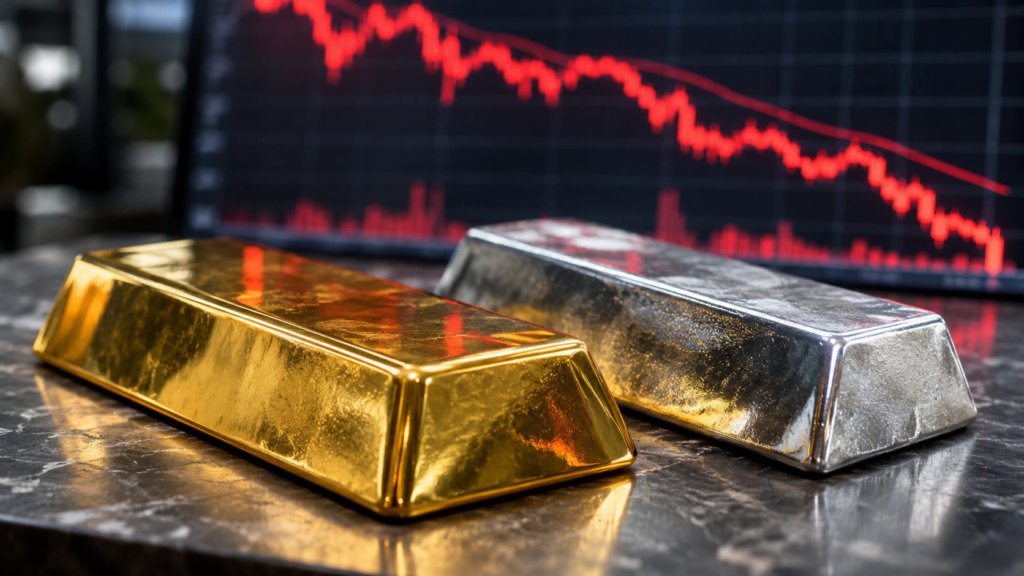
Gold plunged to $3,552 per ounce, heading for its steepest weekly decline in eight months. Silver also extended its losses as a stronger US dollar and expectations of another Federal Reserve rate increase intensified selling across precious metals.
◉ Gold fell 1.9% to approximately $3,552/oz, extending weekly losses to around 8.5%.
◉ Silver declined to approximately $41.96/oz, with industrial metals weakness adding to selling pressure.
◉ A stronger US dollar and expectations of a December Federal Reserve rate increase are driving the precious metals selloff, despite renewed physical buying in Asia.
Gold Extends Losses
Gold prices continued their decline on Friday, November 20, with spot bullion trading around $3,552 per ounce in early European market hours. The 1.9% daily decline puts gold on course for its worst weekly performance in approximately eight months, with losses reaching around 8.5%.
The latest selling pressure reflects a significant shift in interest-rate expectations. Markets are increasingly anticipating another Federal Reserve rate increase in December as policymakers remain concerned about persistent inflation.
The US dollar has also strengthened considerably, reaching levels not seen in approximately 19 months. This creates additional pressure on dollar-denominated commodities by making gold more expensive for international buyers.
The combination of higher expected interest rates, currency strength and broader market liquidation has weakened gold’s traditional appeal as a non-yielding defensive asset.
Silver Under Pressure
Silver has followed gold lower, with selling extending across both precious and industrial metals.
The latest reported futures indication placed silver near $41.96 per ounce, down approximately 1.59% on the day. The metal had already experienced substantial losses during Thursday’s US trading session, when prices approached $42.83.
Unlike gold, silver has an additional source of market sensitivity: its industrial demand exposure. Weakness across industrial commodities and concerns about global economic activity can therefore amplify pressure on silver during periods of declining investor confidence.
The simultaneous decline in gold and silver suggests that the current correction extends beyond isolated profit-taking in precious metals.

Federal Reserve Changes Market Expectations
Interest-rate expectations remain central to the latest market developments.
Recent Federal Reserve communications have reinforced concerns that monetary policy could remain restrictive for longer than previously anticipated. Markets have consequently increased their expectations of another rate increase in December.
Higher interest rates generally increase the opportunity cost of holding precious metals, particularly gold, which does not generate interest income.
The stronger dollar reinforces this effect, creating two simultaneous macroeconomic headwinds for international bullion demand.
This combination has become one of the dominant factors influencing precious metals pricing during the current trading week.
Physical Demand Provides Support
Despite the sharp decline in international prices, physical buying interest has reportedly increased in India and China.
Lower bullion prices are attracting buyers looking to take advantage of the correction, providing a potential counterweight to investment-related selling.
However, stronger physical demand does not necessarily translate into an immediate recovery in international prices. The relationship between consumer demand, institutional positioning, currency movements and monetary policy expectations remains important.
The coming trading sessions will help establish whether physical demand can absorb some of the selling pressure or whether macroeconomic conditions continue to dominate price formation.
Precious Metals Market Outlook
The latest correction highlights how quickly precious metals sentiment can change when expectations surrounding monetary policy shift.
Gold is facing pressure from dollar strength and rising interest-rate expectations, while silver is additionally exposed to industrial demand concerns.
The divergence between physical buying interest and financial-market selling is particularly important. Although lower prices may attract consumers, a sustained recovery will also depend on changes in currency markets, bond yields and expectations for Federal Reserve policy.
For now, both metals remain under significant selling pressure, with the December Federal Reserve meeting emerging as an important catalyst for the next phase of market direction.