Geneva takes centre stage in the luxury-watch world next week as prestigious industry awards coincide with a concentrated series of auctions featuring rare vintage timepieces, modern collectibles and independent watchmaking. The results could provide valuable insight into collector demand, while the awards spotlight technical innovation and craftsmanship.
◉ Geneva’s watchmaking calendar peaks on 7 November, when the GPHG awards ceremony coincides with the opening of major watch auctions.
◉ Auctions are bringing rare watches to market, including a stainless-steel Patek Philippe reference 1436 estimated at CHF 2–4 million.
◉ Auction results will offer evidence of collector demand, while Vacheron Constantin’s heritage exhibition highlights the cultural significance of historic timepieces.
Geneva’s Biggest Watch Week
From 4 to 8 November, Geneva will host a dense programme of exhibitions, auctions and collector events. The focal point is Saturday, 7 November, when the 26th Grand Prix d’Horlogerie de Genève (GPHG) awards ceremony takes place alongside the opening of major auction sales.
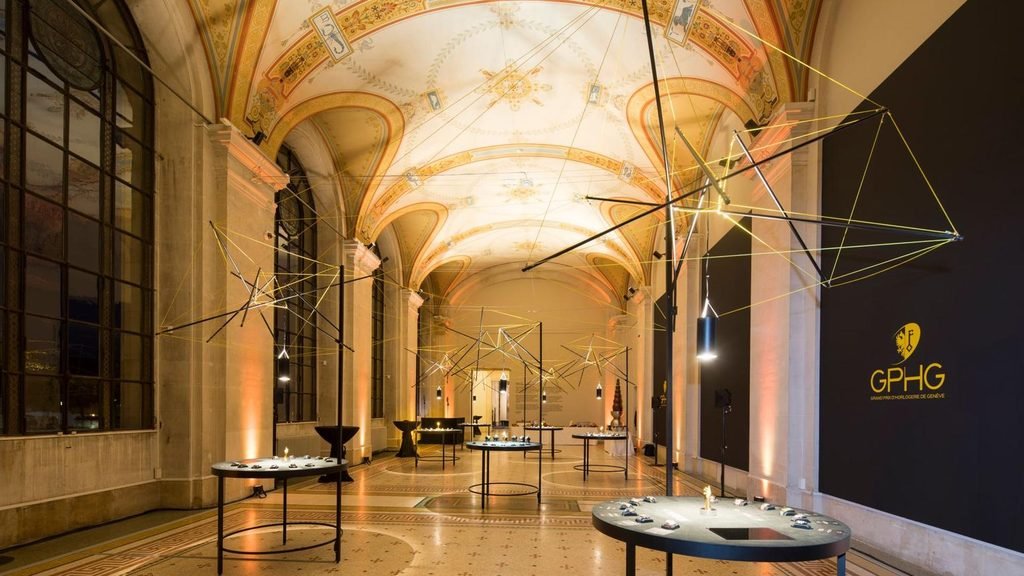
The GPHG exhibition at Geneva’s Musée d’Art et d’Histoire presents 84 nominated timepieces: 78 watches and six clocks from 55 brands. Twenty prizes are due to be awarded, including the prestigious Aiguille d’Or, which recognises an outstanding creation in contemporary watchmaking.
The nominations span established luxury manufacturers and independent makers. For collectors, the programme offers a chance to examine differences in mechanical engineering, design, materials and artisanal techniques. The ceremony is scheduled for 7 November, with the nominated pieces remaining on public exhibition until 15 November.
Phillips Puts Rare Watches to the Test
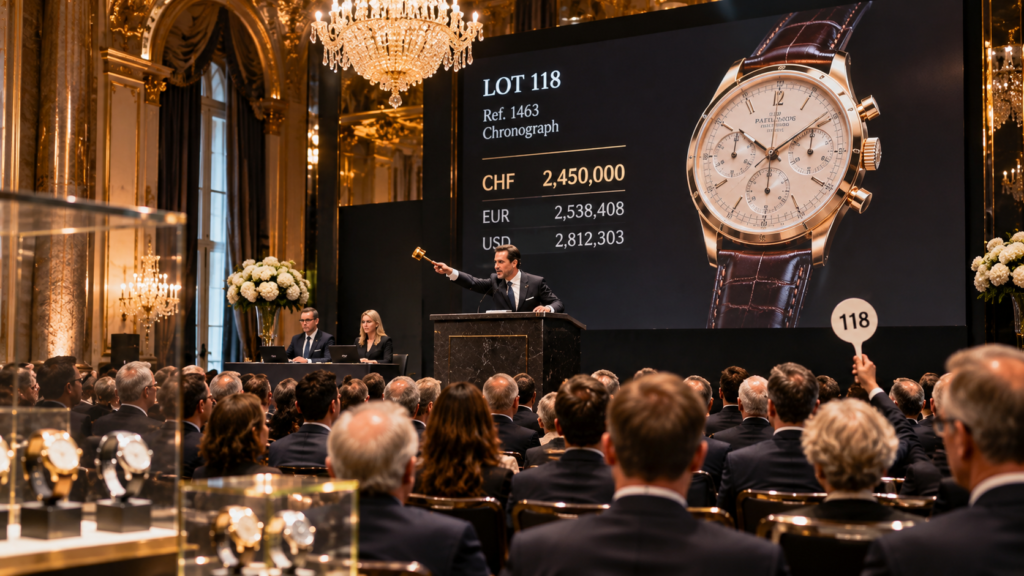
One of the week’s major commercial events is The Geneva Watch Auction: XXIV, organised by Phillips on 7–8 November. Its catalogue brings together rare vintage watches, modern collectibles and distinctive pieces from independent watchmakers.
Among the headline lots is a stainless-steel Patek Philippe reference 1436 split-seconds chronograph, estimated at CHF 2–4 million. Phillips identifies it as one of only two known stainless-steel examples retaining their original case-and-dial configuration.
Another notable piece is a yellow-gold Rolex reference 6062, known as the “Stelline”, with an estimate of CHF 600,000–1.2 million. The watch reportedly emerged from Japan and is being offered from its original owner’s collection.
The catalogue also features a Patek Philippe reference 2497 with a distinctive retailer signature, rare F.P. Journe creations, and watches by independent makers including Roger Smith and Kari Voutilainen.
These lots provide different ways to examine collector preferences. Rarity, condition, provenance, originality and technical complexity can all influence the appeal of a particular timepiece. However, published estimates remain expectations rather than confirmed market values.
The final results will be particularly informative when compared with estimates and comparable sales. Buyers’ premiums and other costs must also be considered when assessing the total price paid.

Three Auction Houses, Different Collectors
Phillips is not the only major auctioneer active in Geneva. Antiquorum’s Important Modern & Vintage Timepieces sale is scheduled for 7–8 November, with highlights including a Breguet tourbillon and a Rolex Submariner Military.
Sotheby’s Important Watches auction is scheduled for 8 November, following a public exhibition from 5–7 November. Its catalogue spans brands such as Patek Philippe, Rolex, Audemars Piguet, Vacheron Constantin and Cartier, alongside independent makers.
Christie’s adds another dimension to the wider Geneva watch season. Its Rare Watches auction is scheduled for 9 November, outside the main 2–8 November reporting window, although its preview offers an opportunity to examine further collectible pieces before the sale.
Together, the catalogues provide a broader picture than any single auction. The watches differ in age, design, condition, rarity and provenance, making direct price comparisons meaningful only when those differences are taken into account.
Vacheron Constantin Looks to History
Beyond the auction floor, Vacheron Constantin is presenting its inaugural Concours d’Élégance Horlogère, a competition dedicated to the preservation and appreciation of historic watchmaking.
More than 550 timepieces were submitted by collectors worldwide, covering watches created between 1755 and 1999. The finalists will be exhibited at Geneva’s Hotel President Wilson from 4–8 November, with the winners scheduled to be announced on 10 November.
The competition spans seven categories, including chronographs, artistic crafts, astronomical complications, multiple complications, design, chiming mechanisms and Chronomètre Royal.
Unlike a conventional product launch, the event places the emphasis on historical significance, originality, technical mastery and preservation. It also offers an opportunity to explore how watchmaking techniques and design have evolved over centuries.

Beyond the Million-Franc Lots
Geneva’s most expensive watches will command attention, but the broader collector market also deserves coverage. The city’s vintage-watch fair, held alongside the Salon du Design on 7–8 November, offers a perspective on specialist dealers and collectors beyond the highest-value auction lots.
The Munich Watch Fair on 8 November provides another European reference point, bringing together dealers and buyers in a more broadly focused watch market.
These events can help put the headline sales into context. The luxury-watch market is not a single segment: demand for exceptional historical pieces may differ from interest in modern collectible models, independent craftsmanship or more accessible vintage watches.
What the Results Could Reveal
The coming week creates an unusually concentrated opportunity to observe both the cultural and commercial sides of watchmaking. The GPHG will recognise selected creations for their design and technical achievement, while the auctions will test buyers’ willingness to pay for specific watches.
The most useful analysis will come after the sales, when estimates can be compared with realised prices and the strongest results examined alongside the characteristics of each watch. Unsold lots, where reported, may also provide context, although no single auction can represent the entire market.
For collectors and luxury-industry observers, Geneva’s programme offers more than a showcase of expensive objects. It brings together craftsmanship, heritage, scarcity and measurable transactions in one of the watch world’s most important annual gatherings.
The central question is not simply which watch achieves the highest price, but what the combination of awards, catalogues and auction results reveals about the qualities collectors value most.
Sources
- Grand Prix d’Horlogerie de Genève — 2026 exhibition and awards
- GPHG — Official website and nominated timepieces
- Phillips — The Geneva Watch Auction: XXIV
- Phillips — Auction highlights and rare lots
- Antiquorum — November 2026 auction calendar
- Sotheby’s — Important Watches, Geneva
- Vacheron Constantin — Concours d’Élégance Horlogère
- Geneva Tourism — Salon du Design and vintage-watch fair
- Denarni Fokus — Editorial Disclosure and Transparency