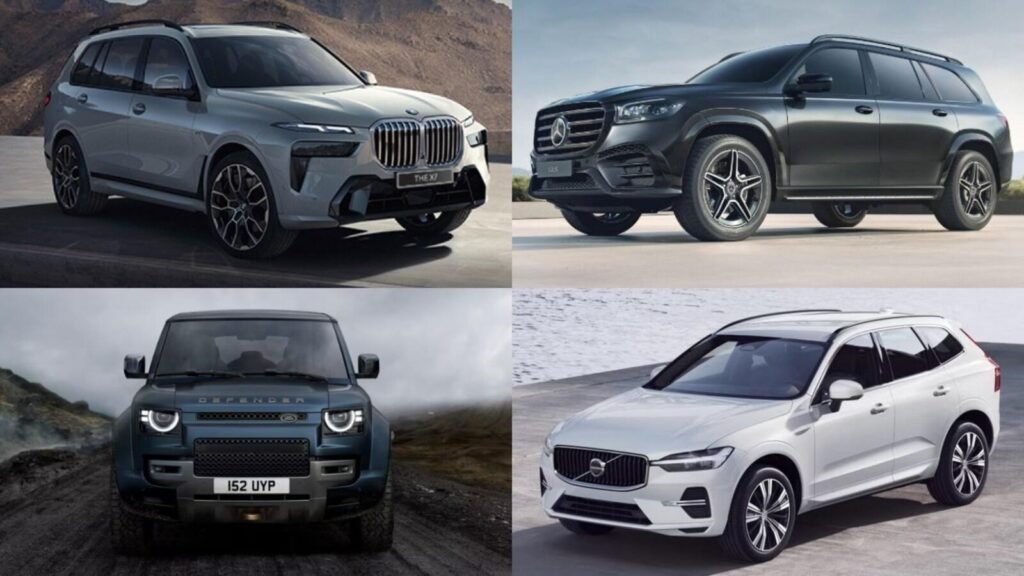
India’s luxury car market is increasingly being shaped by two sharply different strategies, with BMW targeting first-time premium buyers while Mercedes-Benz doubles down on high-end affluent customers.
The divergence highlights a maturing market where aspirational demand at the lower end of luxury is rising even as wealthy buyers continue spending heavily on flagship SUVs, performance cars and chauffeur-driven sedans.
According to Moneycontrol, BMW is leaning aggressively into the entry-premium segment, with models around the ₹50 lakh price point now representing nearly 30% of its Indian sales. The company said this segment doubled in 2025 compared with the previous year. (moneycontrol.com)
That strategy is helping BMW widen its buyer funnel by attracting younger professionals and first-time luxury car owners who may later upgrade into larger vehicles.
Meanwhile, Mercedes-Benz is taking the opposite route: prioritising profitability, exclusivity and premiumisation rather than volume-led competition in entry categories. The brand has focused strongly on top-end models, AMG performance cars and premium EVs. (moneycontrol.com)


BMW Wins Quarterly Race, Mercedes Keeps Annual Crown
Recent sales data show how close the contest has become.
BMW overtook Mercedes-Benz in India’s luxury segment during the March quarter of FY26, its first quarterly lead in nearly 13 years. However, Mercedes retained the full-year leadership position, selling 18,160 vehicles versus BMW’s 17,301. (moneycontrol.com)
That suggests BMW’s mass-premium push is gaining traction, but Mercedes’ richer model mix continues generating stronger annual resilience.
Why India Matters Globally
India remains a relatively small luxury auto market compared with China or Europe, but growth potential is significant.
BMW executives recently said India’s luxury vehicle market could double by 2030 as rising wealth, younger consumers and aspirational demand reshape buying patterns. (The Economic Times)
That makes India strategically important for German automakers seeking growth outside slowing European markets and highly competitive China.
EVs and Wealth Creation Add Fuel
Another growth driver is electrification. Premium EV demand is increasing among urban buyers seeking imported technology and lower running costs.
BMW’s premium electric vehicles accounted for roughly 21% of Q4 FY26 sales, according to local market reports. (The Times of India)
Mercedes is also expanding electric offerings, while preserving its dominance in top-end combustion and hybrid models.


Why It Matters for Europe and Slovenia
For European readers, including Slovenia, India’s luxury auto battle matters because both BMW and Mercedes are major components of European stock indices and industrial supply chains.
Growth in India can help offset weaker demand elsewhere, supporting earnings, suppliers and broader sentiment across Europe’s automotive sector.
Bottom Line
India’s premium car market is no longer one-dimensional.
BMW is building future market share through aspirational entry luxury buyers, while Mercedes is maximizing value through ultra-premium positioning.
In 2026, both strategies appear to be working — and India may become one of the most important battlegrounds in global luxury autos.
Sources
Moneycontrol – BMW vs Mercedes-Benz: India’s luxury car market splits as entry boom meets top-end push (moneycontrol.com)
Moneycontrol – BMW tops luxury car sales in Q4, Mercedes-Benz leads in FY26 (moneycontrol.com)
Economic Times – Luxury car sales in India set to double by 2030, says BMW (The Economic Times)