China’s industrial profits accelerated sharply in September, supported by strong earnings in electronics and AI-related manufacturing. However, the widening gap between technology-driven industries and traditional businesses raises questions about the strength and sustainability of the country’s economic recovery.
│ ◉ Profit growth accelerates: Industrial profits rose 14.4% year on year in September, compared with 4.2% in August.
│ ◉ AI drives industrial earnings: Profits in computer, communications and other electronic-equipment manufacturing increased 103.8% during the first nine months of 2026.
│ ◉ Recovery remains uneven: Furniture manufacturing profits fell 51.3% over the same period, highlighting persistent weakness across parts of the traditional economy.
China’s industrial sector delivered a stronger earnings performance in September, reinforcing the growing influence of advanced manufacturing and artificial intelligence on the world’s second-largest economy.
Industrial profits increased 14.4% year on year, accelerating from 4.2% growth in August, according to figures released on 27 October. For January through September, profits rose 15.5%, slightly below the 15.7% increase recorded during the first eight months.
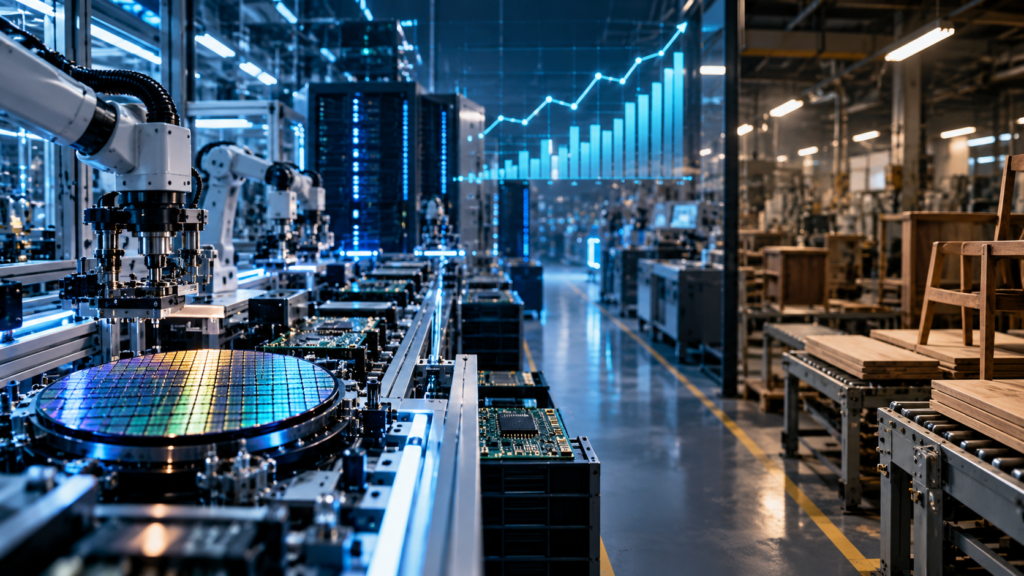
The headline figures suggest improving corporate profitability, but the distribution of those gains tells a more complex story. Electronics manufacturers have benefited from rising demand for semiconductors, computing infrastructure and equipment associated with AI development. Traditional industries, meanwhile, continue to face pressure from uneven demand and challenging operating conditions.
AI Reshapes Industrial Earnings
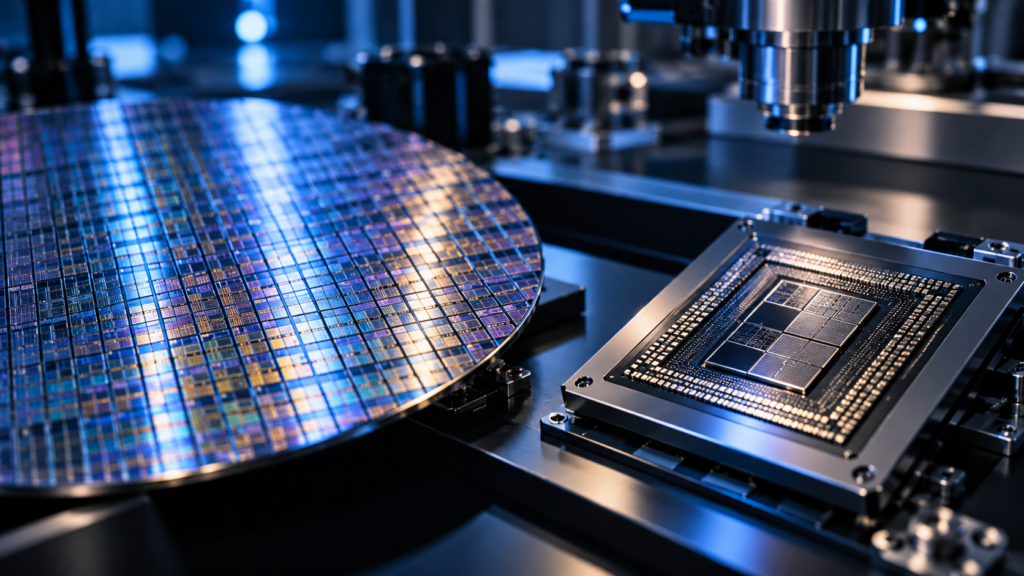
The computer, communications and other electronic-equipment manufacturing sector recorded a 103.8% increase in profits during the first nine months of 2026.
The expansion reflects the growing importance of AI-related investment across global supply chains. Data centres, advanced computing systems, semiconductor components and supporting electronics have become important sources of industrial demand.
Official figures published in September had already highlighted the strength of China’s electronics sector, with profits in the industry rising 110% during January–August. The latest data indicate that technology-related manufacturing remains a major contributor to the country’s industrial earnings expansion.
However, rapid profit growth in a specific industry does not automatically translate into equivalent gains across the wider economy. Technology manufacturers may experience strong demand while businesses exposed to weaker household consumption or traditional manufacturing encounter very different conditions.

Traditional Industries Face Pressure
The contrast is particularly visible in furniture manufacturing, where profits declined 51.3% during the first nine months.
This divergence matters because industrial profitability depends on more than production volumes. Selling prices, input costs, competition and demand conditions can all influence whether additional output translates into stronger earnings.
China’s broader economy grew 4.5% year on year in the third quarter, keeping growth within reach of the government’s annual target. Nevertheless, uneven corporate performance suggests that the benefits of economic expansion remain concentrated in particular sectors.
Global Trade Implications
China’s industrial performance also has implications for international markets. Strong electronics production supports global technology supply chains, but expanding export capacity can intensify competition with manufacturers in Europe and other major trading regions.
If domestic demand remains insufficient to absorb industrial output, exporters may face greater pressure to find overseas customers. This could add to trade tensions as governments scrutinise industrial subsidies, market access and competitive conditions.
For global investors, the central issue is whether AI-related industrial growth can become a broader source of economic strength or remains concentrated among a relatively small group of manufacturers.
The Bigger Picture
China’s September profit figures reveal an industrial economy increasingly shaped by technology investment. Electronics manufacturing is generating substantial earnings growth, while weaker traditional sectors demonstrate that the recovery remains uneven.
The next phase will depend on the durability of global AI spending, domestic demand and the ability of Chinese manufacturers to sustain margins amid intensifying competition.
The headline growth rate is strong. The broader economic picture, however, remains divided.