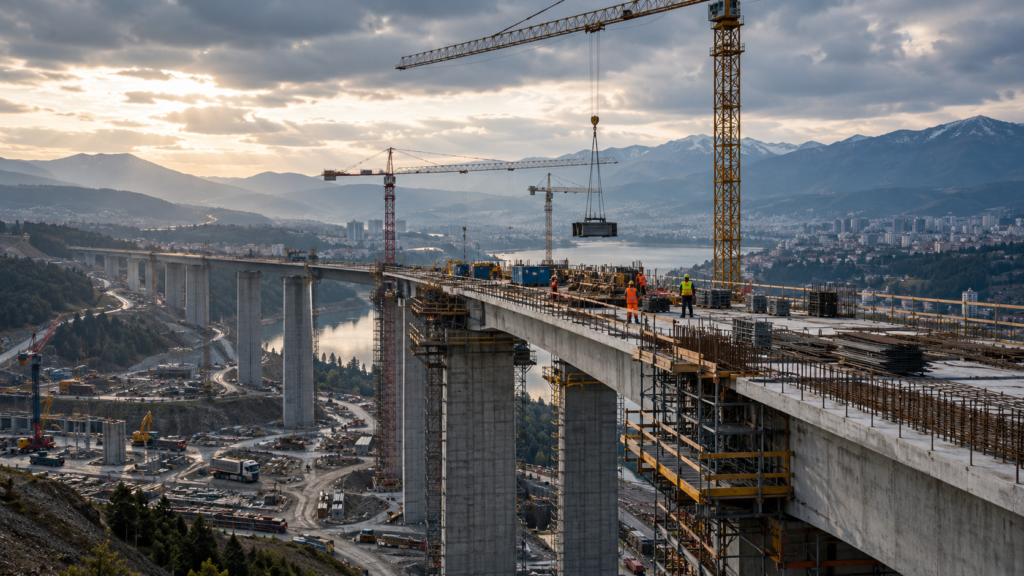
European construction stocks are increasingly being assessed on pricing power, infrastructure exposure and earnings resilience as higher borrowing costs continue to weigh on the housing recovery. Recent corporate results suggest that infrastructure investment and higher-value building materials are helping to offset weakness in residential construction.
◉ Infrastructure is providing support: Public investment and non-residential projects are helping cushion weak demand for new housing across Europe.
◉ Pricing power is becoming a differentiator: Companies able to protect margins against energy, labour and materials costs are attracting greater attention.
◉ The recovery remains uneven: Higher financing costs, regional differences and uncertain housing demand continue to complicate the sector outlook for 2027.
A Divided Construction Market
Europe’s construction sector is entering a potentially important transition. After several years of subdued activity, infrastructure spending and selected industrial projects are creating pockets of resilience, even as residential construction struggles with affordability pressures and elevated financing costs.
The distinction matters for listed building-materials companies. Demand for cement, insulation and construction chemicals depends not only on total building activity but also on the type of projects being delivered, manufacturers’ ability to maintain prices and the energy required to produce their materials.
Pricing Power Takes Centre Stage
According to reporting published on 27 October 2026, Goldman Sachs identified four preferred European construction-related stocks: Sika, Holcim, Heidelberg Materials and Rockwool. The selection reflects a preference for businesses with pricing power and exposure to infrastructure and non-residential construction rather than dependence on an immediate rebound in housing.
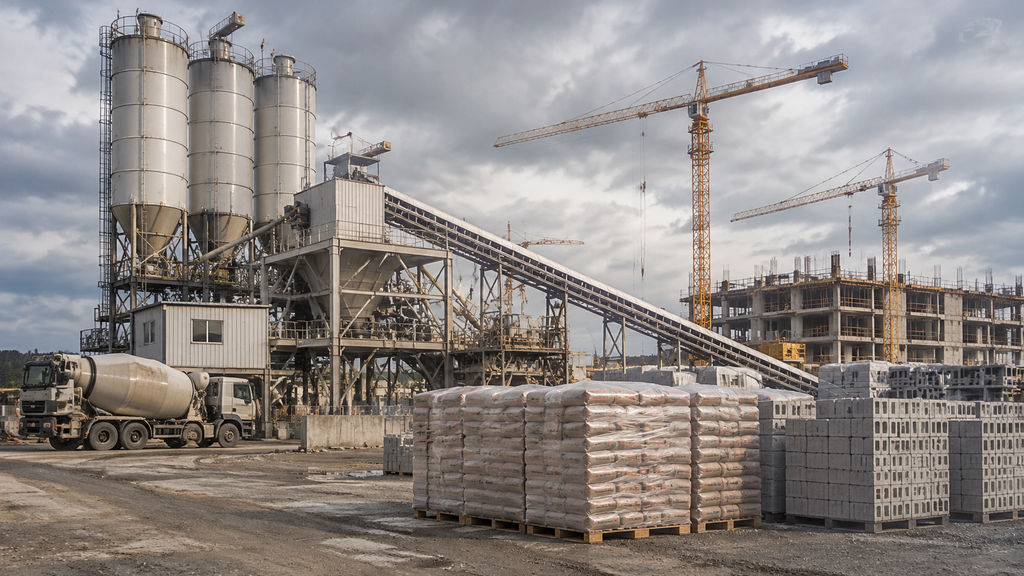
The companies operate in different parts of the building-materials market. Sika supplies construction chemicals and specialist materials, while Holcim and Heidelberg Materials have substantial exposure to cement and other heavy building materials. Rockwool focuses on stone-wool insulation, which is used in energy-efficient buildings and renovation projects.
Their shared appeal is not immunity from the economic cycle. Rather, it is the possibility that infrastructure demand, specialist products and disciplined pricing may help protect earnings while residential construction remains weak.
Recent results provide additional context. Holcim raised its 2026 earnings outlook after reporting stronger-than-expected third-quarter performance. Recurring operating profit increased 17% year on year to 976 million Swiss francs, supported by building solutions and improved margins. The company also pointed to continued infrastructure spending as a potential source of demand in 2027.
Heidelberg Materials has also reported early signs of construction recovery, particularly as infrastructure projects begin to advance in Germany. However, energy costs remain a challenge, highlighting the importance of controlling production expenses and passing higher costs through to customers.
Infrastructure Versus Housing
The broader European outlook remains mixed. Infrastructure investment, energy networks, transport projects and data-centre construction can support demand for materials even when private housing development is subdued. Renovation activity also offers an alternative source of revenue, particularly as buildings face pressure to improve energy efficiency.
Residential construction, however, remains sensitive to mortgage rates, household affordability and developers’ financing costs. A sustained recovery will depend partly on whether borrowing conditions improve enough to unlock delayed projects.
This divergence creates different earnings trajectories across companies and regions. Businesses with exposure to several end markets may be better positioned to absorb weakness in one segment, although geographic diversification alone does not eliminate risks from energy prices, labour costs or slowing economic activity.
What Markets Will Watch
Investors will be assessing whether infrastructure demand can translate into sustained volume growth, whether manufacturers can preserve margins and whether residential construction stabilises during 2027.
Valuations also matter. Strong operational performance does not automatically mean a stock is attractively priced, particularly when market expectations already reflect resilient earnings.
For the sector, the central question is whether infrastructure-led demand can bridge the gap until housing activity improves. The answer will likely vary by company, country and product category, keeping selectivity and earnings delivery central to the European construction-stock narrative.
Sources
- Investing.com — Goldman Sachs Names Top EU Construction Stocks
- Reuters — Holcim Raises Earnings Forecast After Q3 Profit Beats Expectations
- Reuters — Heidelberg Materials Sees Early Signs of Construction Recovery
- European Commission — European Construction Begins to Regain Momentum in 2026
- Denarni Fokus — Editorial Disclosure & Transparency