Summary: Oil prices climbed as reports of Houthi attacks involving Saudi Arabia’s Ras Tanura refinery renewed concerns over Middle Eastern supply security. Brent reached $92.22 per barrel and WTI $82.42, while expectations of a global supply surplus and the upcoming OPEC+ meeting continue to limit market gains.
◉ Brent crude climbed to approximately $92.22 per barrel, while US WTI reached $82.42.
◉ Reports of Houthi attacks involving Saudi Arabia’s Ras Tanura refinery have renewed concerns over the security of critical oil infrastructure.
◉ A potential global supply surplus and the November 29 OPEC+ meeting remain key factors limiting further price increases.
Geopolitical Tensions Lift Oil
Oil prices moved higher on Wednesday, November 25, as renewed reports of Houthi attacks in the Middle East increased concerns about potential disruptions to regional energy infrastructure.
Brent crude futures advanced to approximately $92.22 per barrel, while US West Texas Intermediate (WTI) climbed to around $82.42.
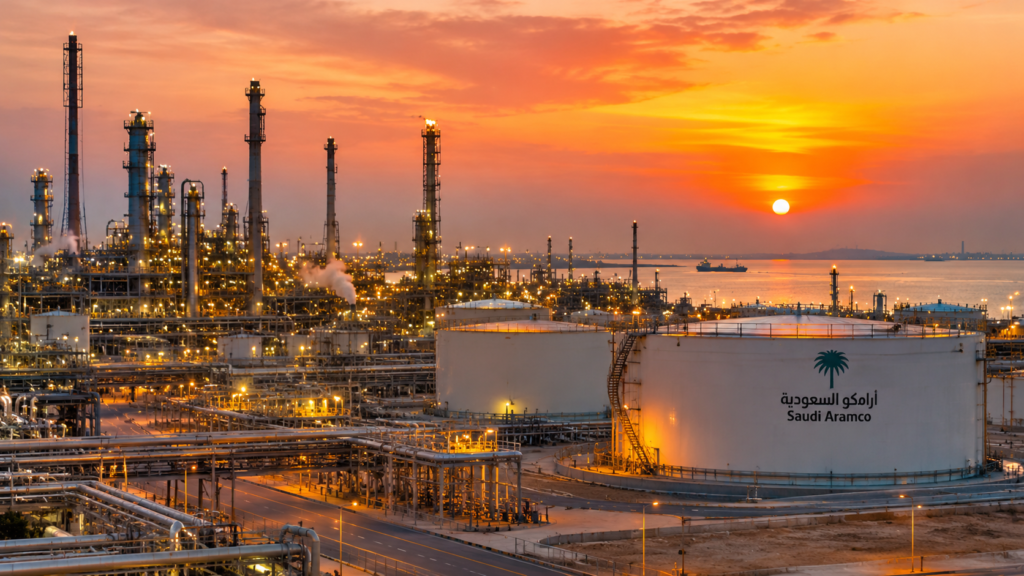
The movement followed reports that Yemen’s Houthi forces had targeted Saudi Arabia’s Ras Tanura oil refinery, one of the most strategically important energy facilities in the region.
The incident introduced another geopolitical risk premium into a market that had recently been struggling with expectations of increasing global supply.
However, the reported attack and its actual impact on oil production must be distinguished. The Saudi-led coalition confirmed that four drones had been intercepted over Ras Tanura, but did not confirm that the refinery itself had been struck.
Ras Tanura in Focus
Ras Tanura represents a critical part of Saudi Arabia’s oil infrastructure.
Located on the kingdom’s eastern Gulf coast, the complex includes a refinery with processing capacity of approximately 550,000 barrels per day and a major crude export terminal.
Its strategic importance extends beyond domestic refining. Any significant disruption to the surrounding export infrastructure could affect international crude flows, particularly shipments destined for Asian markets.
Satellite imagery reviewed by Reuters showed extensive smoke around the facility following the reported incident.
The uncertainty surrounding the situation is itself significant. Even without confirmation of production losses, the possibility of disruption at a major export hub can influence short-term positioning and increase volatility in crude futures.

Supply Surplus Limits Gains
Despite renewed geopolitical concerns, the broader oil market continues to face a potentially important supply-demand imbalance.
Higher production from non-OPEC producers, including the United States, combined with recovering Middle Eastern exports, has increased expectations of a global supply surplus.
Recent developments in Libya also illustrate the changing supply picture. The reopening of the Sharara oil pipeline has restored additional crude flows, adding to the volumes potentially available to international markets.
US inventory data has provided another element for traders to assess. The American Petroleum Institute reported a relatively modest increase of 126,000 barrels in crude stocks for the week ending November 20.
Nevertheless, expectations of a larger global surplus continue to limit the extent of geopolitical price rallies.
This creates two competing forces: regional security risks supporting prices and expectations of additional production restricting their upside.
OPEC+ Meeting Ahead
Attention is increasingly turning towards November 29, when OPEC+ members are scheduled to discuss their production policy for 2027.
The meeting comes at an important moment for the oil market.
Members face a difficult balance between maintaining price stability and responding to changing production capacity, international demand and geopolitical uncertainty.
Iraq is also seeking a higher assessment of its production capacity, a development that could influence future production allocations.
Markets will therefore be watching for signals regarding potential output adjustments, the group’s approach to existing production targets and its willingness to respond to changing supply conditions.
Any indication of tighter production policy could provide additional support to crude prices. Conversely, expectations of higher output could reinforce concerns about oversupply.
What Comes Next?
The latest oil price movement demonstrates how sensitive energy markets remain to developments in the Middle East.
The Ras Tanura incident has renewed attention on the vulnerability of major export infrastructure, while the potential global supply surplus continues to challenge the bullish outlook.
Three factors will be particularly important in the coming days: confirmation of any actual supply disruption in Saudi Arabia, developments in global crude inventories and the outcome of the November 29 OPEC+ meeting.
For now, the oil market remains caught between geopolitical risk and fundamental supply expectations.
The direction of the next major price movement may depend on which of these forces proves stronger.
Sources
- Reuters – Yemen’s Houthis say they attacked Saudi Arabia’s Ras Tanura refinery (25 November 2026).
- Reuters – Oil rises after alleged Houthi attack on Saudi refinery (25 November 2026).
- Reuters – Oil steady as supply glut prospect offsets Middle East disruption fears (25 November 2026).
- Reuters – Oil slumps on increased Middle East flows and Libyan pipeline restart (23 November 2026).
- Denarni Fokus – Editorial Disclosure & Transparency.