Summary: A relief rally is a temporary increase in financial asset prices after investors receive news that is less negative than expected or when previously elevated market fears begin to ease. Although these rebounds can produce sharp gains across stocks, bonds and cryptocurrencies, they do not necessarily signal a lasting market recovery. Understanding the difference between temporary sentiment shifts and genuine fundamental improvement is essential to interpreting market movements.
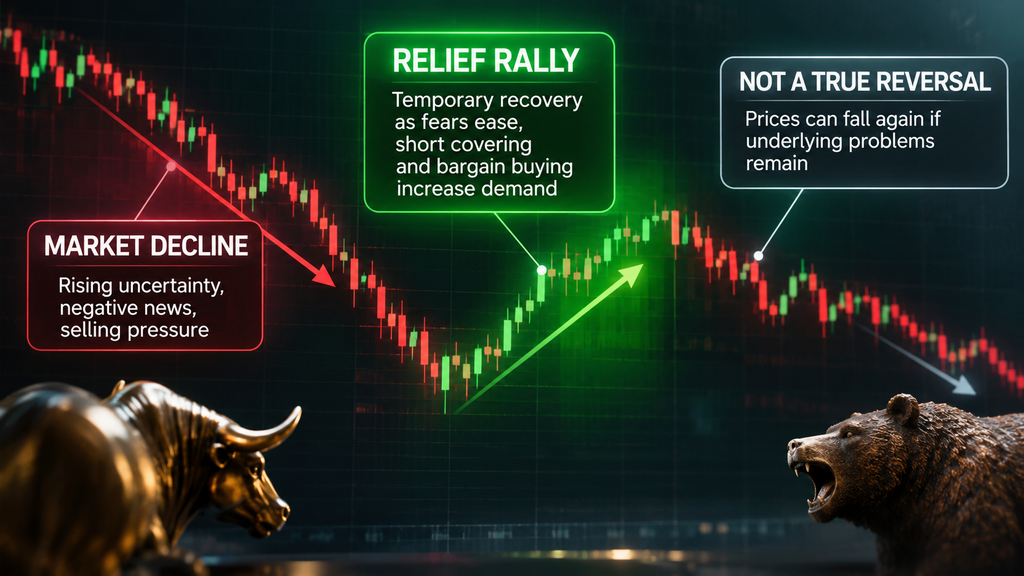
◉ Relief rallies occur when markets recover because anticipated risks become less severe, uncertainty declines or extreme selling pressure begins to ease.
◉ Short covering, improved investor sentiment and institutional repositioning can accelerate price increases without a corresponding improvement in economic fundamentals.
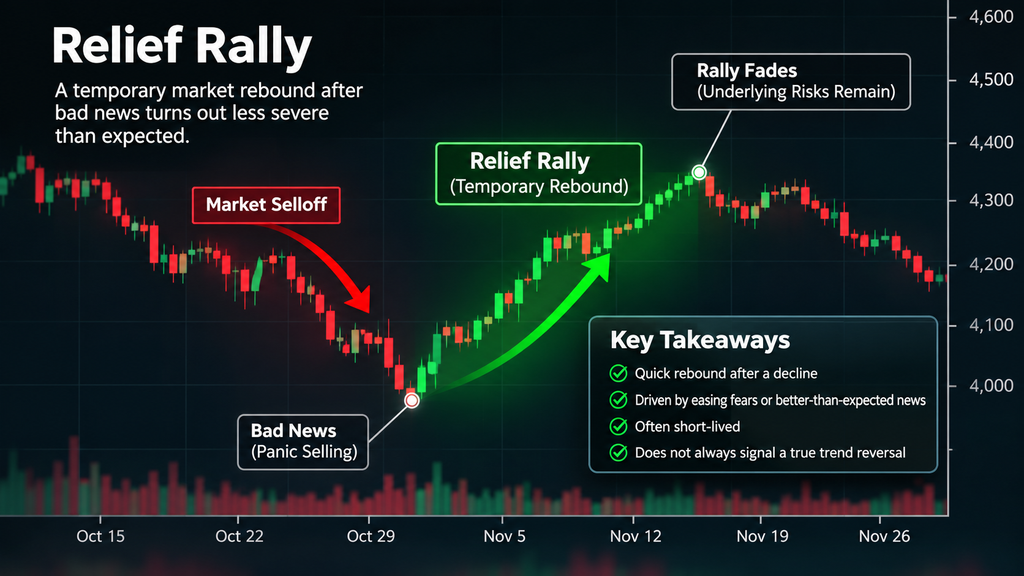
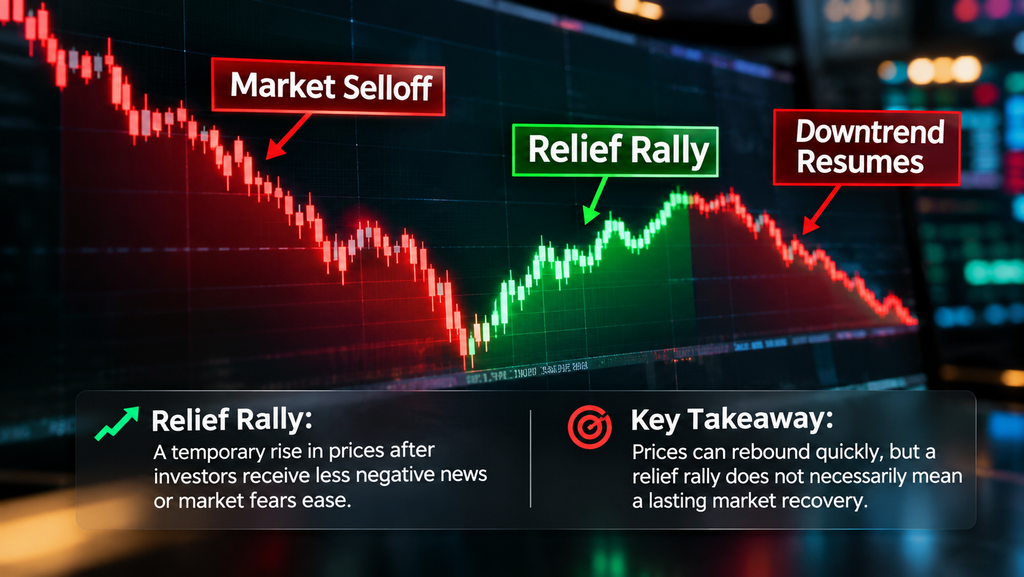
◉ A relief rally is not necessarily a trend reversal: prices can recover temporarily before the original market weakness returns.
What Is a Relief Rally?
A relief rally describes a sudden or gradual increase in asset prices following a period of market stress, uncertainty or substantial losses.
It typically occurs when an event that investors feared turns out to be less damaging than expected, or when new information reduces the perceived probability of an adverse outcome.
The important distinction is that markets do not necessarily need genuinely positive news to recover. Sometimes, the absence of particularly bad news is sufficient to trigger a significant change in investor behaviour.
For example, imagine that financial markets have spent several weeks declining because investors fear that central banks will increase interest rates aggressively.
If new inflation figures show that price pressures are easing, markets may interpret the development as evidence that monetary tightening could be less severe than previously anticipated.
Equities may recover, government bond prices may increase and investors may begin reducing defensive positions.
The economic environment has not necessarily improved overnight. Instead, expectations about the future have changed.
This is the central mechanism behind a relief rally: markets respond to the difference between what investors expected and what actually happened.
Why Do Relief Rallies Happen?
Several market mechanisms can contribute to a relief rally. They frequently occur together, creating a stronger price movement than the original news might suggest.
1. Expectations Improve
Financial markets are forward-looking. Investors continuously assess economic growth, inflation, interest rates, corporate earnings and geopolitical developments.
When a negative scenario becomes less likely, investors may reassess the value of financial assets.
Consider a company facing concerns about a potential recession. Its share price might decline significantly because investors anticipate weaker sales and lower profits.
If new economic data indicate that the recession risk is declining, the shares may recover even before the company’s actual earnings improve.
The rally reflects a change in expectations rather than a completed economic recovery.
2. Short Covering Creates Buying Pressure
Short covering is another important driver.
Short sellers borrow an asset, sell it and aim to repurchase it at a lower price. When the market moves against their expectations, they may close their positions by buying back the asset.
During a sharp market rebound, short sellers can face increasing losses and may be forced to close positions quickly.
This creates additional buying demand, potentially accelerating the upward movement.
In some circumstances, short covering can develop into a short squeeze, where rising prices force further short positions to close.
The resulting price increase can become significantly larger than the initial reaction to the news.
3. Oversold Conditions Attract Buyers
Following a prolonged selloff, some assets may experience unusually strong selling pressure.
Technical indicators, positioning data and investor sentiment can suggest that pessimism has become excessive.
When selling pressure begins to decline, investors seeking exposure at lower prices may enter the market.
This buying activity can help stabilise prices and contribute to a rebound.
However, an asset becoming technically oversold does not automatically mean that its fundamental valuation has become attractive.
4. Institutional Repositioning
Large investment funds, hedge funds and other institutional participants can also contribute to relief rallies.
During periods of uncertainty, portfolio managers may reduce exposure to equities, increase cash holdings or hedge positions.
When perceived risks decline, some of these positions may be reversed.
Even a partial return of institutional capital can generate significant demand, particularly in markets where liquidity has deteriorated during the preceding selloff.
Real Market Example: Nvidia’s November Rally
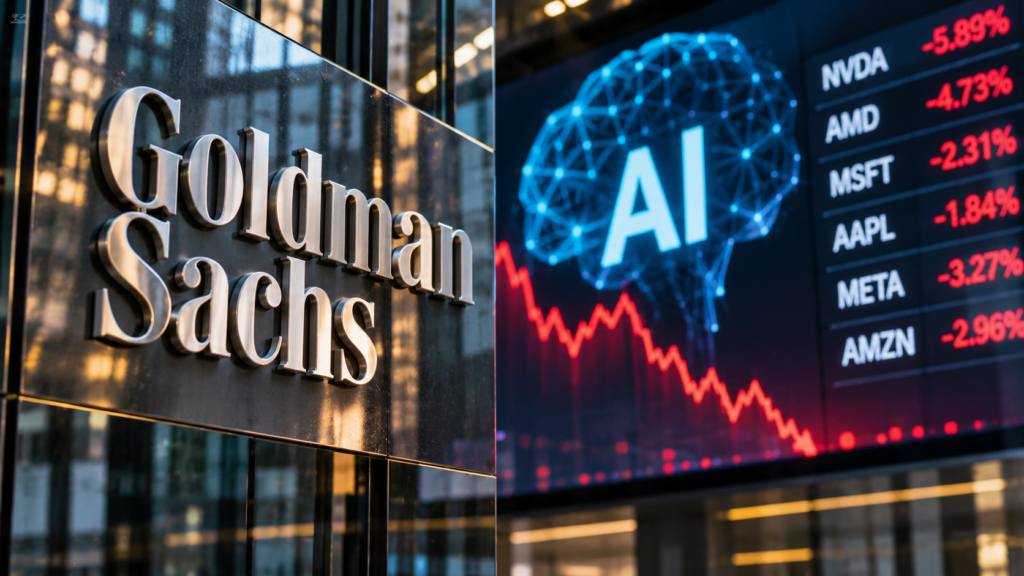
The global market reaction to Nvidia’s leadership developments on November 23–24, 2026, provides a useful contemporary illustration of relief-rally dynamics.
Following a difficult period for technology shares and concerns surrounding the artificial intelligence investment cycle, Nvidia’s reinstatement of Jensen Huang as chief executive helped restore confidence across the sector.
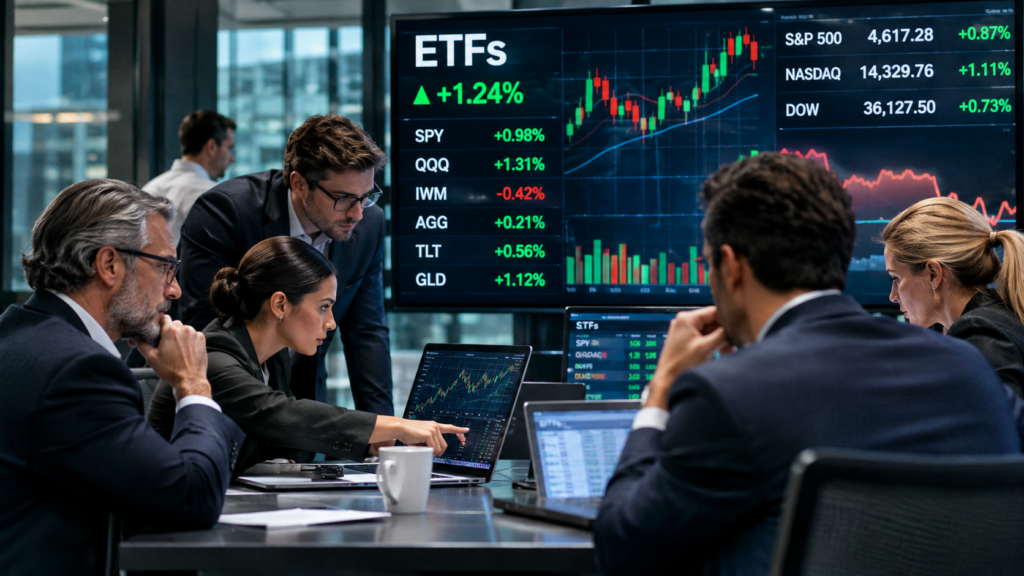
On November 23, Nvidia shares surged approximately 31.5%, while the S&P 500 gained 4.7% and the Nasdaq Composite advanced 6.5%.
Asian technology markets subsequently recorded substantial gains.
The rally reflected more than the leadership announcement itself. Investors were also reassessing concerns about the sustainability of AI investment and the possibility of a deeper correction across technology companies.
However, the recovery encountered resistance almost immediately.
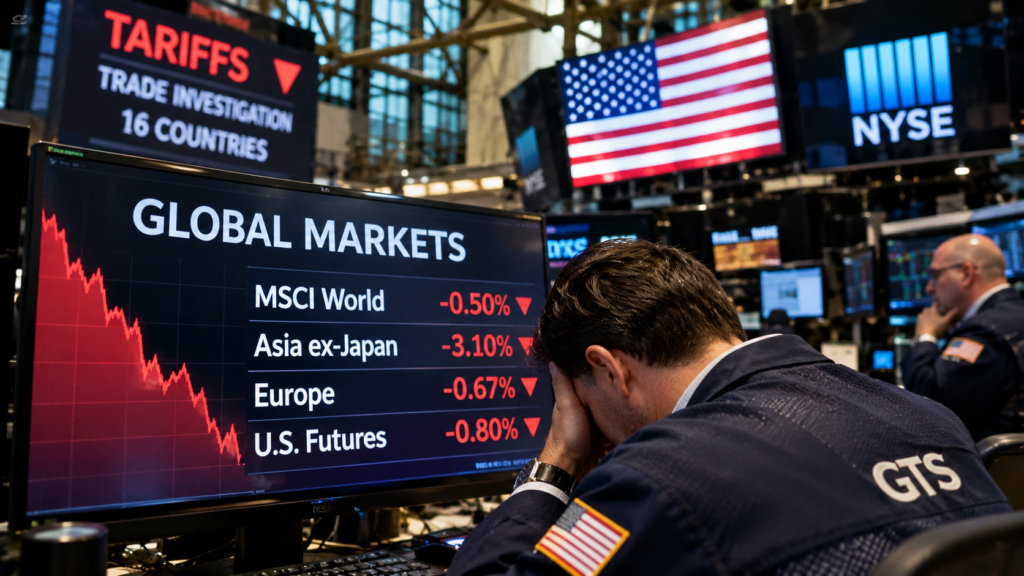
On November 24, Nvidia shares fell approximately 4% in premarket trading, while US stock futures declined as investors reconsidered the strength of the previous session’s advance.
This sequence illustrates an important characteristic of relief rallies: a powerful initial recovery can occur without resolving the underlying uncertainties that contributed to the selloff.
The example also demonstrates why a single positive trading session should not automatically be interpreted as confirmation of a new market trend.
Relief Rally vs. Market Reversal
Although both movements involve rising prices after a decline, a relief rally and a genuine market reversal describe different market conditions.
A relief rally is generally driven by temporary changes in sentiment, positioning or perceived risk. A genuine reversal requires stronger evidence that the underlying forces influencing prices have changed.
| Characteristic | Relief Rally | Genuine Market Reversal |
|---|---|---|
| Main driver | Reduced fear and short covering | Improving fundamentals |
| Duration | Often short-term | Potentially sustained |
| Earnings | May remain weak | Improving earnings outlook |
| Economic data | Still potentially deteriorating | More consistent improvement |
| Investor sentiment | Rapid recovery from pessimism | Broader confidence building |
| Market trend | May remain downward | Direction begins to change |
A relief rally can eventually develop into a genuine recovery. The distinction often becomes clearer only after additional economic data, earnings reports and trading sessions provide evidence.
It is therefore important not to classify every strong rebound as a temporary move or every positive session as the beginning of a new bull market.
How to Identify a Relief Rally
There is no single indicator that can reliably identify a relief rally in real time. Market participants generally examine several signals together.
Price action: A rapid rebound following a substantial decline can indicate that selling pressure is temporarily easing.
Trading volume: A recovery with limited participation may indicate weaker conviction. However, high volume can also accompany short covering, so volume alone is not conclusive.
Market breadth: If only a small group of large companies is responsible for index gains, the recovery may be narrower than the headline performance suggests.
Fundamental developments: If corporate earnings, economic growth and credit conditions continue deteriorating despite rising prices, the underlying recovery may lack fundamental support.
Market positioning: Elevated short interest and heavily defensive positioning can create conditions for sharp rebounds when investors begin closing bearish positions.
Follow-through: One of the most important observations is whether prices maintain their gains over subsequent sessions and whether market participation broadens.
These indicators provide context rather than certainty. A relief rally and a genuine market recovery can initially display very similar characteristics.
Where Relief Rallies Occur
Relief rallies are not limited to stock markets. They can develop across different financial markets whenever uncertainty declines or selling pressure reverses.
- Stocks: Equity indices recover after weaker-than-feared inflation figures, improved earnings or reduced recession concerns.
- Cryptocurrencies: Bitcoin and other digital assets rebound following forced liquidations, improved liquidity or reduced regulatory uncertainty.
- Bonds: Government bond prices rise when investors become less concerned about inflation or future interest-rate increases.
- Commodities: Oil, copper and other commodities recover after fears surrounding demand, supply disruptions or geopolitical developments begin to ease.
- Currencies: Exchange rates move as expectations surrounding monetary policy and economic risks change.
The underlying mechanism is similar, but the factors driving each market can differ considerably.
Why Relief Rallies Matter
Relief rallies provide useful information about investor expectations, market positioning and the sensitivity of asset prices to new developments.
They also demonstrate why financial markets cannot be understood by looking at economic headlines alone.
A market can rise while economic conditions remain weak because investors believe the worst outcomes are becoming less likely. Equally, markets can decline despite positive economic data if investors had already expected an even stronger result.
This relationship between expectations and actual outcomes is one of the fundamental principles of financial market analysis.
For analysts, the important distinction is whether a price recovery reflects a temporary improvement in sentiment or a meaningful change in the economic and financial conditions supporting asset valuations.
The Bigger Picture
Relief rallies are a normal feature of financial markets, particularly during periods of heightened volatility and uncertainty.
They can be powerful, sometimes producing substantial gains within only a few trading sessions. However, the speed of a rebound does not necessarily reflect the strength of the underlying recovery.
The November 2026 Nvidia-led market movement illustrates this clearly: a major positive catalyst produced an exceptional recovery, but subsequent trading showed that broader uncertainty had not disappeared.
Understanding relief rallies helps explain why markets sometimes rise during difficult economic periods and why a strong recovery does not automatically mean that a broader downtrend has ended.
Ultimately, the difference between temporary relief and sustainable market improvement lies in what happens after the initial rebound.
Sources
- Investopedia – Relief Rally: Definition, Meaning and Market Implications
- Reuters – Asian Stocks Rally as Huang’s Nvidia Return Revives AI Trade Investing.com South Africa
- Reuters – US Futures and European Stocks Slip as Nvidia Rally Cools Reuters
- Associated Press – World Stocks Are Mixed After Wall Street’s Rebound AP News
- Barclays – Why Can Markets Rise When the News Is Bad? Barclays
- Interactive Brokers – Relief Rally Explained IBKR Campus
- Editorial Disclosure & Transparency