The Honda NSX is back in a very different form. Called the Tensei, the new project brings together Italian design house Pininfarina and motorsport specialist JAS Motorsport to rework one of Japan’s most recognisable performance cars.
The idea is not to replace the original NSX with a completely different machine. It is to keep its character while improving the engineering, materials and performance for a new generation of collectors.
The result is a limited-production sports car with a naturally aspirated V6, a six-speed manual gearbox and a carbon-fibre body. Only 35 examples are planned, making the Tensei a niche product aimed at buyers who value craftsmanship and driving involvement over mass-market appeal.
More Power, Less Weight
The Tensei starts with the original NSX’s V6 engine architecture. British engineering specialist JUDD Power has increased displacement from 3.0 to 3.5 litres and reworked the engine to produce a claimed 425 horsepower, with a redline of 8,500 rpm.
Power goes to the rear wheels through a six-speed manual gearbox and a mechanical limited-slip differential. There is no hybrid assistance or automatic transmission.
That combination is increasingly unusual in the modern performance-car market. Many new supercars rely on electrification, turbocharging and sophisticated automatic gearboxes to deliver their performance. The Tensei takes a different route, focusing on engine response, mechanical engagement and a direct connection between driver and car.
Carbon-fibre bodywork replaces the original aluminium panels, helping bring the claimed dry weight down to approximately 1,250 kg. The chassis and suspension have also been revised, while carbon-ceramic brakes provide stopping power suited to the car’s performance ambitions.

Pininfarina Keeps the NSX Identity
The design is where the Tensei has to get the balance right. The original NSX became famous for its low proportions, mid-engine layout and everyday usability. Pininfarina has retained recognisable elements, including the pop-up headlights, while giving the car a wider stance, a longer wheelbase and more contemporary lighting.
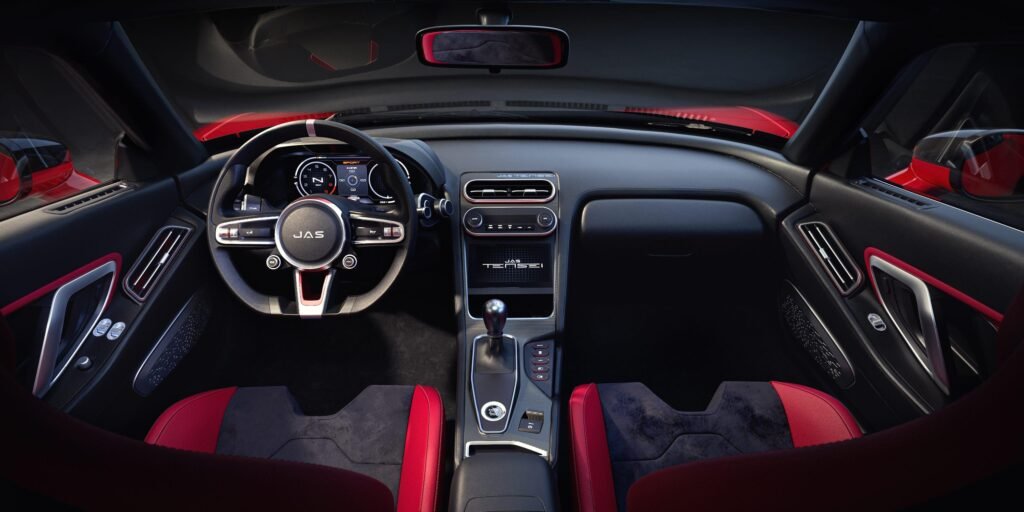
The interior follows the same philosophy. Carbon fibre, leather, Alcantara and titanium bring modern materials into a cabin that retains a driver-focused layout and a traditional analogue tachometer.
It is a deliberate contrast with the large digital screens and increasingly complex interfaces found in many modern performance cars. The Tensei is designed to make the driver feel involved rather than simply manage a collection of electronic systems.
Exclusivity Comes at a Price
JAS plans to build just 35 cars at its facility near Milan, with each example customised for its owner. The company has not announced an official final price in the reveal report, but the scale of the engineering and bespoke production puts the project firmly in the collector-car market.
That business model has become increasingly familiar. Specialist companies are rebuilding classic Porsches, Ferraris and other performance cars with modern materials, revised chassis engineering and highly individual specifications.
The appeal is not simply nostalgia. Buyers are paying for limited production, craftsmanship and a driving experience that is becoming harder to find in new cars.
For JAS and Pininfarina, the challenge is to deliver a car that justifies that exclusivity. A small production run limits volume, but it also allows more attention to detail and personalisation than a conventional manufacturer can offer.
A Different Kind of Performance
The Tensei arrives at a time when the performance-car industry is moving towards electrification, heavier battery systems and increasingly complex powertrains. It does not reverse that direction, but it shows there is still room for a different approach at the top end of the market.
Its naturally aspirated engine, manual gearbox and relatively low weight are central to the proposition. Rather than competing on headline power alone, the Tensei aims to deliver a more analogue experience in a modern package.
The original NSX helped establish that a supercar could combine performance with usability. The Tensei takes that idea into a much more exclusive market.
Whether it becomes a modern classic will depend on the finished cars and how they drive. But its appeal is already clear: in a market increasingly defined by technology, the Tensei is selling something more basic — the feeling of being directly connected to the machine.
Sources
- Road & Track — The JAS-Pininfarina Honda NSX Restomod Is Finally Here
- JAS Motorsport — Definitive Image of Pininfarina-Designed JAS Tensei Revealed
- JAS Motorsport — JUDD Power to Develop Engines for JAS Tensei
- Octane Magazine — Pininfarina-Designed JAS Tensei Unveiled
- Autoblog — Honda NSX Restomod Packs 425 HP and a Six-Speed Manual