A rare reference can attract attention, but rarity alone does not guarantee a high auction price. Collectors also consider the watchmaker’s reputation, the importance of the design, the quality of the movement, the condition of the case and dial, and the strength of the available documentation.
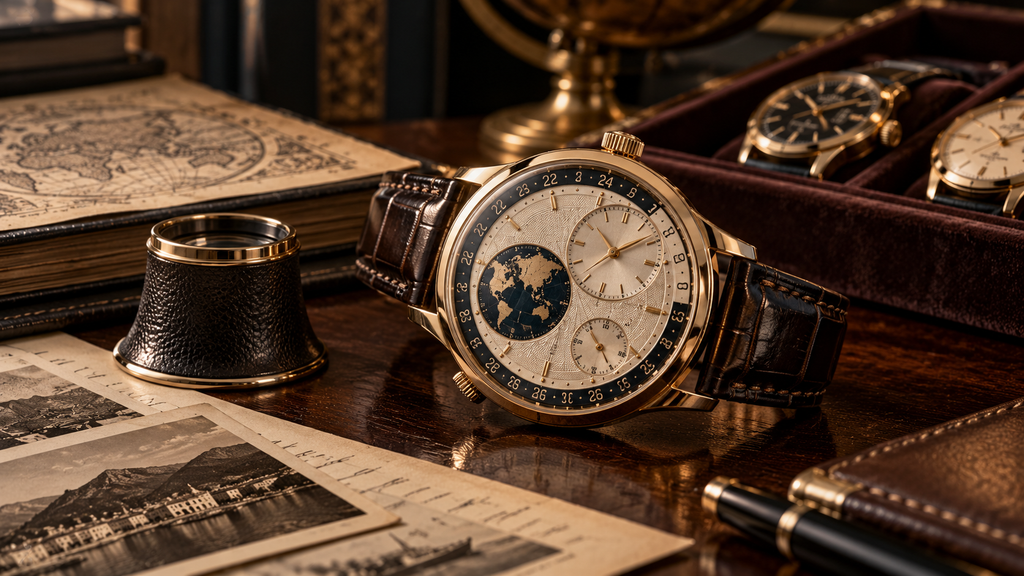
The Patek Philippe Dual Time Reference 3452/1 brings several of those factors together. Its association with Louis Cottier, a watchmaker known for developing world-time mechanisms, adds historical interest. Its reported survival within the original owner’s family for two generations also creates a traceable ownership narrative.
Provenance matters because it helps establish where a watch has been and whether its history can be supported by documentation. Original invoices, service records, archive extracts, correspondence and photographs can help build that record, although the importance of each document varies by model and period.
Condition is equally significant. Original components may be valued differently from replacement parts, while polishing, dial restoration and modifications can affect how collectors assess authenticity. Two examples of the same reference may therefore command materially different prices.
In this market, the object is only part of the story. Its documented history can be just as important.
A Market Expanding at the Top
The rare-watch story arrives amid a notable expansion in reported secondary-market activity. Industry tracking data from EveryWatch puts total secondary watch sales at approximately $10.5 billion in the first half of 2026, a year-on-year increase of 37.2%. The number of watches sold rose 18.7% to approximately 795,000.
The figures suggest a market with more transactions and higher overall value, although aggregate growth does not mean every brand or reference is appreciating. The distribution of demand matters: highly sought-after vintage pieces can perform very differently from modern watches that are readily available through retailers.
Patek Philippe accounted for approximately 14.4% of secondary-market value in the reported period, behind Rolex at 41%. Independent watchmakers also attracted attention at the upper end, where a small number of exceptional pieces can materially influence auction totals.
The most striking auction results remain outliers rather than typical measures of value. In the first half of 2026, an F.P. Journe Chronomètre à Résonance reportedly sold for nearly $13.9 million. Such transactions demonstrate the potential reach of trophy collecting, but they should not be used as benchmarks for the wider watch market.
The distinction between the total value of transactions and the performance of an individual watch is fundamental. A rising market can contain both strong performers and references that struggle to sell at previous price levels.
Asking Prices Are Not Market Prices
Luxury-watch listings often create the impression that a particular reference has a stable and easily identifiable value. In practice, asking prices show what sellers hope to receive, not what buyers have actually paid.
Completed sales provide a stronger basis for comparison, particularly when the reference, condition, age, accessories and sales channel are similar. Even then, the headline price may not represent the seller’s net proceeds after commissions and other expenses.
Auction estimates require similar caution. The $800,000 to $1.6 million estimate for the Patek Philippe Dual Time Reference 3452/1 is the auction house’s assessment of a potential selling range, not a guaranteed result. The final hammer price may fall below or exceed that range, while the buyer’s total cost can include an additional premium.
The distinction becomes more important when watches are traded through different channels. An auction, a specialist dealer and a private transaction may involve different fees, buyer protections, marketing reach and settlement terms.
For a collector assessing a watch as a financial asset, these differences affect the economics of buying and selling. A watch that appears to have increased in value on the basis of public asking prices may generate a much smaller return—or a loss—when transaction costs are included.
The Hidden Costs of Collecting
The purchase price is only one component of the cost of owning a high-value watch.
Insurance, servicing, secure storage, authentication and eventual selling expenses can all reduce the financial outcome. Complicated mechanical watches may require specialised maintenance, and replacement parts or restoration work can be costly. Vintage pieces can also require expert examination before their condition and originality can be assessed confidently.
Liquidity is another consideration. Unlike publicly traded securities, watches do not have a continuous central market with transparent pricing for every reference. A seller may need to wait for the right buyer, accept a lower offer or pay for specialist marketing to reach collectors.
The selling process can also depend on the watch’s documentation. Original boxes, papers and service records may strengthen buyer confidence and influence pricing, although the effect varies by model and the circumstances of the sale.
These factors make headline appreciation an incomplete measure of performance. A watch purchased for €100,000 and later sold for €120,000 has generated a 20% increase in gross price, but the owner’s actual return would be lower after purchase and sale costs, insurance, servicing and any other expenses.
For this reason, luxury watches occupy an unusual position between personal possessions, cultural objects and tradable collectibles. Their financial characteristics differ substantially from those of liquid investments.
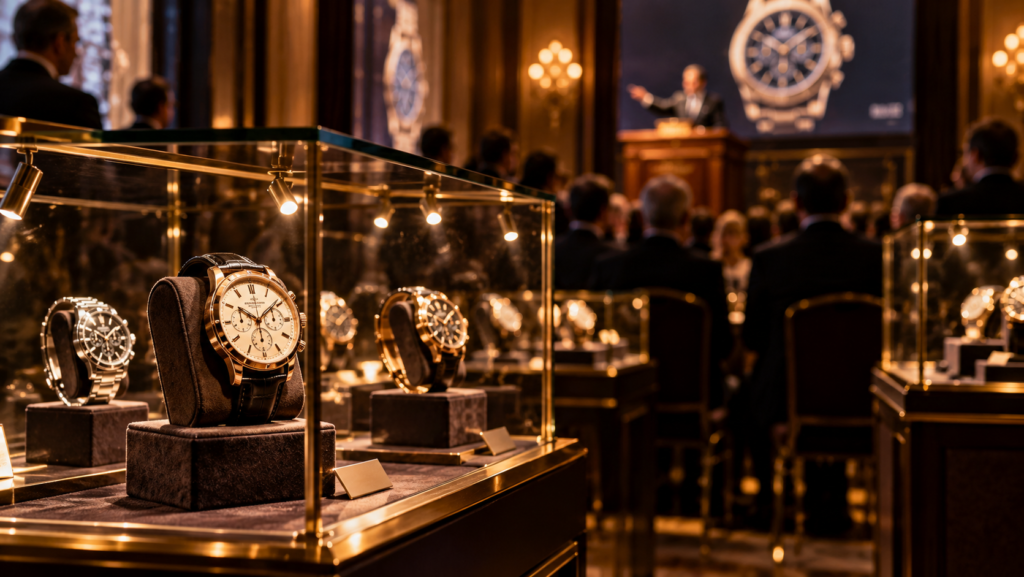
Illustrative AI-generated image of a luxury watch in an auction setting; not a verified photograph of the watch featured in the upcoming Christie’s sale.
Wealth Preservation or Speculation?
The language of wealth preservation is frequently applied to luxury watches, especially models associated with established manufacturers and long collecting histories. But preservation of value is not an inherent property of a brand or a mechanical complication.
A watch’s resale performance can be influenced by changing tastes, the availability of comparable examples, the number of interested buyers and broader economic conditions. Demand can concentrate on a handful of models while other watches from the same manufacturer trade below their original retail prices.
The secondary market also contains different types of buyers. Some collect for historical significance or mechanical craftsmanship. Others are attracted by design, brand identity or the possibility of resale. These motivations can overlap, but they do not produce the same approach to pricing.
For collectors, a watch may retain considerable personal value even if its resale price declines. For buyers treating watches primarily as financial assets, the relationship between acquisition cost, liquidity and exit price becomes more central.
The strongest market evidence therefore comes from completed transactions and the characteristics of the individual piece—not simply from a manufacturer’s reputation or the fact that a reference is described as rare.
The Next Auction Will Provide a Test
The December auction of the Patek Philippe Dual Time Reference 3452/1 will offer a clearer indication of how bidders value this particular combination of rarity, historical significance and provenance.
Its estimate establishes expectations, but the final result will depend on the interest of participating collectors and the competitive bidding process. A strong sale could reinforce demand for exceptional vintage timepieces, while a result below expectations would not, by itself, establish a wider decline in the market.
The outcome will be most informative when considered alongside other comparable sales, including the condition of the watches, their documented histories and the costs associated with each transaction.
The larger story is not that rare watches inevitably preserve wealth. It is that a small group of exceptional timepieces can command substantial prices when scarcity, provenance, condition and collector demand converge.
That combination can make watch collecting culturally significant and commercially compelling. It can also make valuations difficult, transaction costs material and future resale outcomes uncertain.
For the luxury-watch market, the difference between rarity and lasting value remains the central question.
Sources
- Christie’s, Rare Patek Philippe Dual Time Reference 3452/1 announced for December Luxury Week
- EveryWatch, H1 2026 Secondary Market Report
- EveryWatch, A Seller’s Guide to Pre-Owned Watch Value
- Phillips, The New York Watch Auction: XIV — June 2026 results
- Sotheby’s, Fine Watches auction catalogue
- Haute Time, Latest luxury-watch coverage