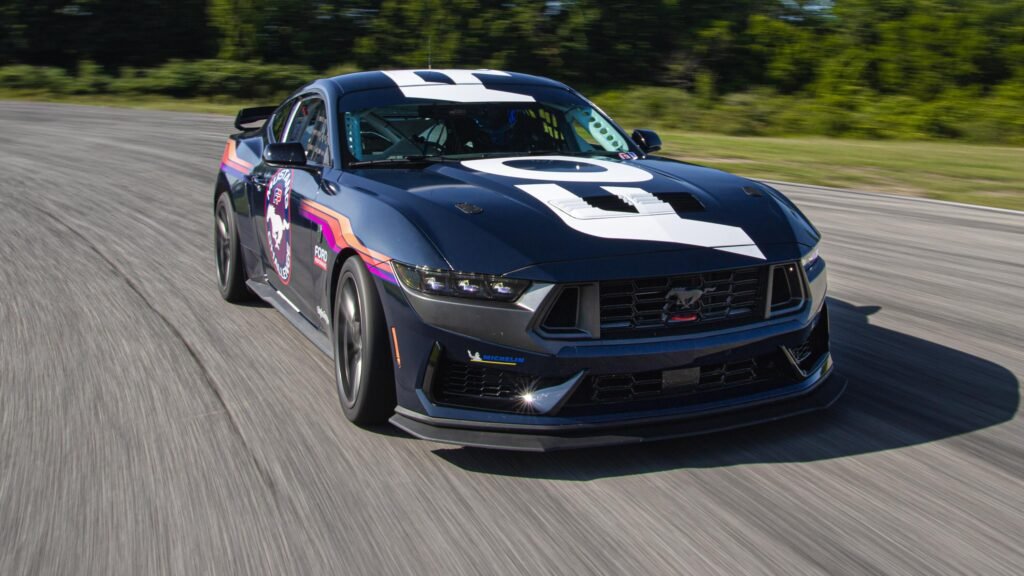
The Mustang Challenge Global Invitational Championship will bring together three established race weekends in 2027:
- Daytona International Speedway, USA: The opening round takes place on January 22–24 during the Roar Before the Rolex 24 weekend.
- Spa-Francorchamps, Belgium: The second round will run alongside the 24 Hours of Spa, giving drivers the opportunity to race at one of Europe’s most recognisable circuits.
- Mount Panorama, Bathurst, Australia: The championship concludes at the legendary Australian circuit, alongside the Mustang Cup Australia season finale.
All three rounds will use the Mustang Dark Horse R. The invitational will have its own points classification, separate from the regional championships, so drivers can compete for the international title without having to abandon their existing programmes.
That structure makes the championship accessible to customers who want to enter selected international events rather than finance a complete overseas season.
The Dark Horse R Is The Product
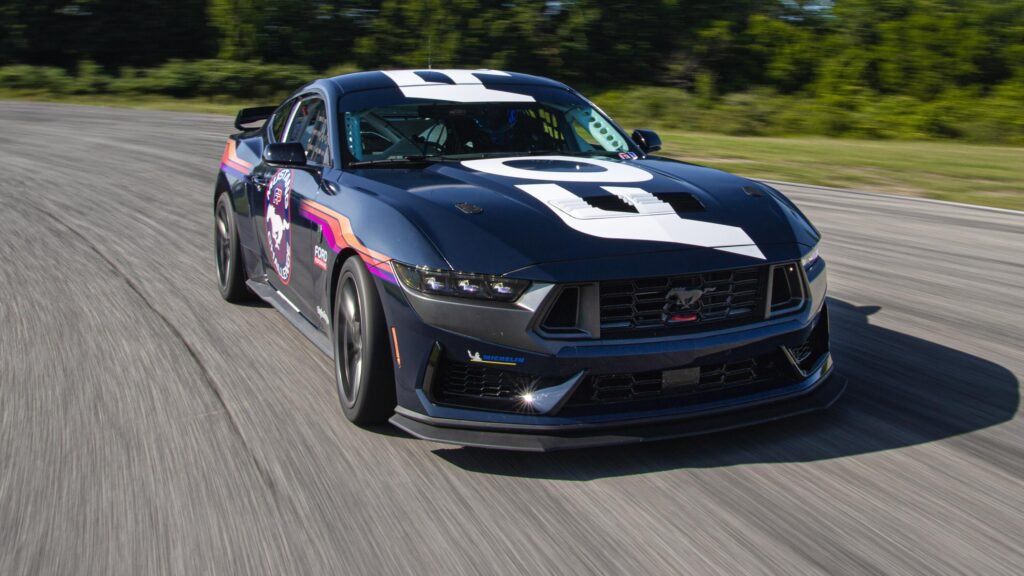
The Mustang Dark Horse R is a track-only race car built around a naturally aspirated 5.0-litre V8 engine. It features competition-focused components, including a roll cage, racing suspension, Brembo brakes, a racing exhaust and dedicated slick tyres.
Ford introduced the car as a relatively accessible entry point into organised circuit racing, positioned below its more specialised Mustang GT4 and GT3 competition cars.
The vehicle’s commercial appeal extends beyond its initial purchase price. Owners may need race preparation, mechanical support, replacement parts, tyres, transport and coaching throughout a season. Sales and service are managed by Multimatic, creating a support structure around the car itself.
For Ford, a common vehicle specification across different markets also makes it easier to establish a consistent customer-racing identity. Teams and drivers can focus on competition without having to adapt to fundamentally different cars for each regional series.
Motorsport Becomes A Customer Business
The global invitational represents a broader opportunity to monetise motorsport participation. Customers are not simply buying a car; they are buying access to famous circuits, competitive experiences and a community built around the Mustang brand.
That creates potential revenue opportunities across several parts of the ecosystem:
- Vehicle sales: More reasons for enthusiasts to purchase a dedicated race car.
- Team services: Arrive-and-drive packages, engineering support, mechanics and race preparation.
- Logistics: International freight, spare parts, equipment transport and event coordination.
- Partners and sponsors: Brand exposure during established endurance-racing weekends.
- Customer retention: A structured path from domestic racing to international competition.
The model also gives regional teams a potential route to attract customers from outside their home markets. A driver based in North America could compete at Daytona, travel to Spa with a European team and finish at Bathurst with Australian support.
The commercial opportunity depends on how much of this coordination Ford and its partners can make straightforward for customers.
International Racing Has A Price
Competing on three continents is not inexpensive. Even if the car remains the same, transporting it and its equipment between events requires planning, customs documentation, insurance and specialist freight.
Drivers must also budget for travel, accommodation, entry fees, tyres, consumables and potential damage. A championship that is accessible in sporting terms may still be financially demanding.
Ford has not yet published all the commercial details of the invitational, including a complete cost structure for customers. The ultimate reach of the programme will depend on how the organiser, teams and suppliers package the experience.
The existing regional championships help reduce the barrier to entry because drivers can retain their local programmes and choose international rounds selectively. That flexibility is central to the business model.
From Racing Heritage To Revenue
Ford’s strategy builds on the Mustang’s established identity in motorsport. The company already competes internationally in professional categories, while the Dark Horse R allows customers to participate in a more standardised racing format.
The Global Invitational extends that approach by linking established events instead of creating a separate global series from scratch. This reduces the need for a wholly new calendar and allows Ford to build on existing infrastructure and audiences.
The model also strengthens the connection between professional motorsport and customer ownership. Enthusiasts can experience prominent circuits in a car carrying the same brand identity as Ford’s wider racing programme.
The commercial test will be whether the format attracts enough repeat entrants to support teams, service providers and future events. A successful inaugural season could make international customer racing a more durable part of Ford’s motorsport business.
A New Track For Mustang
Ford’s Mustang Challenge Global Invitational Championship is a strategic expansion of customer motorsport, linking Daytona, Spa-Francorchamps and Bathurst in a three-round international contest.
Rather than building an entirely new racing series, Ford is connecting existing programmes and using the Mustang Dark Horse R as the common platform. That approach creates a new product for customers while offering potential business to teams, suppliers and event partners.
The championship’s long-term success will depend on participation, logistics and the value customers see in racing at these venues. But the concept illustrates how manufacturers can use motorsport not only to market road cars, but also to create a recurring business around ownership, competition and experience.