Europe’s industrial heavyweights are making multibillion-dollar bets on artificial intelligence, seeking to turn decades of engineering expertise and factory data into a competitive advantage as demand for AI data centres accelerates.
Schneider Electric, Siemens and ABB are pursuing different strategies. Schneider is expanding aggressively into industrial software, Siemens is combining engineering with advanced simulation and AI, while ABB is prioritising physical equipment and developing much of its software internally.
The competition reflects a broader shift in the AI economy: Europe may have fewer dominant consumer AI platforms, but its industrial companies are positioning themselves to supply the infrastructure, software and automation needed to make AI useful in factories, energy systems and data centres.
Schneider Makes Its Biggest Bet

Schneider Electric has agreed to acquire US engineering software company PTC in a deal valued at approximately $22.6 billion in equity, making it the largest acquisition in Schneider’s history. The transaction, announced on October 5, is intended to combine Schneider’s expertise in energy management and industrial operations with PTC’s software for product design, engineering and lifecycle management.
The strategic logic is to connect information from the design stage through manufacturing, operation and maintenance. This could allow industrial customers to use AI to identify inefficiencies, improve product development and make better decisions using data collected across their operations.
Schneider expects the acquisition to generate approximately €250 million in annual cost synergies by the third year after completion, alongside around €800 million in potential revenue synergies. The deal remains subject to shareholder and regulatory approvals, with completion anticipated by the third quarter of 2027.
The scale of the purchase nevertheless carries financial risks. Investors initially reacted negatively to the announcement, raising questions about the price paid, the additional financing required and how quickly the combined software businesses can deliver returns.
Siemens Builds Its Software Advantage
Siemens has pursued a longer-term strategy of combining industrial engineering with digital technologies. Its acquisition of US software company Altair Engineering for approximately $10 billion expanded its capabilities in simulation, high-performance computing, data science and AI.
These tools allow companies to test designs virtually before committing to physical production. Manufacturers can simulate how a component will perform under different conditions, identify potential failures and reduce the need for costly prototypes.
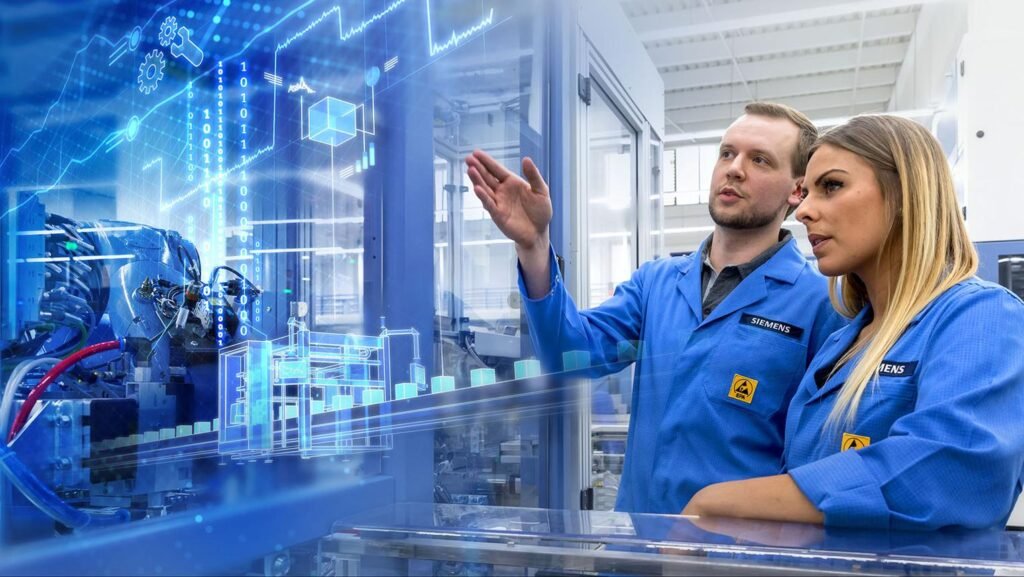
When combined with operational data from factories, these capabilities can help create digital twins: virtual representations of products, equipment or entire industrial systems that can be used to monitor performance and test improvements.
Siemens’ strategy is built around connecting the physical and digital worlds. Rather than treating AI as a standalone product, it is embedding intelligence into engineering software, manufacturing systems and industrial infrastructure.
This approach could provide a competitive advantage in sectors where reliability, precision and safety are essential, including automotive manufacturing, aerospace, energy and transport.
ABB Focuses On Physical Infrastructure
ABB is taking a different route. Instead of relying on major acquisitions of software companies, the Swiss engineering group is concentrating on electrification, automation and the physical components needed to operate industrial facilities.
Its $5.5 billion acquisition of UK industrial components manufacturer Rotork strengthens its position in equipment used to control industrial processes and infrastructure.
ABB also develops software internally, using its existing industrial expertise and workforce of software engineers. Its approach reflects the view that customers can achieve substantial productivity gains through better equipment, automation and control systems without necessarily requiring a large new software platform.
The company’s technology is also relevant to AI data centres, where reliable electricity distribution, automation and cooling are critical to maintaining performance.
The difference between ABB and its rivals is therefore not whether AI matters, but where each company believes it can create the greatest value.
Data Centres Drive Demand
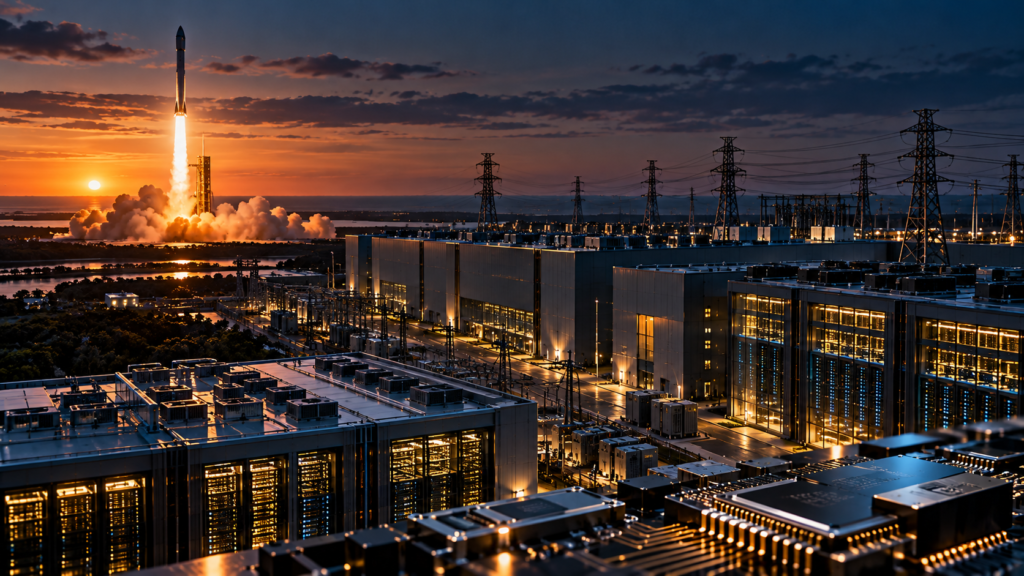
The expansion of AI infrastructure is providing a powerful commercial incentive for all three companies.
Large data centres require substantial amounts of electricity, advanced cooling systems and reliable power-management equipment. As computing requirements increase, operators need infrastructure capable of supporting higher power densities while managing energy costs and operational risks.
Schneider has particularly strong exposure to this market. Its data-centre business generated approximately €10 billion in revenue in 2025, equivalent to around one-quarter of group revenue.
ABB reported approximately $3 billion in data-centre-related revenue, while Siemens generated more than €3 billion from the sector during the first nine months of its fiscal year.
Schneider also raised its 2026 financial outlook on October 16 after reporting strong third-quarter demand, highlighting the immediate commercial benefits of the AI infrastructure buildout.
However, this opportunity depends partly on continued investment by cloud providers and technology companies. If AI spending slows, financing becomes more expensive or projects are delayed, suppliers could face weaker orders after a period of rapid growth.
The Race To Industrial AI
Beyond data centres, the companies are competing to develop what is increasingly known as industrial AI: the use of machine learning and related technologies to improve the performance of factories, production lines and industrial systems.
Factories generate enormous volumes of information through sensors, machines, engineering systems and quality-control processes. Much of this data has historically been used for specific operational tasks rather than combined into a broader source of intelligence.
AI could help manufacturers identify production bottlenecks, predict equipment failures, optimise energy consumption and detect defects earlier. In engineering, it could accelerate product design and simulation. In industrial maintenance, it could help prioritise repairs before equipment fails.
The commercial value will depend on whether these applications deliver measurable improvements in productivity, quality, safety and operating costs.
Industrial companies also face challenges that are less prominent in consumer AI. Systems must work reliably, integrate with legacy equipment and meet strict cybersecurity and safety requirements. A model that performs well in a demonstration may not automatically deliver the same results in a complex factory.
Investors Weigh Growth Against Risk
The three companies offer different ways to gain exposure to the industrial AI opportunity, but each faces its own investment considerations.
Schneider is combining its established energy-management business with a larger software portfolio. Its acquisition of PTC could strengthen recurring software revenue, but the purchase price and additional debt and equity financing raise questions about execution and returns.
Siemens offers exposure to industrial software, simulation and automation through a strategy developed over many years. Its challenge is to integrate acquired technologies and convert them into sustained growth across its broad industrial customer base.
ABB provides a more equipment-focused approach, benefiting from electrification and automation demand while limiting its reliance on large software acquisitions. Its performance will still depend on industrial investment cycles, project execution and competition in key equipment markets.
For all three, the most important test will be whether AI-related demand translates into profitable growth rather than simply higher sales and larger acquisition budgets.
Europe’s Industrial AI Opportunity
Europe’s industrial giants are positioning themselves to capture value from AI by focusing on areas where they already possess significant strengths: engineering, energy infrastructure, automation and decades of industrial data.
Schneider is pursuing a software-led strategy, Siemens is deepening its integration of engineering and AI, and ABB is emphasising the physical systems that make industrial operations possible.
The approaches differ, but the underlying opportunity is similar. If AI helps manufacturers operate more efficiently and data-centre investment continues, all three companies could benefit.
The risks are equally significant. Large acquisitions must deliver returns, AI infrastructure spending must remain sustainable, and industrial AI must move from promising demonstrations to measurable business outcomes.
The next phase of competition will not be decided by which company makes the biggest announcement. It will be determined by which can turn industrial data, engineering expertise and AI into reliable productivity gains for customers.
Sources
- Financial Times – Europe’s industrial giants take diverging paths as they ride AI boom
- PTC – Schneider Electric to acquire PTC
- Reuters – Schneider Electric raises 2026 targets again on booming data-centre demand
- Siemens – Acquisition of Altair strengthens AI-powered industrial software portfolio
- Euronews – Schneider Electric shares fall after $22.6 billion PTC deal