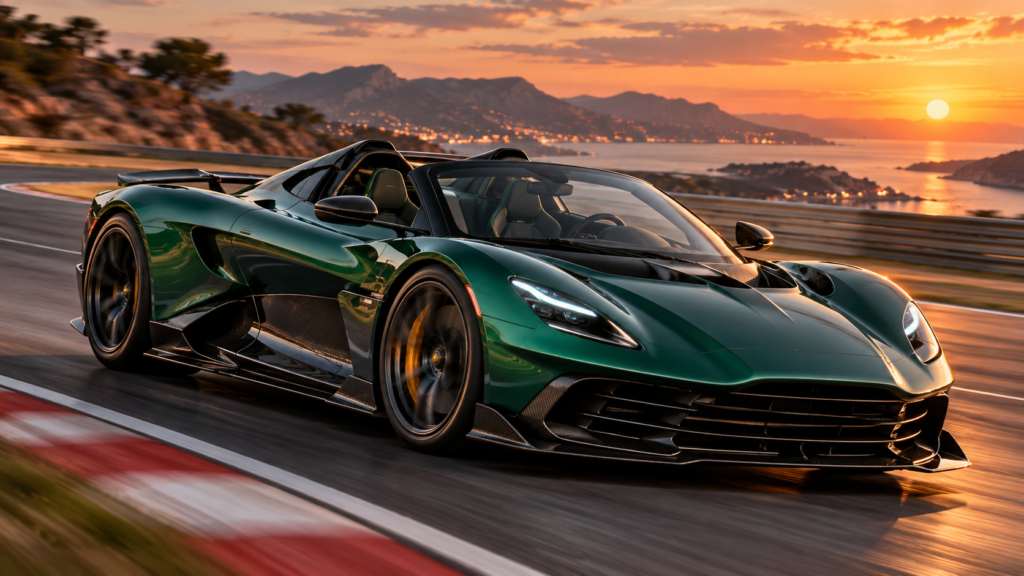
Short description: Koenigsegg is recalling all seven CC850 hypercars delivered to the United States after a parking-brake software fault allowed one vehicle to roll away. The case highlights how software reliability has become a critical safety issue, even in ultra-exclusive performance cars.
◉ Seven vehicles affected: The US recall covers every CC850 delivered in the country, representing a small but notable share of the planned 70-car production run.
◉ Software-based remedy: Koenigsegg plans a free over-the-air update, with an authorised dealer able to install the fix if a remote update is unsuccessful.
◉ A wider industry lesson: The incident demonstrates how electronic controls can introduce safety risks that traditional mechanical testing may not reveal.
What Happened?
Koenigsegg has initiated a safety recall covering all seven CC850 hypercars delivered to the United States after a vehicle reportedly rolled away while reverse was selected and the engine was running.
The incident was reported on 12 October 2026. According to the recall information, the driver attempted to engage the electronic parking brake before leaving the vehicle on a slope. Under those specific conditions, the brake could remain engaged only while its control button was continuously pressed. Once the button was released, the system could fail to hold the car.
No injuries were reported.
The Swedish manufacturer investigated the incident and subsequently filed a voluntary recall with the US National Highway Traffic Safety Administration on 21 October. The campaign covers affected 2025 and 2026 model-year vehicles built between September 2025 and August 2026.
Why Software Matters
The proposed remedy is a revised parking-brake control software update. Owners are expected to receive the update over the air, while vehicles that cannot complete the process remotely can be serviced by an authorised dealer. The repair is free of charge.
The issue is particularly revealing because it concerns the interaction between the car’s electronic controls and its operating state, rather than a conventional failure of a physical brake component.
Modern performance vehicles increasingly depend on software to coordinate power delivery, transmission behaviour, stability systems and electronic parking functions. These systems can improve precision and usability, but their reliability depends on how they respond to combinations of conditions that may not be fully captured by standardised testing.
The recall documentation indicates that the specific scenario fell outside the scope of conventional static parking-brake tests. That distinction does not eliminate the safety risk: a vehicle that moves unexpectedly can cause damage or injury regardless of whether it meets other regulatory requirements.
Exclusivity Does Not Remove Risk
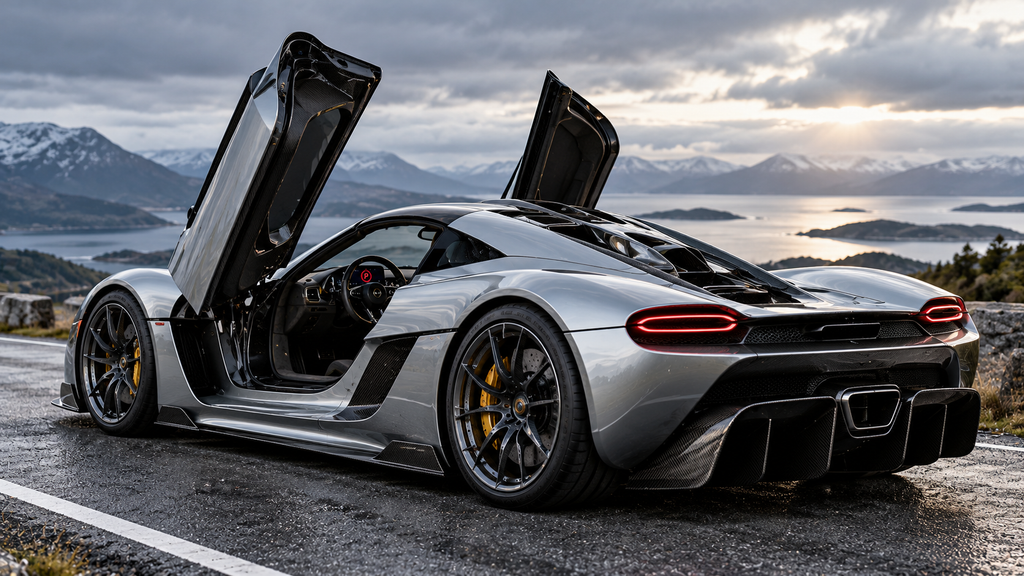
The CC850 is among the most distinctive vehicles in Koenigsegg’s portfolio. Its 5.0-litre twin-turbocharged V8 produces up to 1,385 horsepower on E85 fuel, while its Engage Shift System combines a manual-style driving experience with the ability to operate as an automatic.
Koenigsegg originally planned a production run of 50 cars before increasing it to 70 following strong demand. With only seven vehicles covered by the US recall, the absolute number is small. Yet all seven US-delivered examples are affected, making the campaign significant relative to the model’s limited production.
For manufacturers of low-volume hypercars, each vehicle represents a substantial engineering investment and a highly visible expression of brand reputation. A safety issue affecting only a handful of cars can therefore carry implications beyond the direct cost of repairs.
The Business Implications
The immediate financial cost of a software update across seven vehicles is likely to be modest relative to the value of the cars. The more important consideration is how efficiently the manufacturer identifies, communicates and resolves the problem.
Rapid software-based remedies can reduce the need for physical component replacement and lengthy workshop visits. However, they also place greater responsibility on manufacturers to validate control logic, monitor field reports and ensure that updates are completed successfully.
The recall does not establish that the same defect affects CC850s delivered outside the United States. Whether further action is required in other markets will depend on the manufacturer’s findings and the relevant authorities.
What to Watch Next
The next milestones are the completion of the US software updates and any additional recall notices in other markets. The case also reinforces a broader industry question: as vehicles become increasingly software-defined, how effectively can manufacturers test unusual combinations of operating conditions before customers encounter them?
For Koenigsegg, the immediate priority is straightforward—ensure that every affected car’s parking brake operates as intended. For the wider luxury automotive market, the incident is another reminder that engineering complexity and exclusivity do not remove the need for rigorous safety controls.