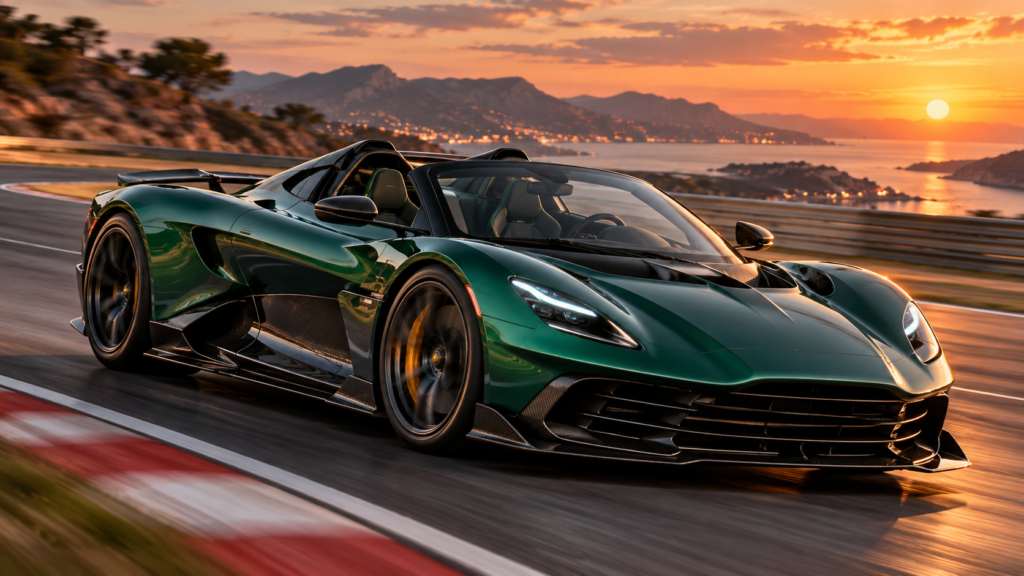
Short description: Aston Martin has unveiled the Valhalla Spider, an open-top plug-in hybrid supercar combining 1,079 PS, Formula 1-inspired engineering and a claimed top speed of 350 km/h. The new model extends the British marque’s hybrid performance strategy into the exclusive convertible segment.
◉ 1,079 PS hybrid power: A twin-turbocharged 4.0-litre V8 works with three electric motors to deliver 1,100 Nm of combined torque.
◉ 350 km/h top speed: The Spider reaches 100 km/h in a claimed 2.5 seconds and can achieve its maximum speed with the roof removed or the optional carbon-fibre hardtop fitted.
◉ Deliveries in 2027: First customer deliveries are expected in the third quarter of 2027, adding a new high-performance derivative to Aston Martin’s limited-production portfolio.
Open-Air Performance Meets Hybrid Technology
Aston Martin has expanded its Valhalla supercar range with the Valhalla Spider, a convertible developed to preserve the performance characteristics of the coupe while introducing open-cockpit driving.
The powertrain combines a bespoke 4.0-litre twin-turbocharged V8 producing 828 PS with three electric motors contributing a further 251 PS. Together, the system delivers 1,079 PS and 1,100 Nm of torque, channelled through an eight-speed dual-clutch transmission.
The Spider retains the Valhalla’s carbon-fibre structure and active aerodynamic systems. Engineers have recalibrated the aerodynamics and stability controls to account for changes in airflow when the roof is removed. A redesigned wind deflector and a taller engine-air intake help manage cockpit turbulence and maintain cooling performance.
A Roof With a Performance Trade-Off
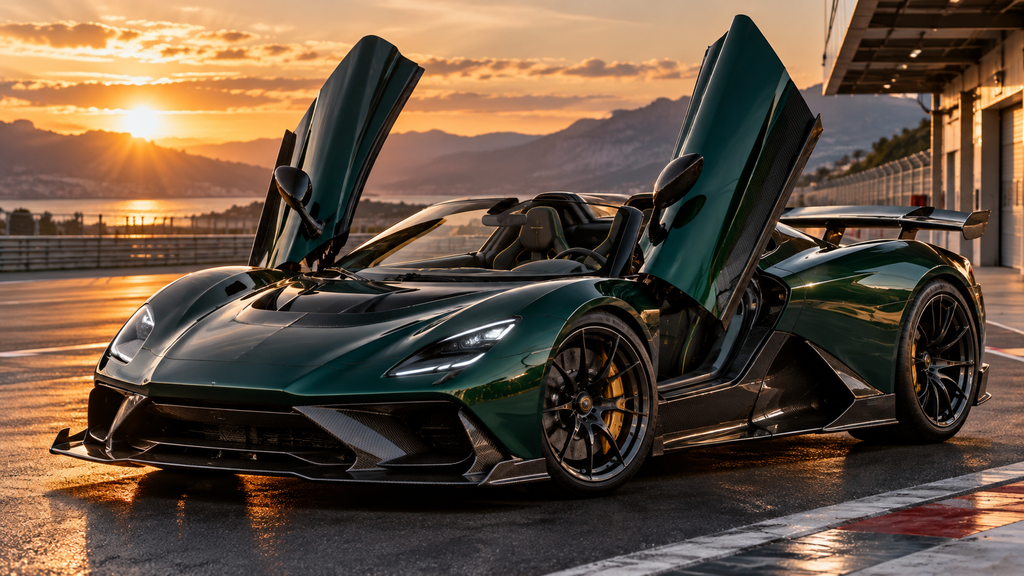
The removable fabric roof is designed for flexibility, but it introduces an important distinction in performance. With the standard fabric panel installed, maximum speed is limited to 200 km/h. The optional carbon-fibre hardtop allows the car to reach its electronically limited 350 km/h maximum, as does driving with the roof removed.
Aston Martin also claims more than 600 kg of downforce with the roof fitted under specified high-performance conditions. The Spider receives revised seating designed to improve comfort and access, while retaining the model’s distinctive upward-opening doors.
The car is scheduled to make its global debut at the Concours at Wynn Las Vegas from 29 October to 1 November 2026. Customer deliveries are expected to begin in Q3 2027.
Exclusivity and Commercial Positioning
The Valhalla Spider arrives in a market where manufacturers increasingly use high-performance derivatives to extend the value of established platforms. Convertible variants can broaden a model’s appeal without requiring an entirely separate vehicle architecture, although they still demand dedicated engineering and aerodynamic development.
Aston Martin has planned 999 Valhalla vehicles across the range. Specialist automotive reporting indicates that most of the planned allocation has already been assigned, with approximately 250 Spider examples expected. The company has not publicly confirmed a final Spider production allocation or price in its launch announcement.
For the brand, the Spider is more than a roofless alternative. It reinforces the Valhalla’s role as a technological showcase, combining electrification, active aerodynamics and engineering expertise influenced by Formula 1.
What Matters for the Luxury Car Market
The Valhalla Spider illustrates how hybridisation is moving beyond efficiency and into the highest-performance end of the automotive market. Electric motors provide additional power and front-axle torque vectoring, while the combustion engine remains central to the car’s character.
Its commercial significance will depend on pricing, final production numbers, delivery execution and the strength of demand for ultra-high-performance hybrid cars. Limited availability may support exclusivity, but it does not automatically guarantee future collector value.
For now, the Spider strengthens Aston Martin’s position in a segment where engineering credentials, distinctive design and controlled production volumes are central to brand differentiation.