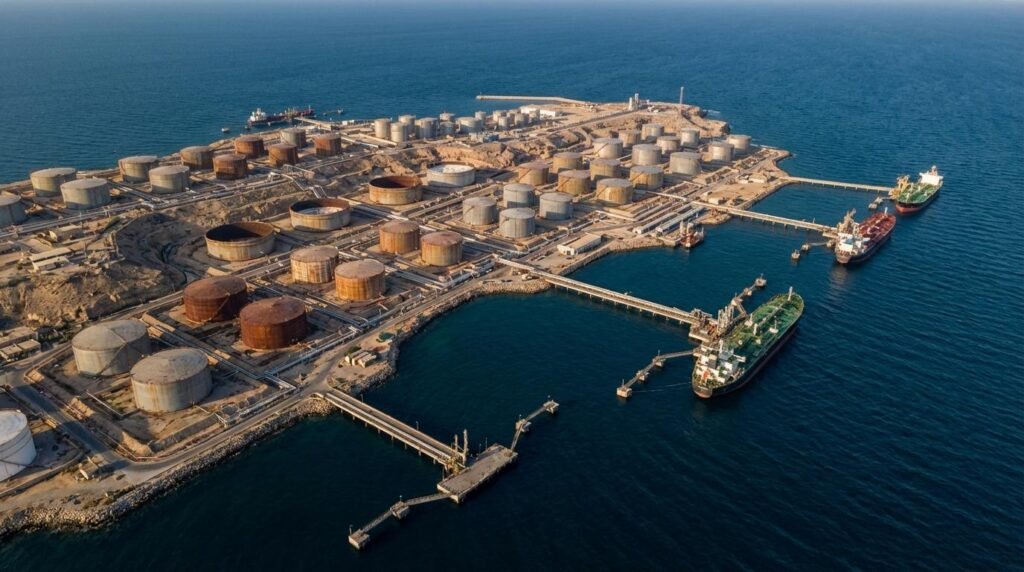
Saudi Arabia’s energy export infrastructure faces renewed security risks as the conflict involving Iran, Yemen’s Houthi movement and regional military forces intensifies. On Friday, 16 October, Saudi-led forces said they intercepted a ballistic missile heading towards Yanbu, a major Red Sea oil export hub that provides an alternative route for crude shipments when traffic through the Strait of Hormuz is disrupted.

Missile Interception Raises Energy Concerns
The Saudi-led coalition also reported destroying two cruise missiles over the Red Sea and three drones over Riyadh and southern Saudi Arabia. The coalition did not identify those responsible for the intercepted weapons.
Yanbu has strategic importance because it allows Saudi crude to reach international markets through the Red Sea, bypassing the Strait of Hormuz. Any threat to this route could complicate efforts to maintain exports if Gulf shipping remains restricted.
The incident came amid wider regional escalation. In Yemen, two missiles struck the grounds of Aden International Airport, according to local authorities, who blamed the Iran-aligned Houthi movement. The group had not immediately claimed responsibility. Authorities said passengers on a flight preparing to depart were evacuated and no casualties were reported at the airport.
Strait of Hormuz Remains a Critical Pressure Point
The missile interception comes as the confrontation involving the United States and Iran continues to disrupt energy-market expectations. The Strait of Hormuz is one of the world’s most important oil shipping routes, and restrictions on maritime traffic have increased uncertainty over the availability and cost of crude supplies.
US Central Command said American forces had helped Gulf allies move more than 100 million barrels of crude through the strait over the previous seven days. Iran disputed Washington’s account of control over the waterway, underscoring the continuing uncertainty surrounding shipping access and security.
The situation creates a dual risk for oil markets: exports through Hormuz could remain constrained, while attacks on alternative routes or infrastructure could limit Saudi Arabia’s ability to redirect shipments.
Oil Prices Reach New Highs
Brent crude briefly climbed to $110 per barrel on Friday, its highest level since May, before retreating. Prices have been supported by concerns that the conflict could disrupt production, export terminals, pipelines and tanker movements across the region.
Higher crude prices can benefit oil producers when exports continue uninterrupted, but the impact is more complicated when infrastructure itself comes under threat. Shipping insurance, transport costs and security requirements can also rise, increasing the cost of delivering energy to buyers.
Governments are exploring ways to cushion the impact. The US Department of Energy sought an exchange involving up to 17 million barrels from the Strategic Petroleum Reserve, part of broader efforts to manage supply pressures. Such measures can provide temporary relief, but they cannot fully offset a prolonged disruption to major export routes.
Investors Face Higher Geopolitical Risk
The latest developments add another layer of uncertainty for energy companies, airlines, shipping firms and businesses exposed to fuel costs. Sustained oil-price increases could lift inflation, raise operating expenses and complicate central-bank decisions on interest rates.
For investors, the key indicators will be whether Yanbu remains operational, whether shipping through the Strait of Hormuz improves and whether attacks on energy infrastructure continue. A reduction in hostilities could ease the risk premium embedded in crude prices, while further disruption could renew upward pressure.
The interception near Yanbu does not itself confirm that Saudi oil exports have been interrupted. It does, however, highlight how the conflict is extending risks beyond the Strait of Hormuz to alternative export routes that have become increasingly important to global energy supply.
Sources
- Investing.com / Reuters — Iran War: Missiles Target Saudi Oil Hub as Yemen Conflict Escalates
- Reuters — Missiles Hit Aden Airport as Saudi-Led Coalition Intercepts Missile Headed for Yanbu
- Reuters — Analysis: How the Houthis Are Helping Iran Turn Saudi Arabia Into a Pressure Point
- Reuters — Oil Climbs as Middle East Conflict and Tanker Attacks Persist