
The Islamic Development Bank (IsDB) Group is preparing a new financing programme for Indonesia worth approximately US$2.56 billion over 2026–2030, as the country seeks to strengthen infrastructure, industrial capacity and workforce development.
The strategy was discussed on October 8 in Jakarta during a meeting between IsDB Group Chairman Muhammad Al Jasser and Indonesian Finance Minister Suahasil Nazara, who also serves as the bank’s governor. The discussions focused on accelerating existing projects and identifying new priorities in healthcare and strategic connectivity.
Indonesia currently has six active IsDB projects with a combined value of approximately US$1.8 billion. The new Member Country Partnership Strategy (MCPS) is intended to improve project preparation and execution while coordinating financing across the wider IsDB Group, including its private-sector, trade-finance and insurance operations.
The proposed financing envelope is indicative rather than a guaranteed disbursement. Its final scale will depend on project readiness, implementation progress and the financing arrangements agreed between Indonesia and the bank.
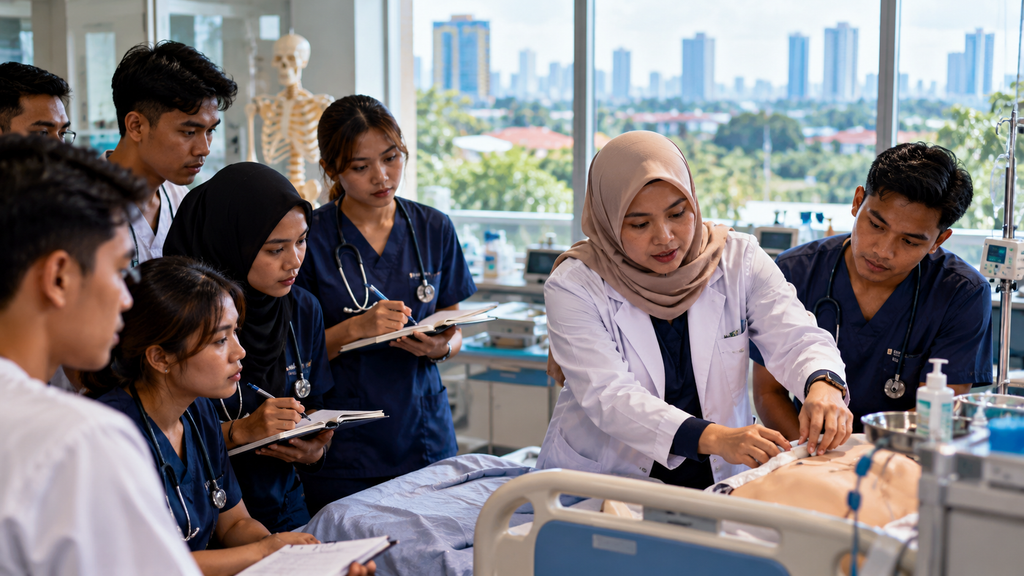
The programme focuses on two broad priorities. The first covers infrastructure, connectivity, resilience and industrial upgrading, including transport links, food security, sustainable fisheries and energy. The second targets human capital through stronger healthcare systems, education and skills development.
The partnership builds on more than five decades of cooperation. Cumulative IsDB Group approvals for Indonesia have reached approximately US$7.2 billion across around 350 operations, spanning sectors such as health, agriculture, education and transport.
For Indonesia, the financing could support infrastructure investment and help address skills gaps as the economy moves towards higher-value industrial activity. Better transport connections and more reliable energy and food systems could also improve the operating environment for domestic businesses and international investors.
However, the economic impact will depend on how quickly projects move from planning to implementation. Financing commitments alone do not guarantee completed infrastructure, productivity gains or new employment. Procurement, execution capacity and the quality of project selection will be central to the programme’s results.
The new strategy signals a shift towards a more coordinated development partnership, combining infrastructure funding with investment in people and productive capacity. Its significance will ultimately be measured by the projects delivered and the lasting economic benefits they generate.
SOURCES